Walk from the Guindais walls to Ribeira, with a stop at Santa Clara and views over the Douro. Follow the route in order and find out what to look for along the way.
Start in the upper town, see the walls and decide whether to visit Santa Clara. Then head down to the river and finish at a small surviving gateway through the medieval enclosure.
Only have 30–45 minutes? Stay in the upper town for the walls, bridge views and Santa Clara’s exterior. Save the descent for another time.
Towers and a surviving section beside the upper town.
1 · What to see
Guindais walls
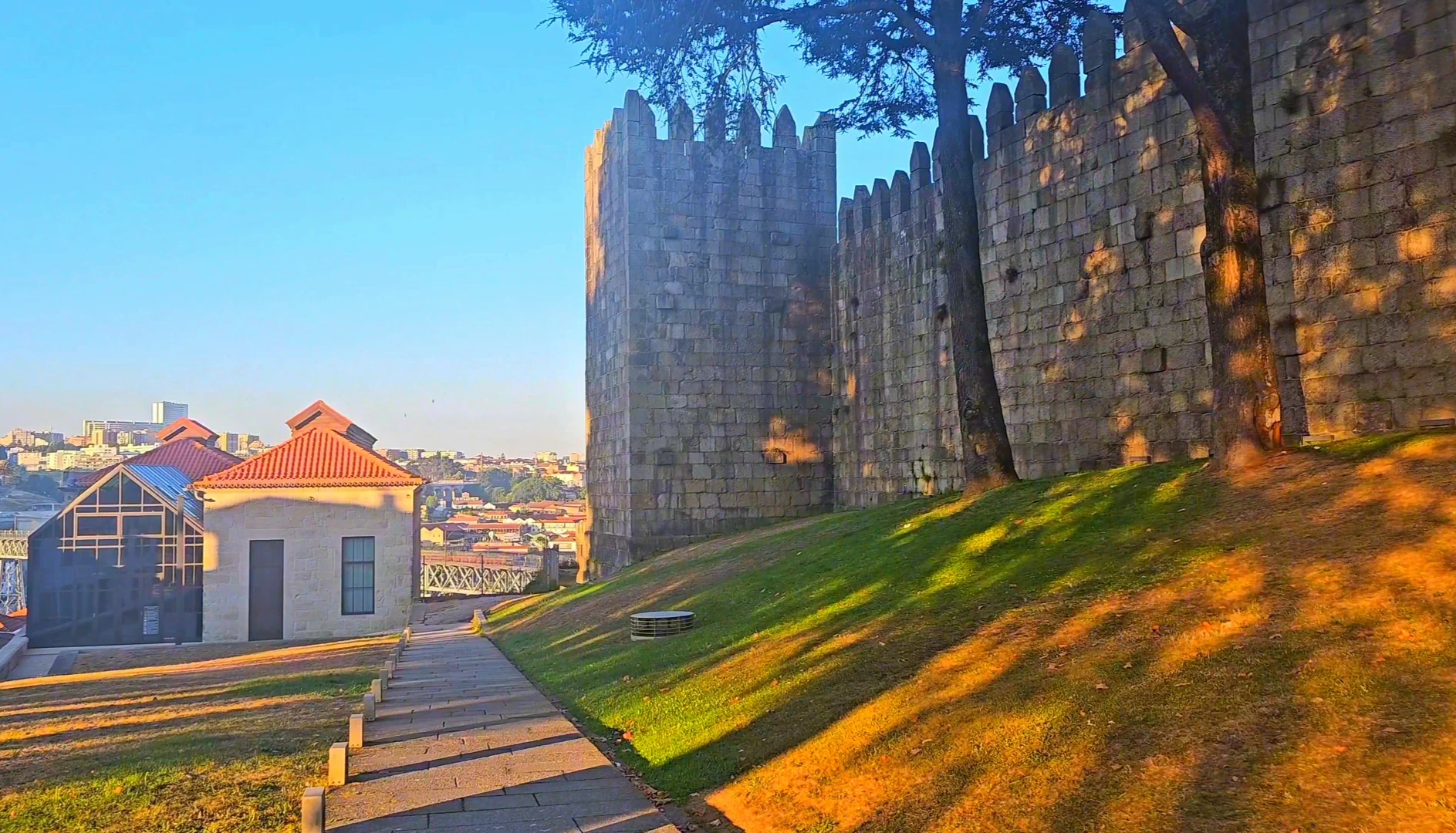
Start around Avenida Vímara Peres and Rua Arnaldo Gama, near Santa Clara. Here you can see the Guindais stretch, its towers and the notched battlements along the top.
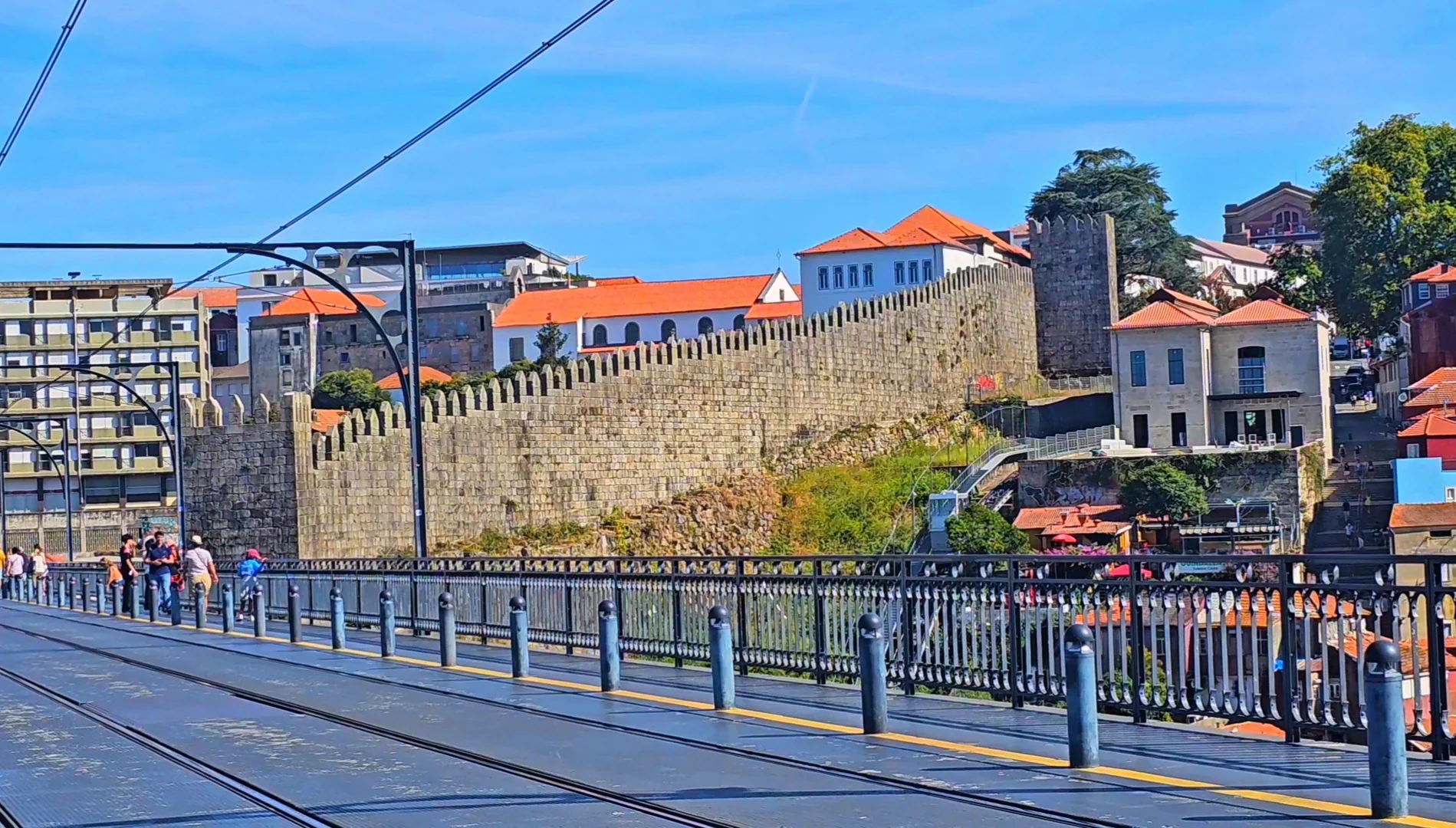
The larger wall was built in the fourteenth century to protect a city that had spread beyond its older enclosure around the cathedral. From the pedestrian area by Luís I Bridge’s upper deck, you can see how it sits on the slope. Stay clear of the metro tracks.
In the early fourteenth century, Porto looked very different from the city you see today. There was no Luís I Bridge and no São Bento station. High above the river, the old centre around the cathedral stood inside a small stone enclosure with four main gates.
But much of daily life had already spilled beyond it. Homes and businesses spread outside the cathedral hill. Down by the Douro, the port drew people and goods. Anyone with a house or warehouse beyond the walls helped the city grow without enjoying the same protection.
In 1336, King Afonso IV ordered a larger circuit of walls to enclose this expanding city. Work continued across several reigns and was completed in 1376, under King Fernando. That is why they are called the Fernandine Walls, even though he did not begin them.
The new enclosure reached the river and covered roughly 44 hectares, compared with about three inside the old one. Defending Porto also meant defending its trade. Part of the construction money came from a tax on wine entering Porto, known as the sisa do vinho.
Next: head to Santa Clara at Largo Primeiro de Dezembro. The two stops are close together.
A reason to pause before heading downhill.
2 · Optional church visit
Santa Clara Church
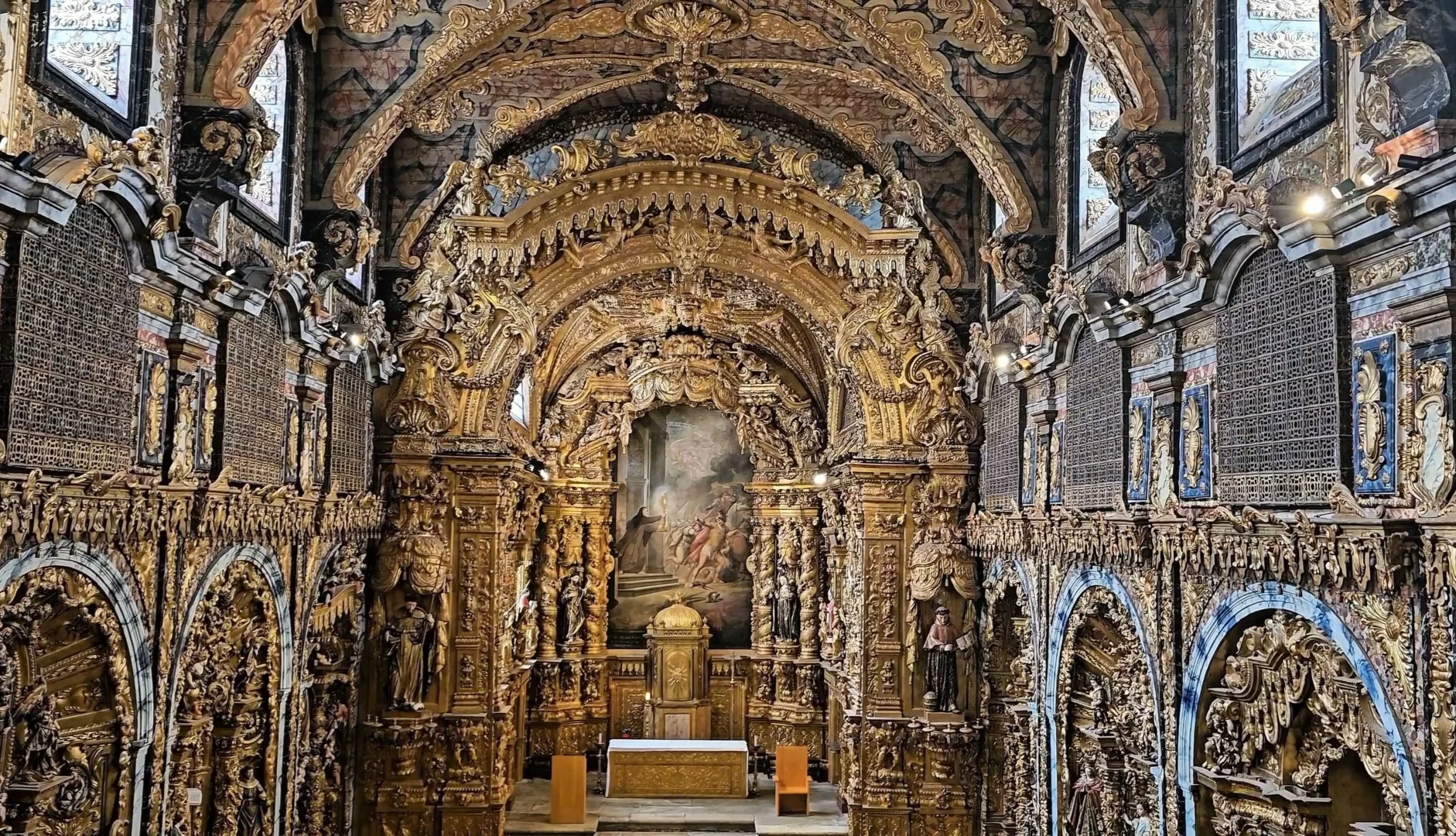
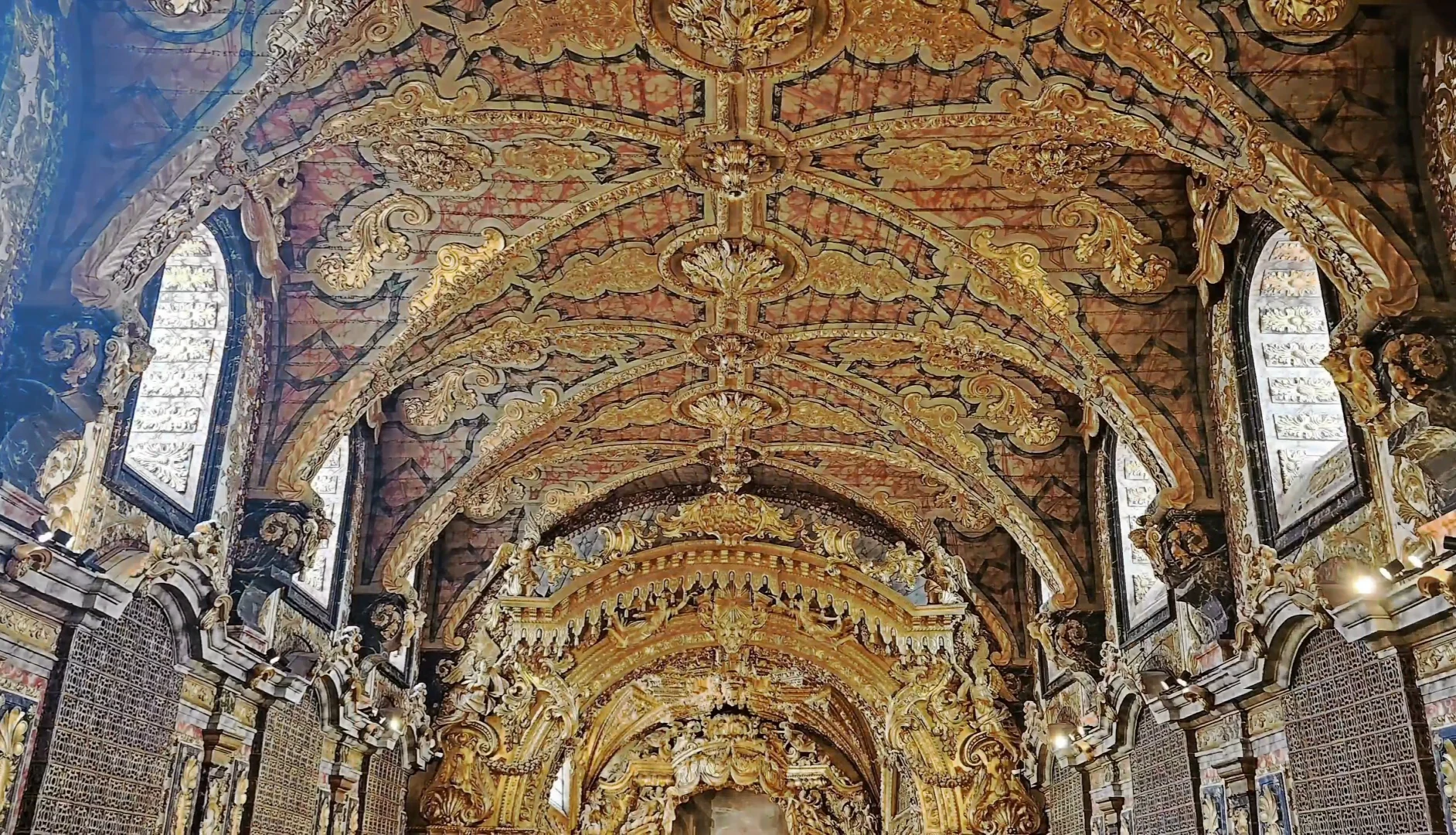
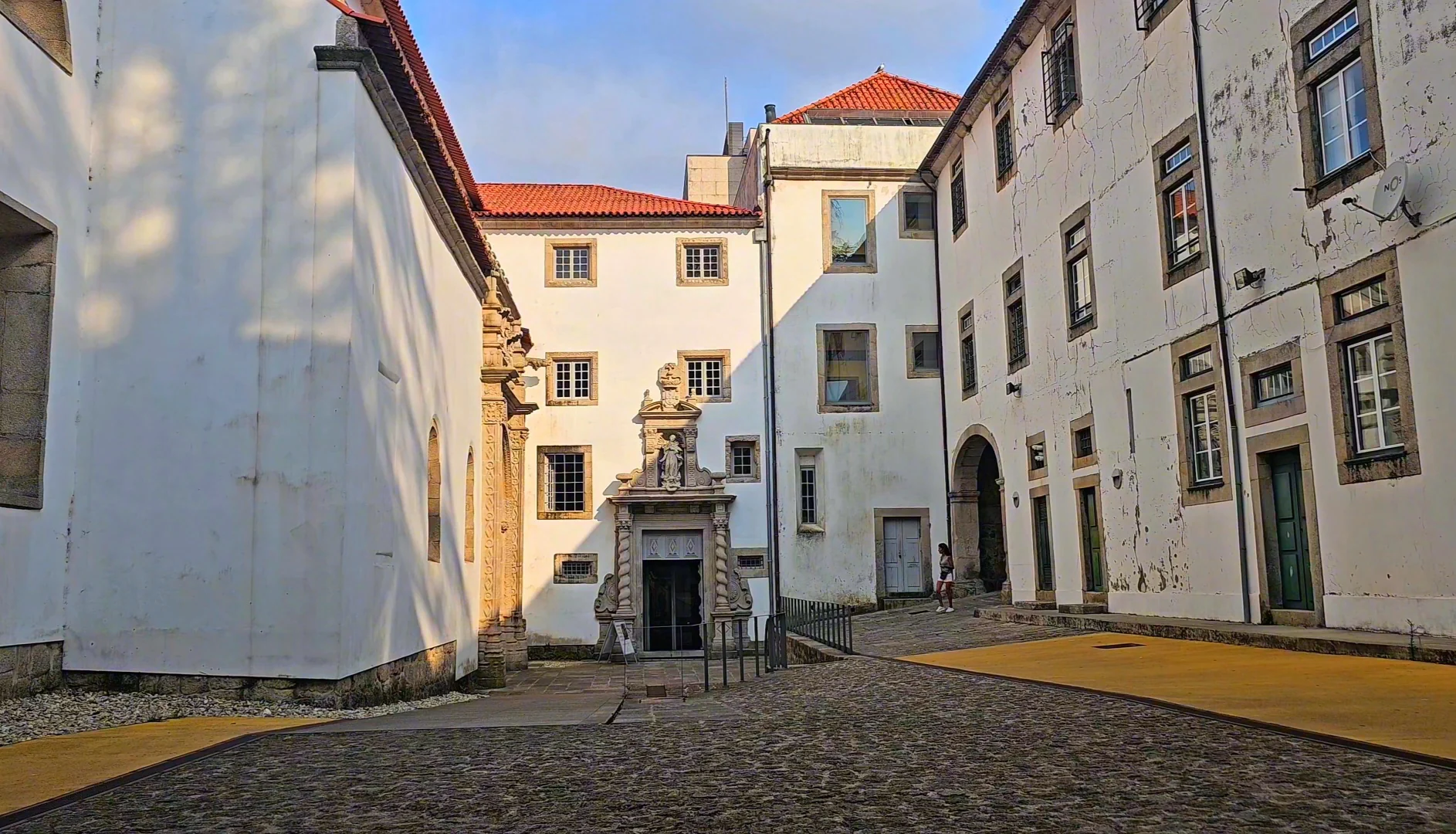
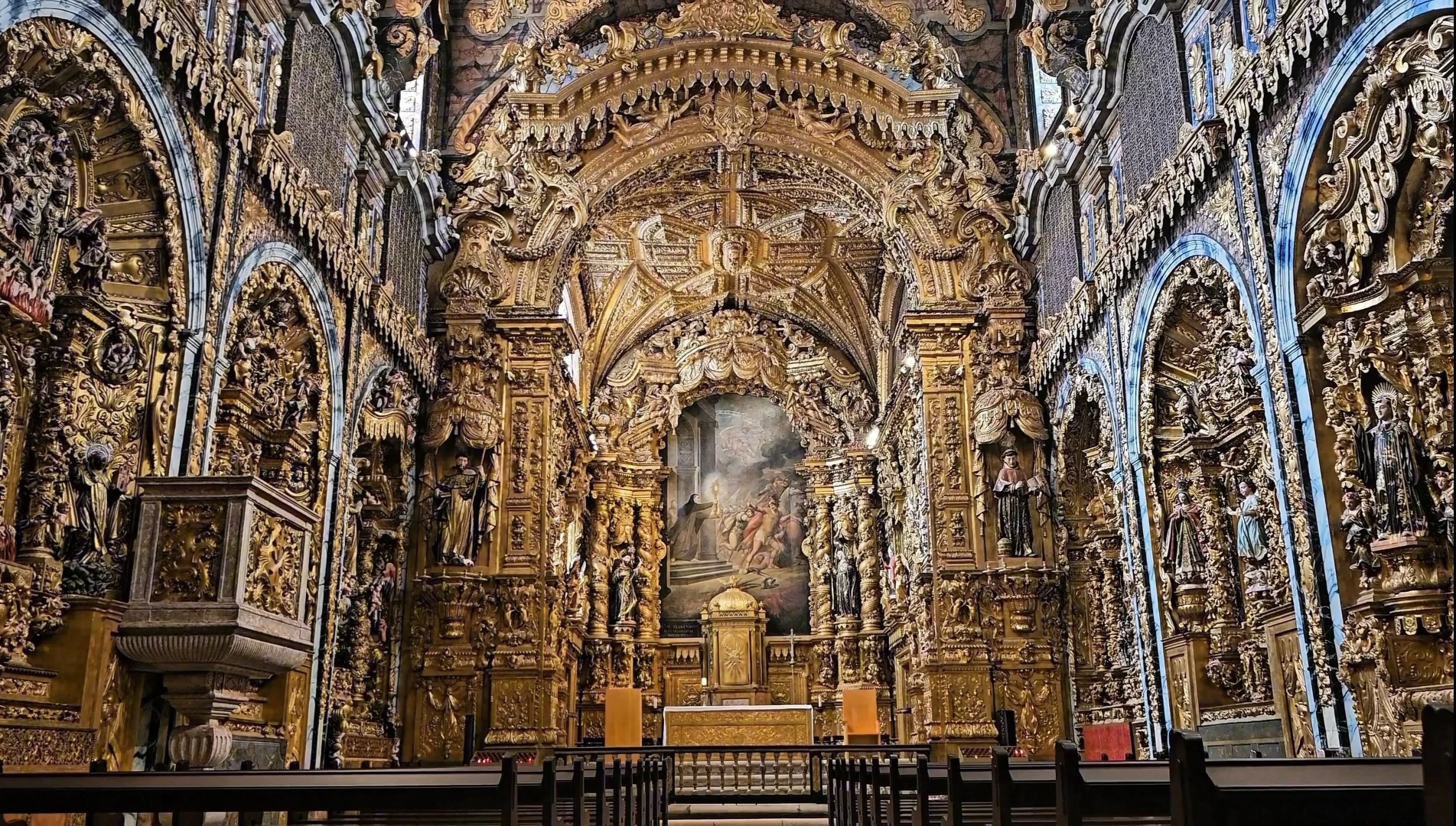
At Largo Primeiro de Dezembro, 155, enter the courtyard and find the church. Inside, gilded woodcarving covers much of the space. Allow roughly 30–45 minutes to appreciate the details.
Going inside is optional. Standard admission is €5. Usual hours are 9am–1pm and 2pm–6pm, with changes for religious services. Check your date before going. You can also continue straight to the descent towards Ribeira.
Santa Clara Church belonged to a convent of Poor Clare nuns, women following the rule of Saint Clare. The community previously lived at Torrão, near Entre-os-Rios, in an isolated place vulnerable to attacks. They wanted a home within a fortified city.
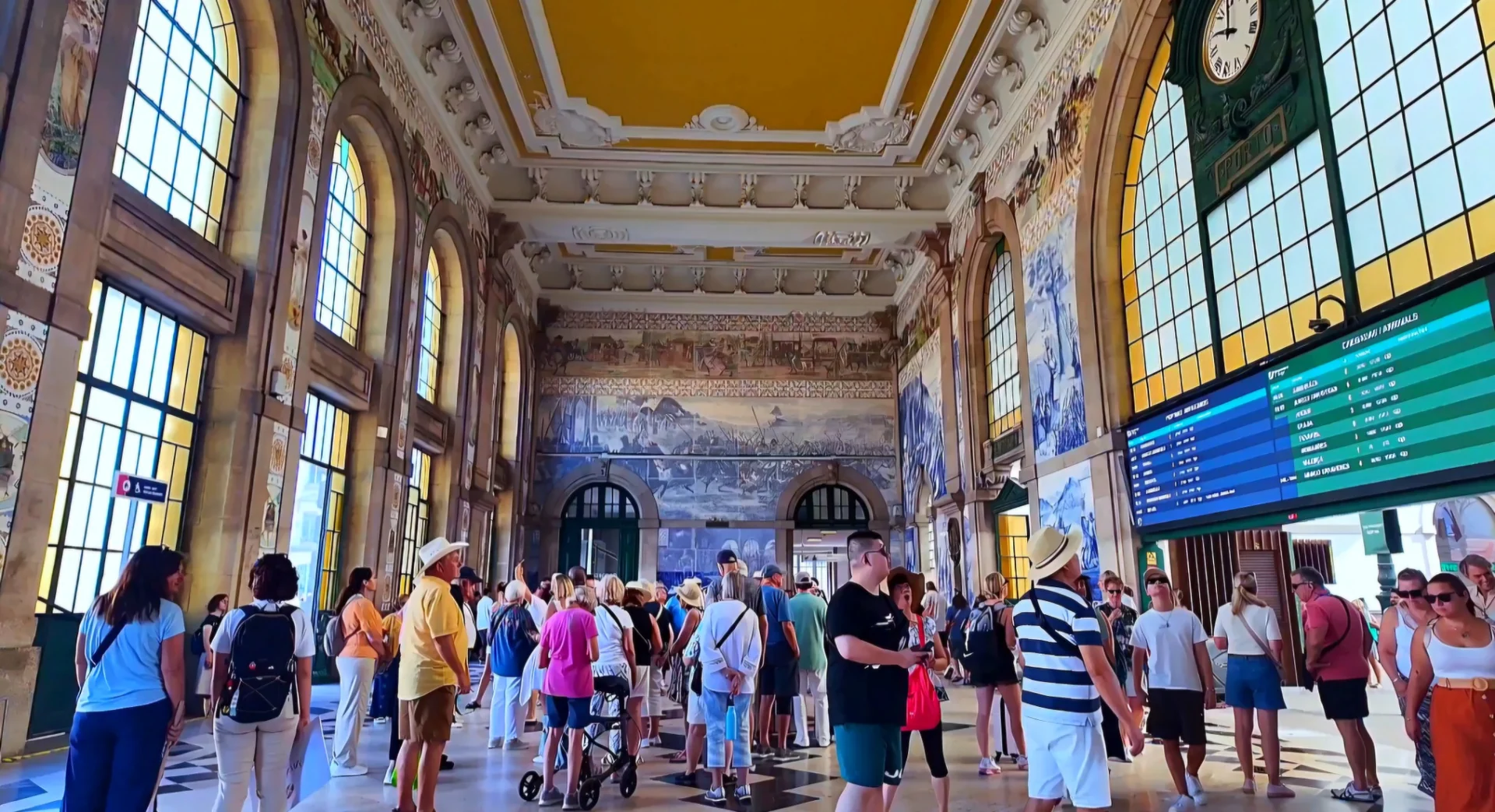
The project had the support of Philippa of Lancaster, the English queen married to João I of Portugal. The couple married in Porto Cathedral in 1387. A tile panel at São Bento station depicts their entry into the city, in a work made centuries after the event.
Papal permission to move came in 1405. Work on the new convent began in 1416, with João I attending the laying of the first stone. The nuns moved in during 1427. The nearby wall was part of the protection they sought.
Santa Clara was a home for enclosed nuns. The community had its own spaces, separate from the church area used by the public.
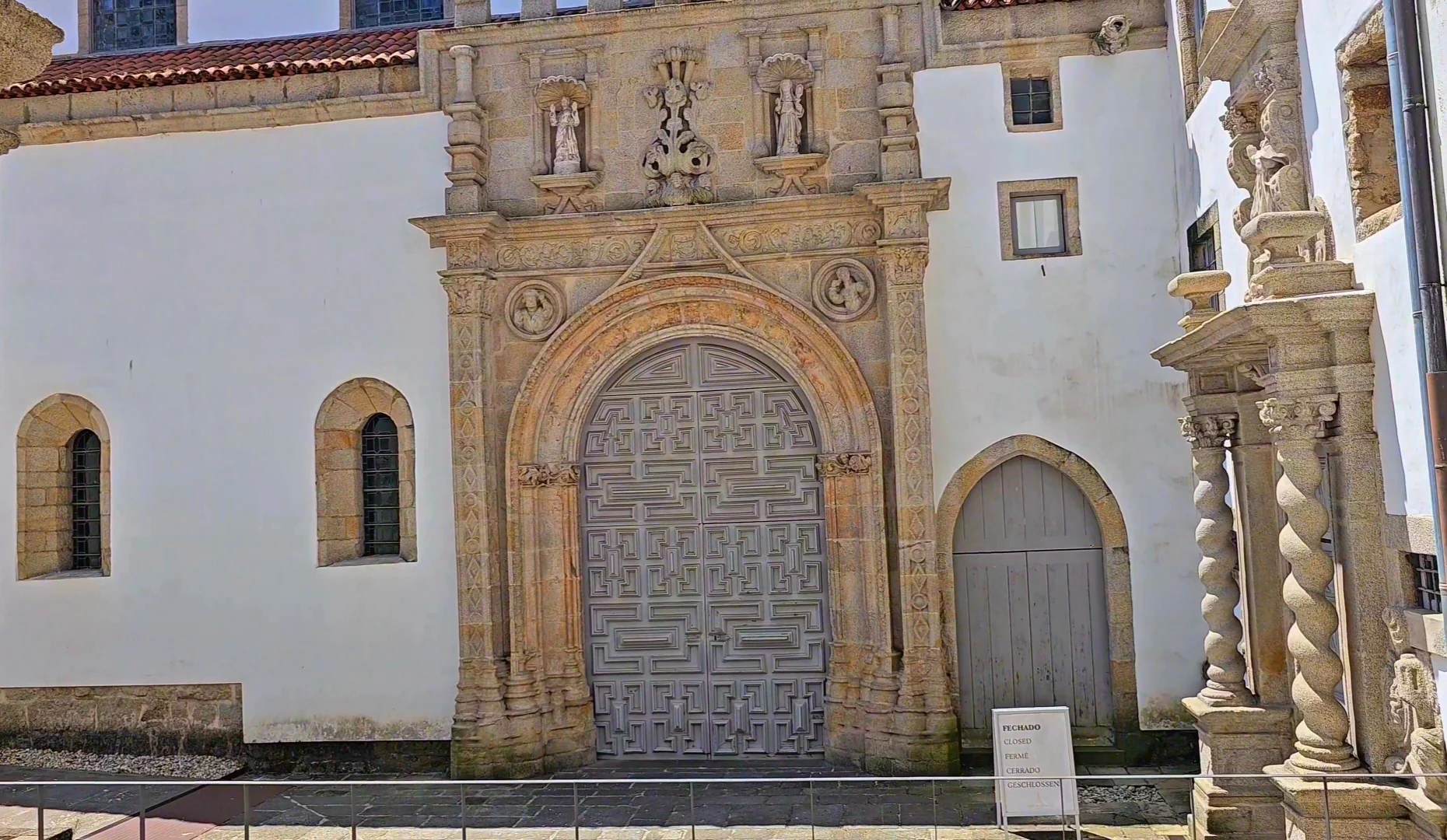
The outside gives little away. Inside, carved and gilded wood covers much of the church. The Baroque decoration that dominates today is far later than the medieval foundation; Miguel Francisco da Silva was one of its principal eighteenth-century craftsmen.
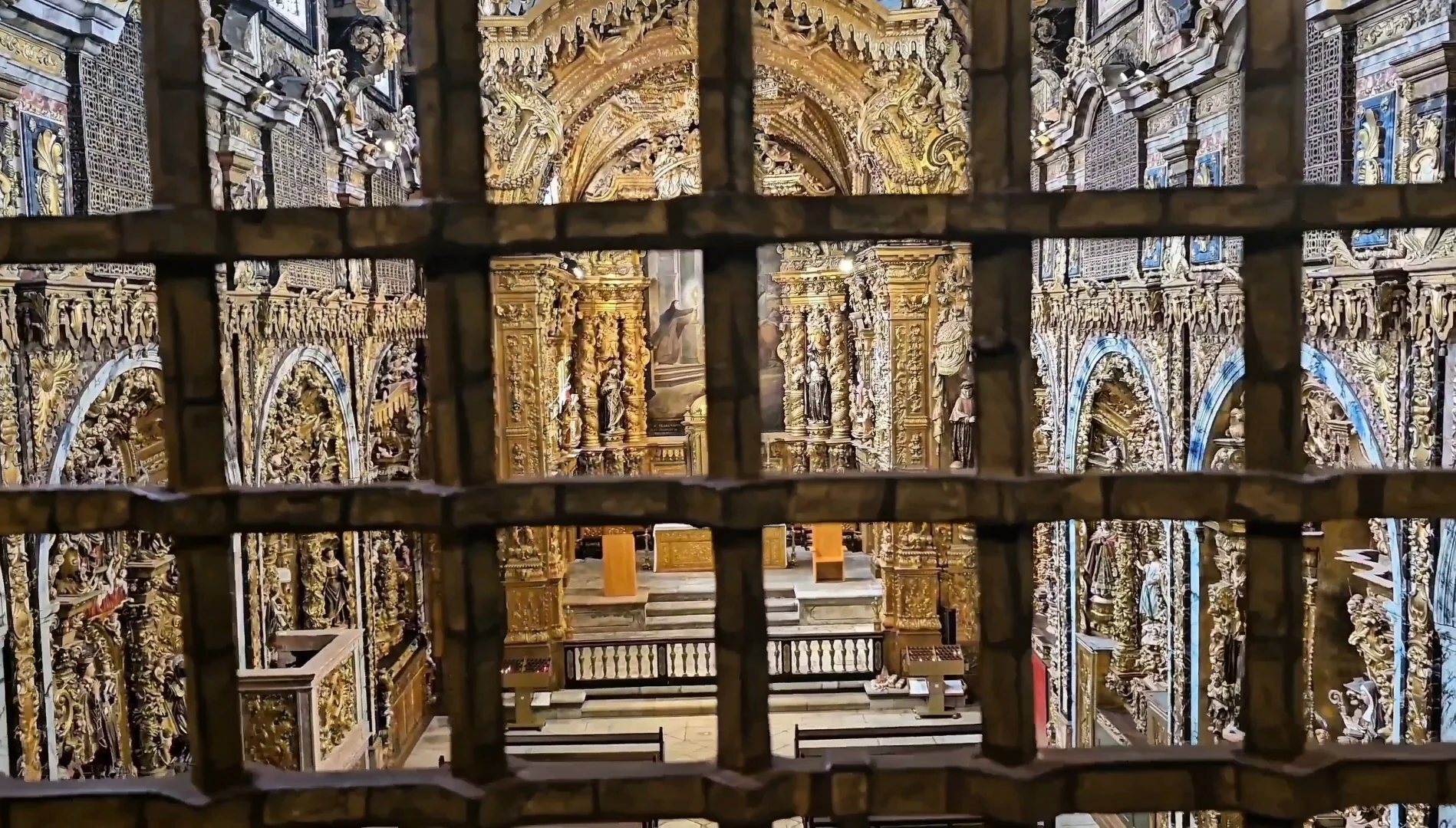
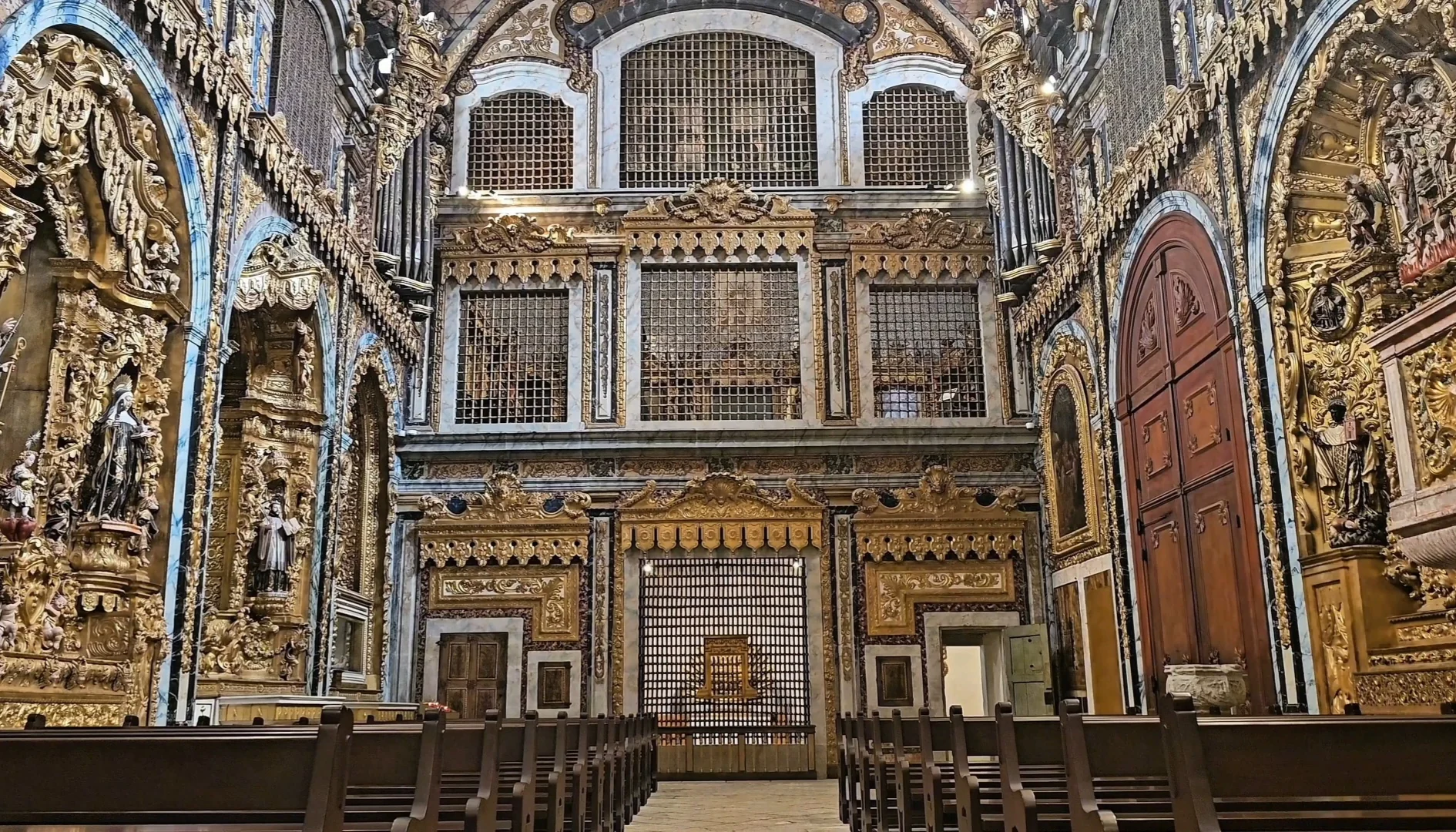
Once the first impression settles, look at the choirs and grilles. The lower choir let the nuns attend services and the daily offices. The upper choir served the abbess, professed nuns and other senior members according to the community’s hierarchy. The spaces reveal something of life within the convent.
The community remained until 1900, when its last nun died. Following the 1834 suppression of religious orders, women in female convents had been permitted to stay until the last religious sister’s death. Behind the interior you visit was a home inhabited for centuries.
The grille makes the separation between the religious community and the church space visible.
Why offer eggs to Saint Clare before a wedding?
This church maintains the tradition of offering eggs to Saint Clare to ask for fine weather on a wedding day, a religious and popular custom still associated with couples preparing to marry.
Santa Clara’s exterior doorwayThe ceiling and gilded woodcarvingThe choirs and grillesThe entrance courtyardThe nave and altar
Next: return to Rua Arnaldo Gama and find the entrance to Escadas dos Guindais.
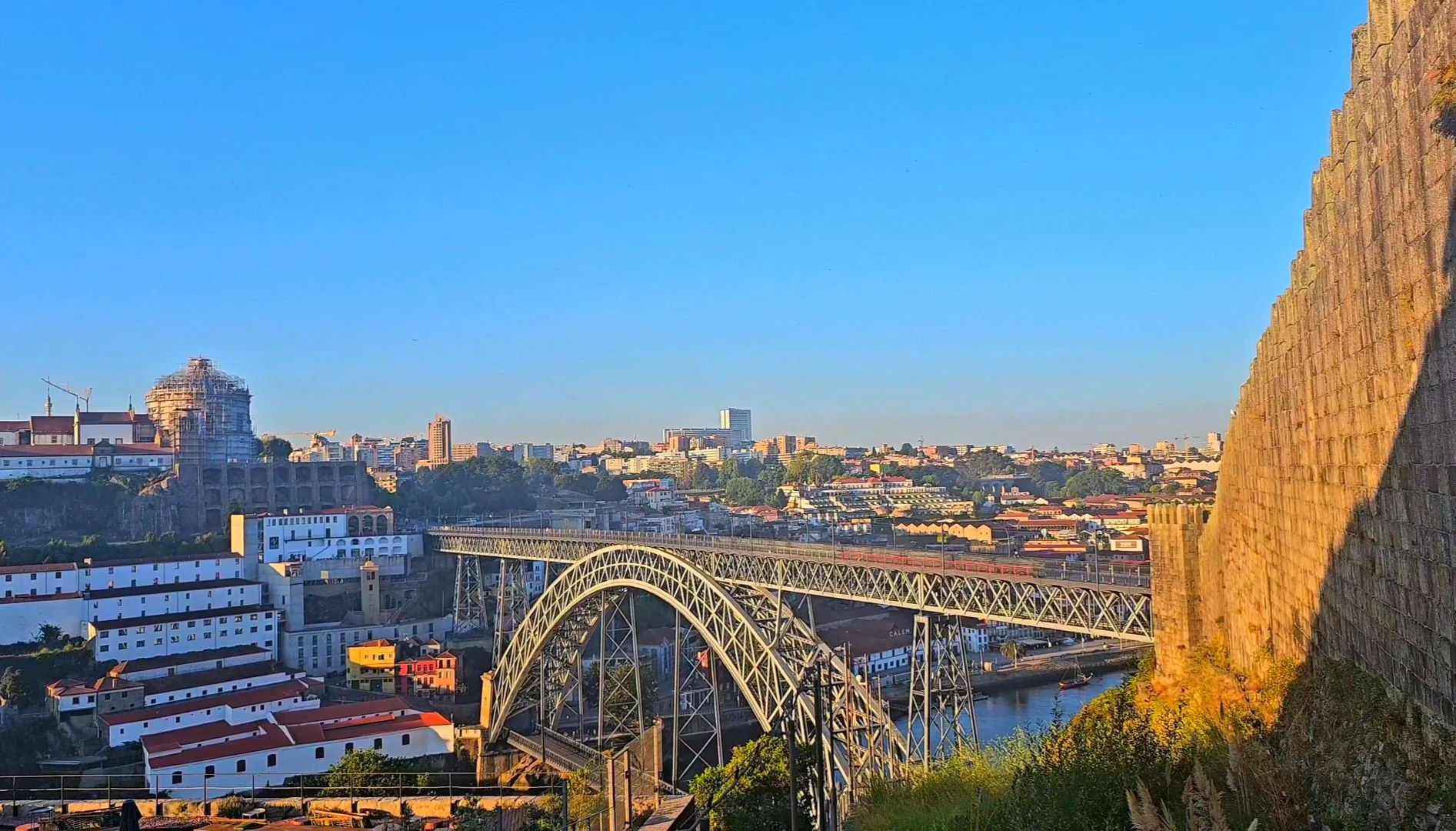
Before the descent: the bridge and Gaia from the upper town.
3 · Expect stairs
Down to Ribeira
Escadas dos Guindais descend towards the lower deck of Luís I Bridge. This is the route’s main staircase. Take your time and wear shoes with reliable grip.
To avoid this staircase, consider Avenida Vímara Peres, Avenida Dom Afonso Henriques and Rua de Mouzinho da Silveira instead. Slopes and cobbles remain. On 26 November 2026, the Guindais funicular was still displaying a maintenance closure notice.
Next: at the river, walk west along the quay, past Praça da Ribeira.
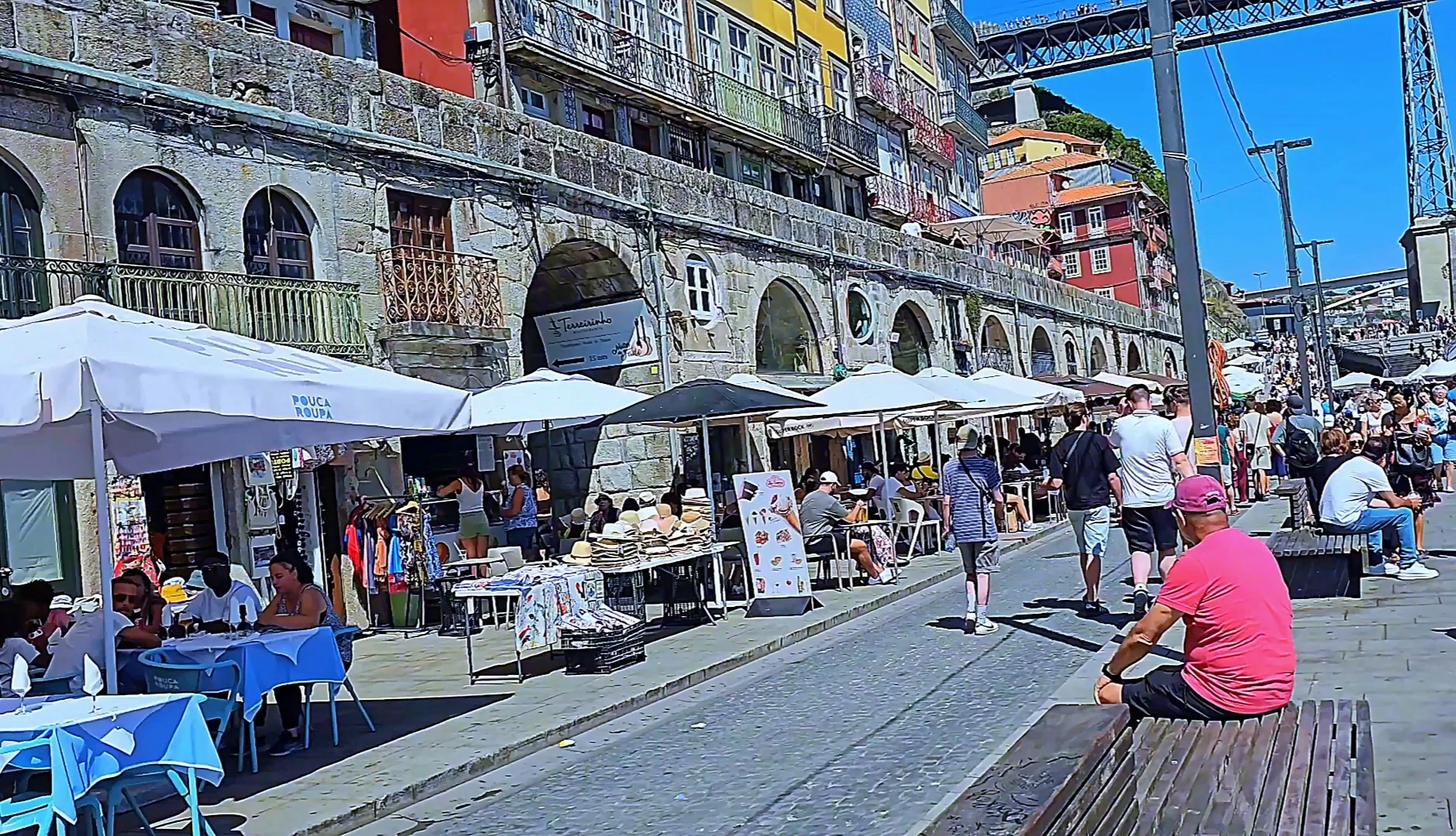
Ribeira, where the walk ends. The gateway sits among the buildings beside the quay.
4 · End of the route
Postigo do Carvão
Beyond Praça da Ribeira, find Postigo do Carvão between Rua da Fonte Taurina and the quay. It is small and easy to miss among the buildings.
A postigo was a smaller opening through a wall. This one connected the city to the river’s landing places. It makes a fitting finish: after the large towers, a modest gateway that gave access to the river.
Pause here, continue along the Douro, or add the Caminho Novo stretch.
Extend the walk: where are the Caminho Novo walls?
From Ribeira, continue west along the Rua Nova da Alfândega area to Escadas do Caminho Novo. Another surviving stretch stands on this western side of the enclosure. The steps climb towards São João Novo. Allow roughly 20–30 extra minutes, longer if you explore, and expect more exertion. This is an optional extension.
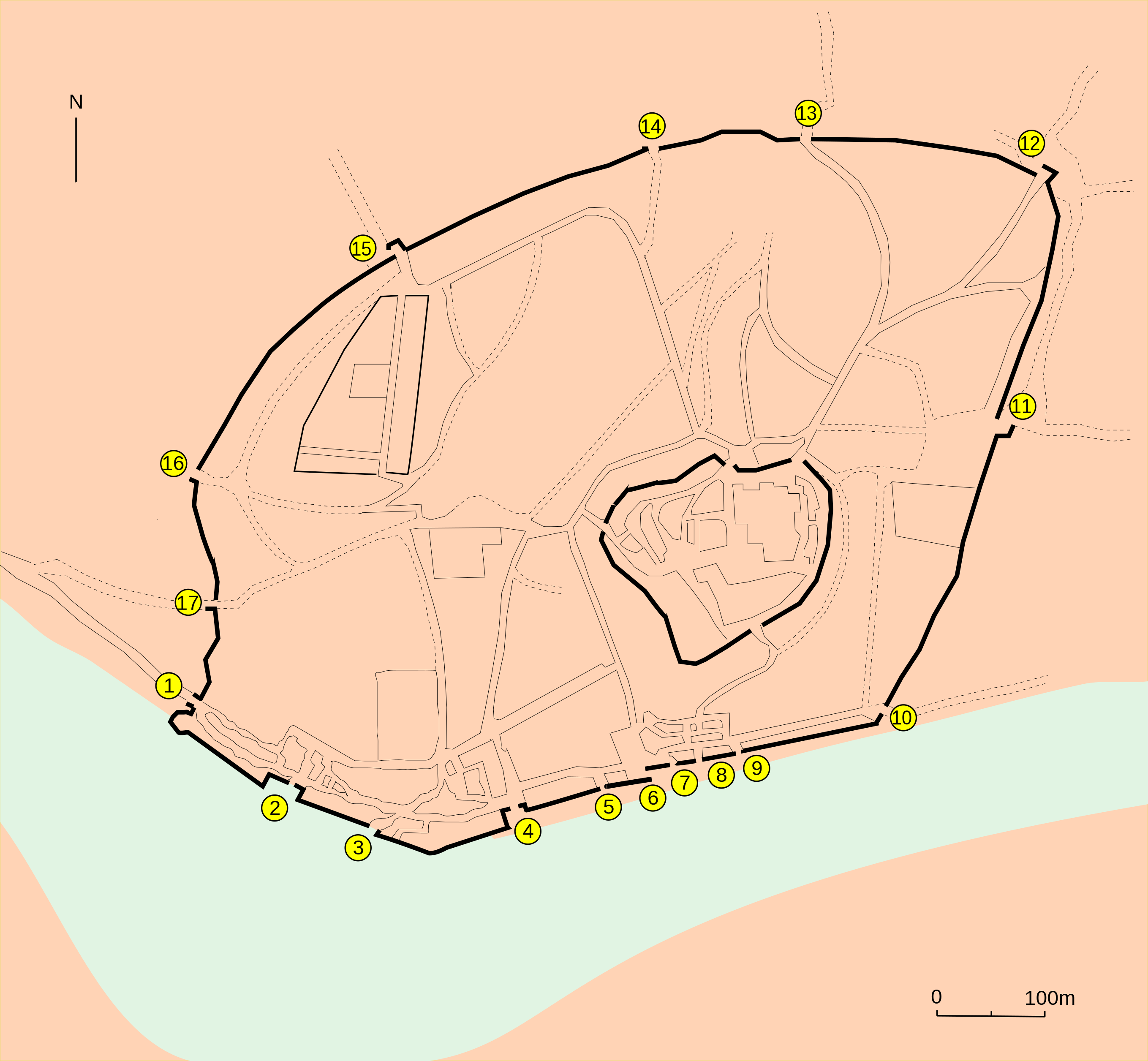
Compare the small cathedral enclosure at the centre with the larger circuit reaching the river. This modern reference plan shows both enclosures and the historic gates and smaller openings. Use the individual map links to navigate today’s streets. The numbers belong to the original plan.
Plan: Manuel de Sousa, Wikimedia Commons, 2007. Reproduced unchanged. Original · CC BY-SA 2.5
Key to the gates and smaller openings
Porta Nova ou Nobre
Postigo dos Banhos
Postigo da Lingueta
Postigo da Alfândega
Postigo do Carvão
Porta da Ribeira
Postigo do Pelourinho
Postigo da Forca
Postigo da Madeira
Postigo da Lada
Porta do Sol
Porta de Cimo de Vila
Porta de Carros
Porta de Santo Elói
Porta do Olival
Porta das Virtudes
Postigo de São João Novo
Names and openings changed over time. This plan brings together historical references; it does not show a present-day route along the wall-top.
The useful details
Before you go.
Information checked on 26 November 2026. Opening times and conditions can change; the links take you to the responsible organisations.
Santa Clara: tickets and opening times
Standard ticket
5 €
Student, senior or Porto.CARD
4 €
Children aged 10 and under
Free
Daily: 9am–1pm and 2pm–6pm. Last admission is 30 minutes before each closing time. On Tuesdays and Saturdays, visits finish at 5pm because of 6pm Mass.
Visits are not permitted during Mass or other religious celebrations. Occasional schedule changes apply: check your chosen date on the official website. Student and senior discounts require proof of eligibility.
Address: Largo Primeiro de Dezembro, 155. Allow roughly 30–45 minutes to appreciate the interior; this is a planning suggestion.
Do the walls cost anything to see? Can you climb them?
You can view the surviving stretches from surrounding streets and public spaces without buying a church ticket. Seeing the walls from outside and walking along their battlements are different experiences.
This guide does not assume regular access to the wall-top, towers or gated gardens. If an entrance is closed, continue along public streets. Santa Clara has separate admission and opening hours.
How do I get there and back? Is the funicular running?
Starting in the upper town: São Bento metro station, on line D, lets you walk uphill towards the cathedral and Santa Clara. Expect a climb. If you cross from Gaia on Luís I Bridge’s upper deck, Avenida Vímara Peres brings you close to the start.
Guindais funicular: on 26 November 2026, the operator was still displaying a maintenance closure notice. Plan without relying on it and check the latest status before travelling.
Returning: from Ribeira, expect an uphill walk towards São Bento, or choose suitable road transport for your destination and needs.
How many steps are there? What about limited mobility?
The full route includes uneven paving, slopes and stairs. The Guindais and Caminho Novo staircases are unsuitable for wheelchair users or anyone unable to use steps.
To reduce exertion, split the visit: explore the upper Santa Clara and Avenida Vímara Peres area separately from Ribeira, using transport between them. Avoiding one staircase does not remove the historic centre’s slopes.
If you require step-free access inside Santa Clara, confirm arrangements with the church team in advance. Wear shoes with reliable grip; stone paving can be slippery in rain.
When to go, photography and rainy-day options
For photographs: late-afternoon light can bring out the granite’s texture and the views towards Gaia. Its direction changes with the season; balance your preferred light with the church’s closing time.
In rain: Santa Clara and São Bento’s tile hall let you focus on interiors, subject to their access arrangements. Save the staircases for conditions you feel comfortable with.
With children: towers, battlements and the search for a small river gateway give the walk an easy goal. Keep the more violent stories for adult reading and adapt the distance to your family.
How does this fit into a day in the centre?
With just a morning or afternoon, combine the cathedral, Santa Clara and the descent to Ribeira. São Bento fits well before the climb. Olival and Vitória make more sense while exploring the Clérigos area; save Leça do Balio for a separate outing.
Does Santa Clara offer musical visits?
The church also advertises musical visits, combining an introduction to the convent’s musical heritage with a short performance of eighteenth- and nineteenth-century music using a historic organ. It offers another way to experience the building. Check programme dates and arrangements before choosing a visit.
Check current menus, prices, terrace seating and booking arrangements directly with the restaurants. For a shorter stop, a coffee or tea around Ribeira works just as well.
Optional reading
For those who want the stories, too.
The walking route is above. Here are stories about the king whose name the walls bear and the city’s earlier past. Each has its own context, so you can open whichever interests you.
Fernando and Leonor Teles: why was their marriage controversial?
In the fourteenth century, Fernando, the king of Portugal whose name these walls bear, chose to marry Leonor Teles. There was a problem: she was already married to João Lourenço da Cunha and had a son. Leonor belonged to the nobility, but making her queen would take more than the king’s desire.
Fernando had a commitment of his own: he had promised to marry a princess of Castile, the powerful neighbouring kingdom covering much of present-day Spain. The promise formed part of a peace agreement. Breaking a royal marriage arrangement could unsettle alliances and relations between kingdoms.
Fernando arranged the annulment of Leonor’s marriage and married her himself. In 1372, their union was publicly celebrated at Leça do Balio Monastery, near Porto, in what is now the municipality of Matosinhos.
Sections of the nobility and the population opposed the match. The king could recognise a queen; he could not make everyone accept her. One of the most provocative refusals would come from his own family.
The refused kiss
Prince Dinis refused to kiss the new queen’s hand. Dinis was Fernando’s half-brother: they shared a father, Pedro, but Dinis’ mother was Inês de Castro, the noblewoman murdered before Pedro became king. The Portuguese title infante means a king’s child who is not the reigning monarch.
The scene comes from Fernão Lopes, a chronicler writing decades later. Kissing Leonor’s hand meant publicly acknowledging her. Refusing challenged the king’s choice in front of his court.
According to Lopes, Fernando tried to strike Dinis with a dagger. Two men involved in the princes’ upbringing intervened and stopped him. In the chronicler’s account, a missing gesture of homage almost ended in bloodshed within the royal family.
What power did Leonor Teles, Fernando’s wife, hold?
Leonor Teles was Portugal’s queen through her marriage to Fernando in the fourteenth century. Alongside her title, she held lands, income and powers of her own.
Leonor’s position was about more than access to her husband. She received lands, income and authority over places including Sintra, Óbidos and Alenquer.
Historian Isabel de Pina Baleiras documents an especially powerful right: within her domains, Leonor could exercise supreme justice, including the death penalty. Behind the stories about her marriage stood a woman with substantial means to govern.
Maria Teles, the queen’s sister: what happened in her marriage?
Maria Teles was the sister of Leonor Teles, Portugal’s queen through her marriage to King Fernando in the fourteenth century. Maria married a half-brother of the king: Prince João, also a son of Pedro and Inês de Castro. Her husband would murder her in Coimbra.
The best-known explanation again comes from Fernão Lopes. In his narrative, Leonor feared the couple’s position and raised the possibility of João marrying Beatriz, the king’s daughter and heir. That prospect brought him closer to the throne. Lopes’ account also involves suspicions cast on Maria’s fidelity.
The husband’s murder of Maria is documented. Leonor’s part in the alleged plot is not established with the same certainty. Modern research examines that distinction. The accusation belongs to the story that survives; it does not make the queen’s responsibility a proven fact.
What happened to Portugal after King Fernando died?
In 1383, Fernando, king of Portugal, died. Beatriz, his daughter with Queen Leonor Teles and their heir, was married to Juan I, king of Castile, the neighbouring kingdom covering much of present-day Spain. Leonor became regent, governing under the succession arrangements.
For a country with its own crown, the heiress’ marriage to the neighbouring king raised an enormous question: who would rule Portugal? The marriage treaty included conditions intended to keep the kingdoms separate. They did not prevent division. Some Portuguese supported Beatriz; others opposed the regency and the succession settlement.
Beside Leonor stood Count Andeiro, an influential nobleman and diplomat from Galicia, in the north-west of present-day Spain. The queen’s opponents accused him of being her lover. Their political closeness is documented; the alleged affair must still be identified as an accusation in the sources.
In Lisbon, Andeiro was killed by the Master of Avis, another of Fernando’s half-brothers, also named João. He headed a religious military order, which explains the title “Master”. He was a different João from the prince who murdered Maria Teles, Leonor’s sister.
The killing formed part of a political coup. The Master became the leading figure resisting the Castilian claim. In 1385, an assembly of clergy, nobles and representatives of towns and cities, the Cortes, chose him as Portugal’s king in Coimbra. Victory over the Castilian king’s army at Aljubarrota that year strengthened his position. The Avis dynasty had begun.
Leonor had already lost the regency. In 1384, she surrendered it to her son-in-law, the king of Castile, who later forced her to leave Portugal. The marriage that had brought her into the centre of power ended with the queen removed from both government and country.
Several episodes about Fernando and Leonor Teles, Portugal’s fourteenth-century king and queen, come from Fernão Lopes’ chronicles. Understanding who wrote them helps us read them carefully.
Fernão Lopes wrote in the fifteenth century, serving the Avis dynasty that came to power through the Master’s victory over his rivals. He also oversaw the royal archive and worked with documents. His chronicles are essential sources for this period.
Their importance makes it worth asking how they were written. Researchers examine how the portrayals of Leonor, Maria and the rival claimants helped legitimise the new dynasty.
On this page, episodes that depend on Lopes’ narrative keep that attribution. Leonor’s marriage, her authority and the succession are remarkable enough without adding an invented conspiracy.
Before there was a Portugal. People lived on the cathedral hill in the Iron Age, centuries before the Portuguese kingdom existed. Archaeologists found traces of a hillfort, a fortified settlement of a kind familiar across north-western Iberia. Excavations on Rua de D. Hugo uncovered successive layers beneath the modern city.
Roman Porto. Under Roman rule, the settlement changed and occupation spread down towards the Douro. Casa do Infante, near the waterfront, preserves Roman remains, including mosaics. The monumental Porto you know had not yet taken shape: the city was developing between the hilltop and its port.
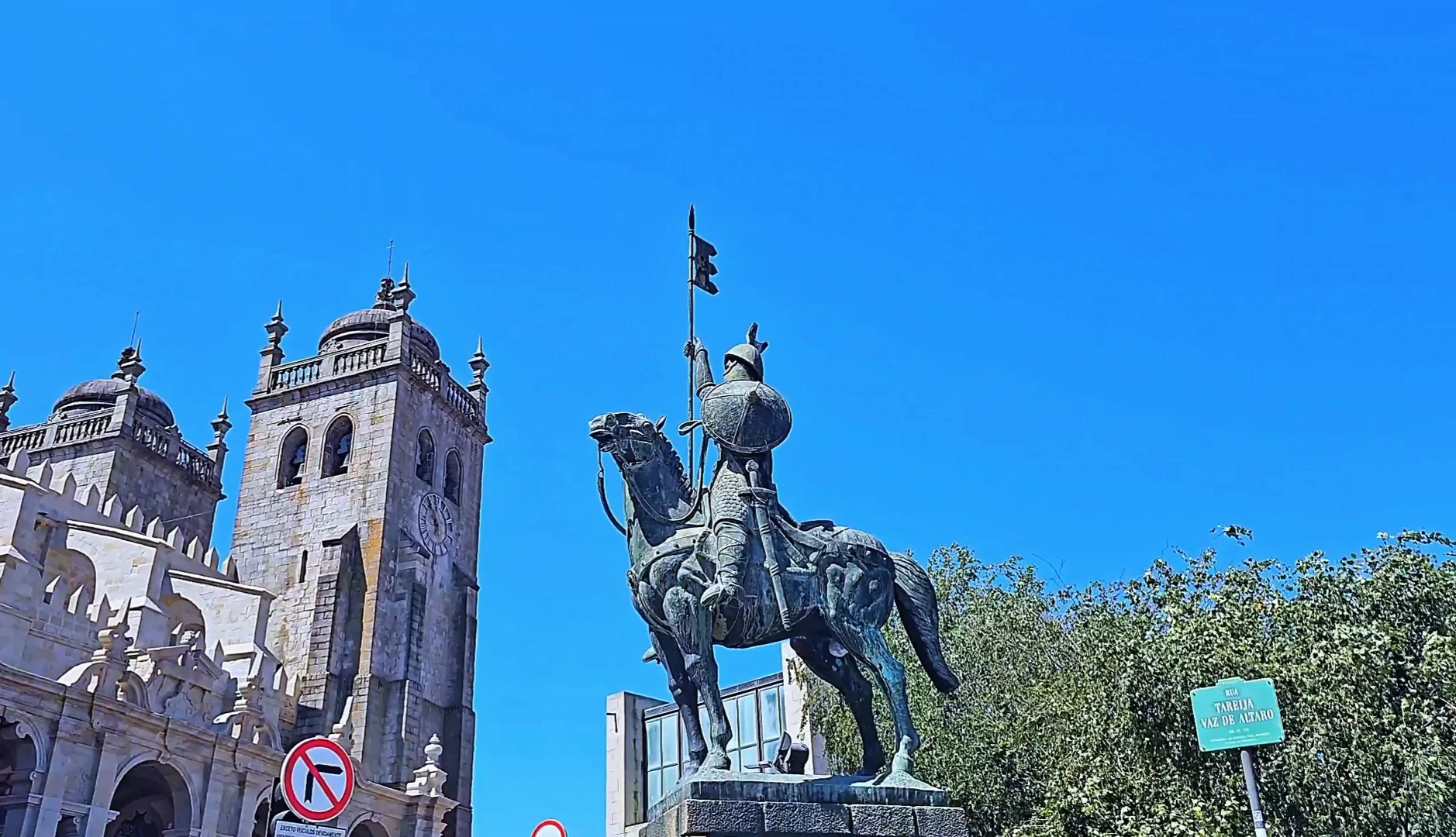
Changing kingdoms and frontiers. After the Roman Empire, the region experienced Suevic and Visigothic kingdoms and the changes brought by Islamic expansion into Iberia from the eighth century. In 868, Vímara Peres took Portucale as part of the Christian kingdom of Asturias’ expansion. The statue beside the cathedral commemorates him. He was not the founder of an independent Portugal, which emerged centuries later.
The bishop was also the city’s lord. In 1120, Teresa, mother of Afonso Henriques, Portugal’s future first king, granted the town to Bishop Hugo. A charter of 1123 set out the inhabitants’ rights and obligations. Religious authority had very practical consequences for urban life.
More than one set of walls. The medieval enclosure around the cathedral is generally described as Romanesque. Earlier defences had several phases; simply calling them “Suevic walls” turns an old attribution into a certainty that archaeology does not support. The older enclosure and the later Fernandine circuit belong to different stages of Porto’s growth.
Portucale would eventually give Portugal its name. By the time Fernando became king, the place that had named the country already had a history far longer than the walls that now bear his name.
Vímara Peres, commemorated beside the cathedral. People lived on this hill long before 868.
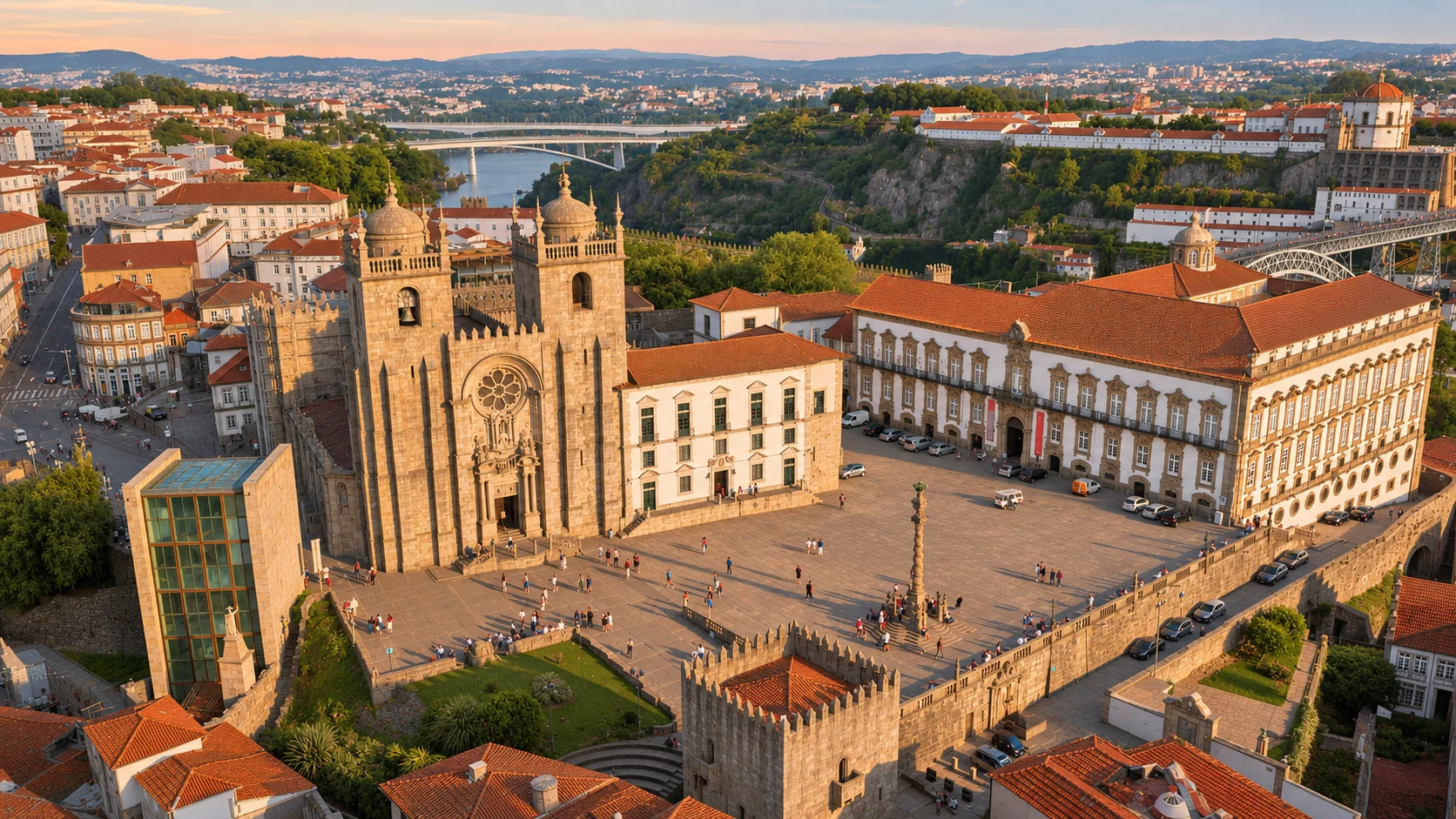
The cathedral and its square help you picture Porto’s old core. Photograph edited for sunset colour and lighting.
Other places connected with these stories
The former Olival Gate: how was it linked to the Jewish community?
Around Campo dos Mártires da Pátria, near the entrance to Rua de São Bento da Vitória, look for the setting of the former Olival Gate. The structure has gone; the name helps reconstruct one of the city’s entrances.
In 1386, João I ordered Porto’s Jewish population to concentrate in the Olival quarter, inside the walls. A judiaria was a district assigned to the Jewish community. The measure restricted where its inhabitants could live: being within the same city did not mean living under the same conditions.
Rua de São Miguel preserves the community’s memory. At numbers 9–11, protected remains of a Jewish place of worship were identified, including the hekhal, the space for sacred scrolls. Heritage designation does not guarantee admission to the building. Explore the streets and confirm any interior visit in advance.
Cimo de Vila Gate: which religious image survives in the cathedral?
Cimo de Vila Gate stood in the Batalha area and was associated with an image of Our Lady of Batalha. When the gate and, later, its places of worship disappeared, the sculpture took another route through the city.
University of Porto research identifies it in the cathedral’s Chapel of Saint John the Evangelist, beside the cloister. It is a piece of the city that outlasted its architectural setting. Ask locally about its current display and access if you want to seek it out.
Why were many gates and stretches of wall demolished?
During the eighteenth and nineteenth centuries, streets were opened, squares reshaped and gates and walls demolished as their defensive purpose diminished. The Porto you walk through was also made by those choices.
The surviving sections have their own history of change. Guindais underwent a major restoration campaign between 1959 and 1962. This is not an untouched medieval scene: it combines what survived with later preservation work.
Where is Leça do Balio, the monastery of Fernando and Leonor’s wedding?
Leça do Balio Monastery is in Matosinhos, outside this central Porto walking route. In 1372, Fernando, king of Portugal, publicly celebrated his marriage to Leonor Teles here. Save it for a separate outing and check transport and admission arrangements in advance.
This guide draws on heritage inventories, responsible organisations and historical research. Scenes from Fernão Lopes are attributed to him; allegations against Leonor are not presented as proven crimes.
Photographs from Renata’s / GoldenPorto’s archive. The cathedral image has edited colour and lighting, as noted in its caption. Manuel de Sousa’s plan retains its own licence.
Text, photographs and walking route: Renata / GoldenPorto. Reviewed: 26 November 2026.