Location and admission
The main entrance is on Praça de Almeida Garrett, near Avenida dos Aliados. The tiled hall is free to enter; allow around 15 to 30 minutes for a visit.
See the azulejos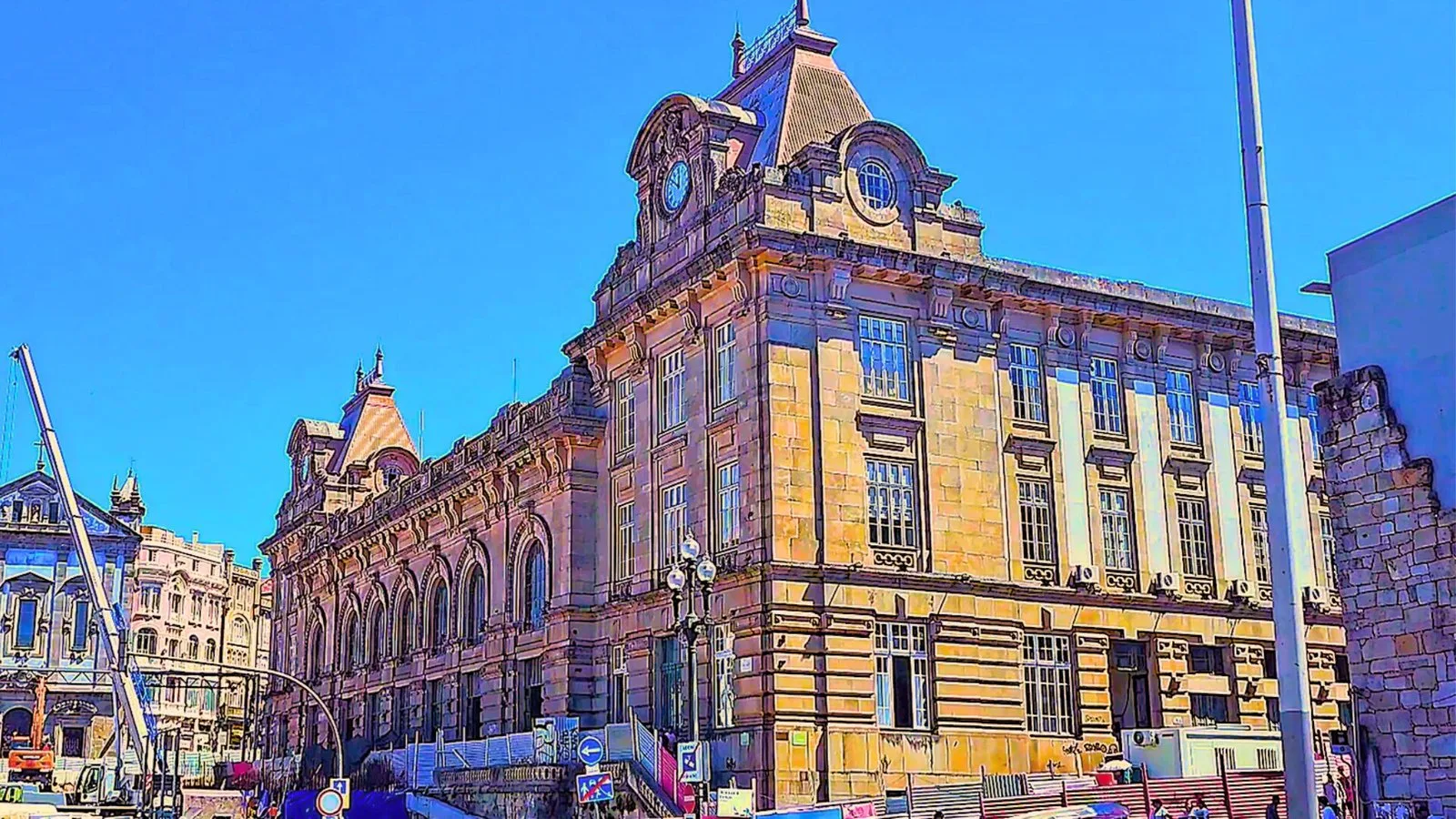
Porto landmark guide
Over 20,000 azulejo tiles, scenes from Portuguese history and a working railway station in the heart of Porto.
Some people come to São Bento to catch a train; others come for the stories painted across its walls. Take a little time to explore both sides of the station.
Before you go
The main entrance is on Praça de Almeida Garrett, near Avenida dos Aliados. The tiled hall is free to enter; allow around 15 to 30 minutes for a visit.
See the azulejosStart with the colourful frieze near the ceiling, which follows the history of transport. Then look down at the large blue-and-white scenes from Portugal’s past.
See nearby sightsCommuters cross the hall on their way to the platforms, while visitors stop to work out what the tile panels depict. São Bento is unusual: a busy railway station that also serves as a public gallery of Portuguese history.
Trains reached this area in 1896, but the monumental station building opened in 1916. It is within easy walking distance of Aliados and Rua das Flores, with Porto Cathedral and Ribeira nearby.
Quick facts
Four details worth knowing before you enter the tiled hall.
You do not need a ticket to see the tile panels in the main hall. A ticket is required if you intend to travel by train.
The present station was built on the site of the São Bento de Ave-Maria convent. Trains had already reached this area in 1896.
Porto architect José Marques da Silva designed the monumental building, drawing on French architectural influences.
Jorge Colaço painted the panels between 1905 and 1908, depicting historical events, northern Portuguese customs and the evolution of transport.
Explore on video
Discover our filmed walks around Porto and Gaia, including routes through the historic centre, landmarks and streets you can explore on foot from São Bento.
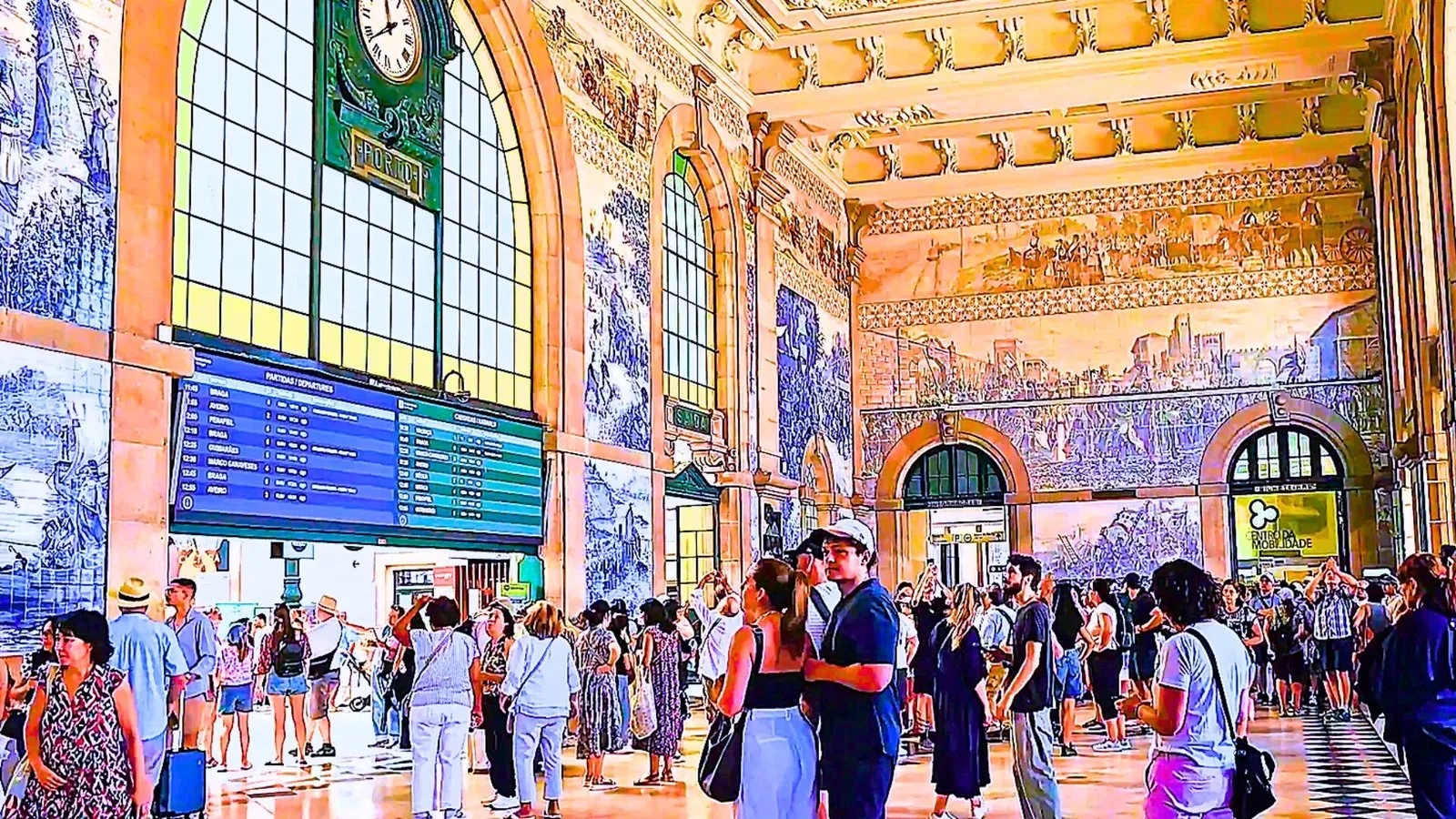
What the panels depict
Among the large blue-and-white scenes, look for King João I entering Porto with Philippa of Lancaster, his English bride-to-be. Their wedding took place at Porto Cathedral in 1387. Another panel depicts the Portuguese conquest of Ceuta in 1415.
Two scenes refer to the origins of the Portuguese kingdom: the tournament of Arcos de Valdevez and the legend of Egas Moniz, a nobleman who presented himself and his family to the King of León to honour a promise. Other panels show fairs, farming and customs of northern Portugal.
Near the ceiling, the multicoloured frieze follows the development of transport, up to the arrival of the railway. It brings several centuries of stories together in a single station hall.
The artist
Jorge Colaço (1868–1942) was a Portuguese painter known for large narrative tile panels. Rather than limiting tiles to decorative patterns, he used them to tell stories through historical figures, landscapes and everyday life.
He painted São Bento’s tile panels between 1905 and 1908. They became part of the station building, designed by architect José Marques da Silva and inaugurated in 1916.
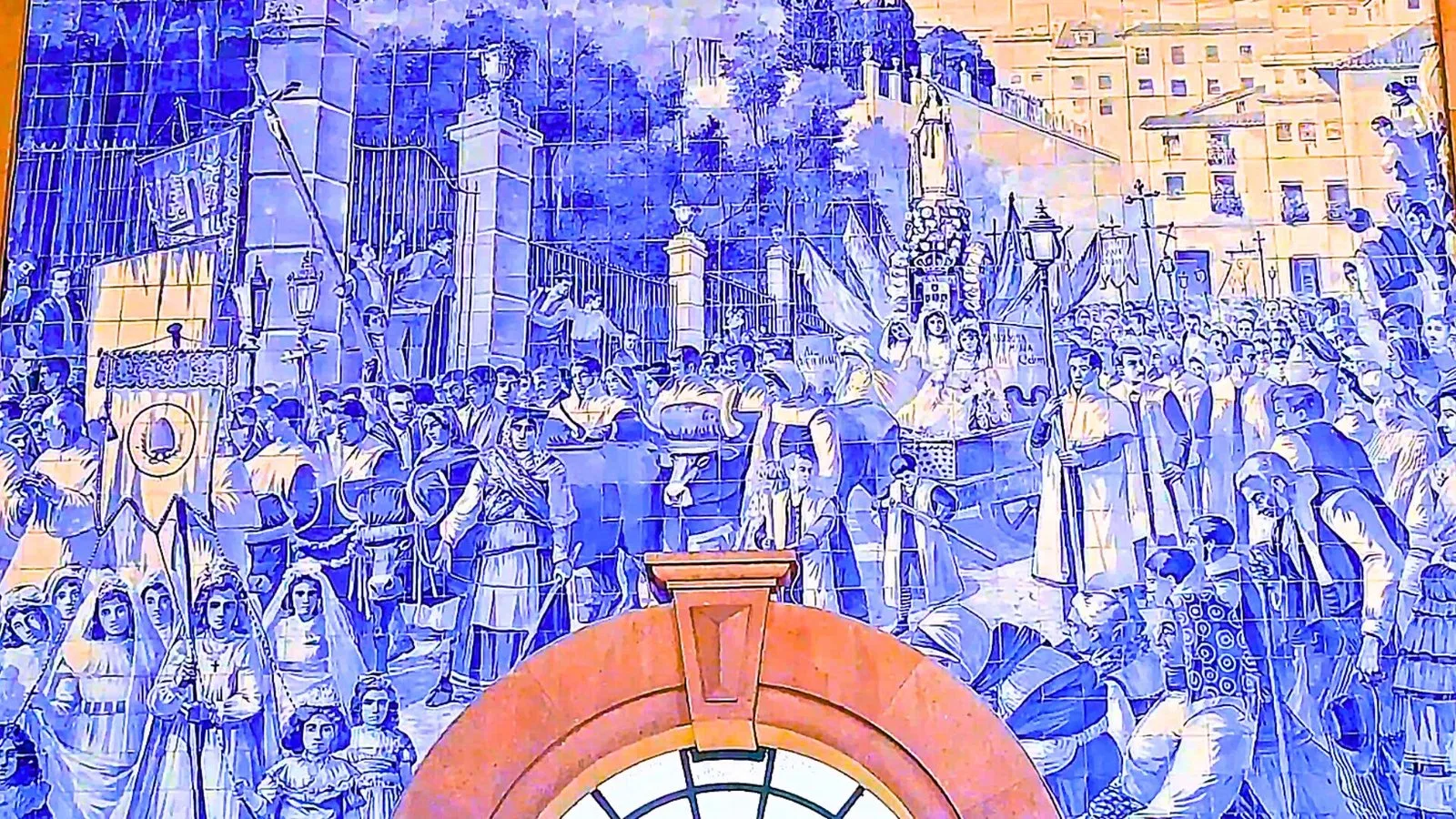
Look at the gestures, clothing and animals in the rural scenes. They reveal the everyday northern Portuguese life Colaço chose to depict.
Visual gallery
Browse photographs of the façade, clock, tile murals, stained glass and station platforms.
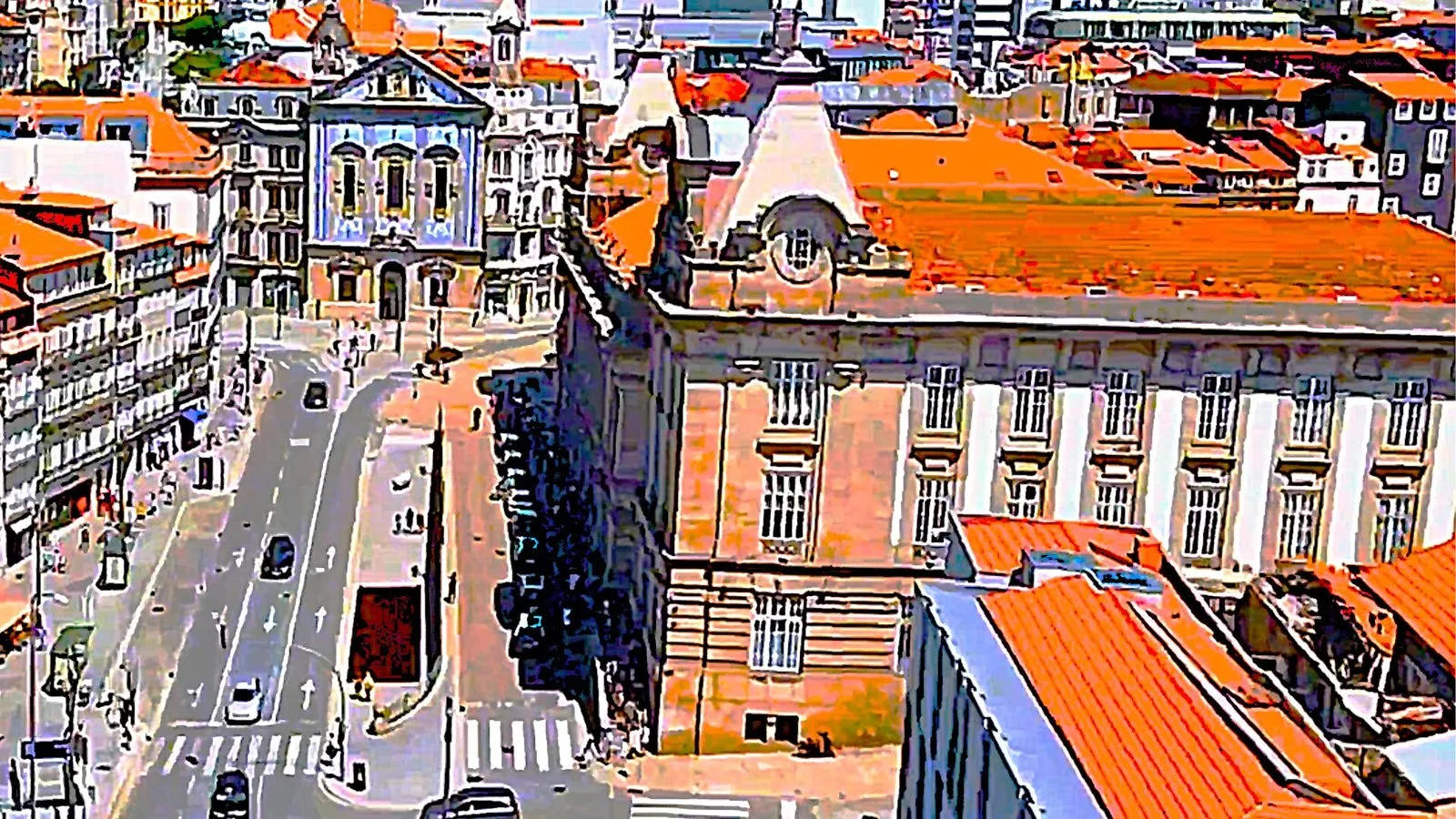 Station façade
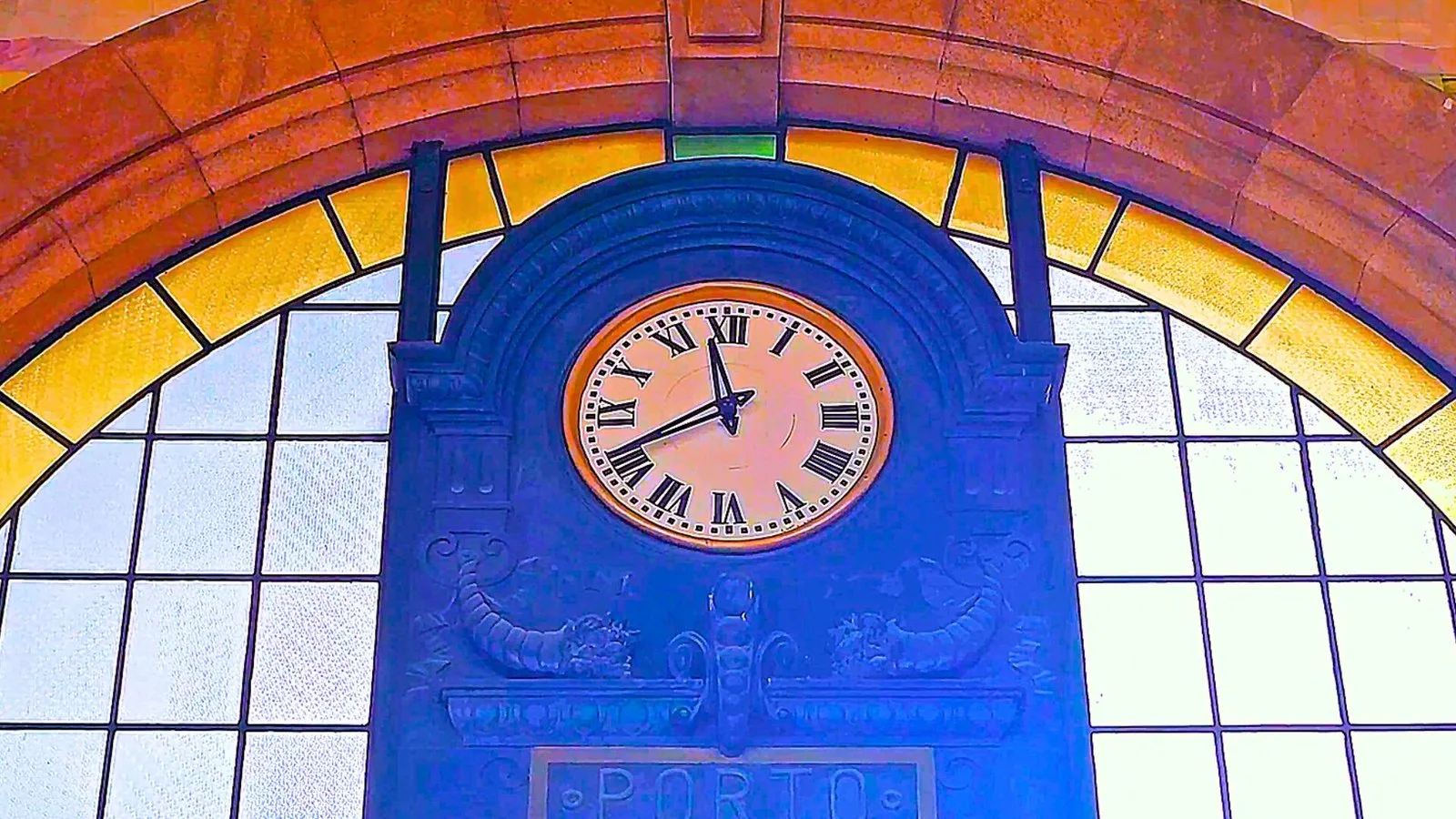 Hall clock
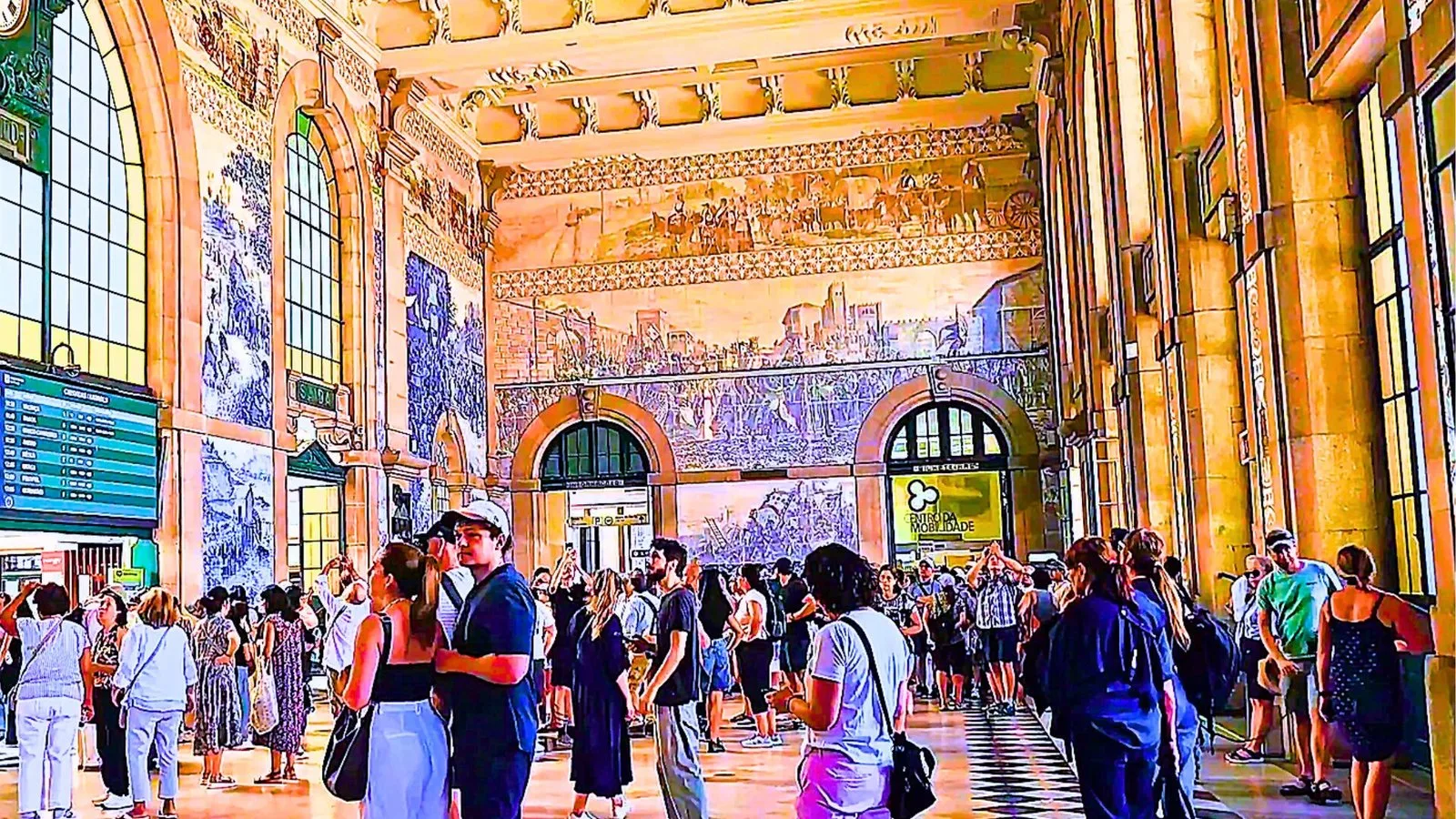 Colaço’s azulejos
Historical panels
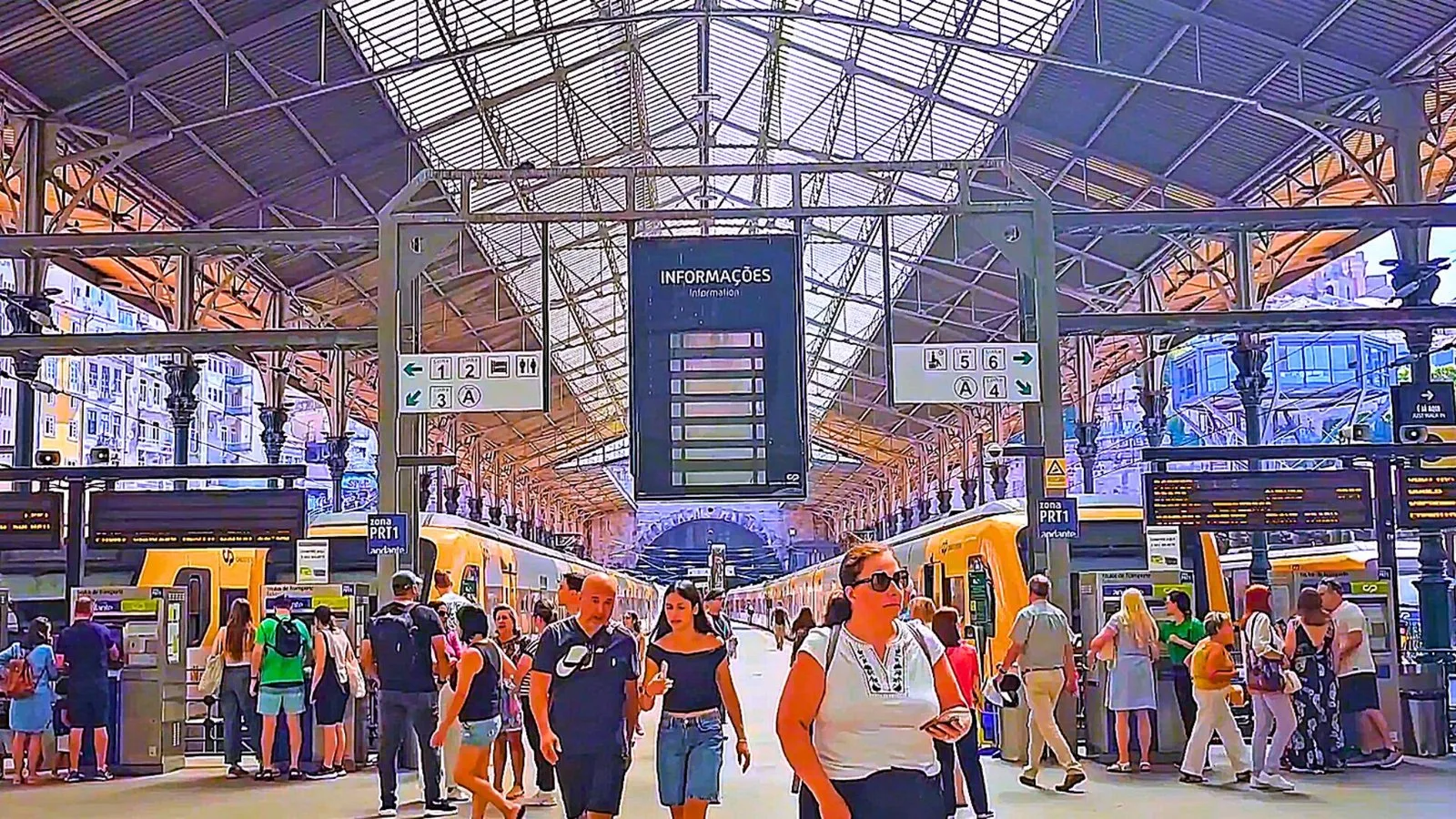 Trains at São Bento
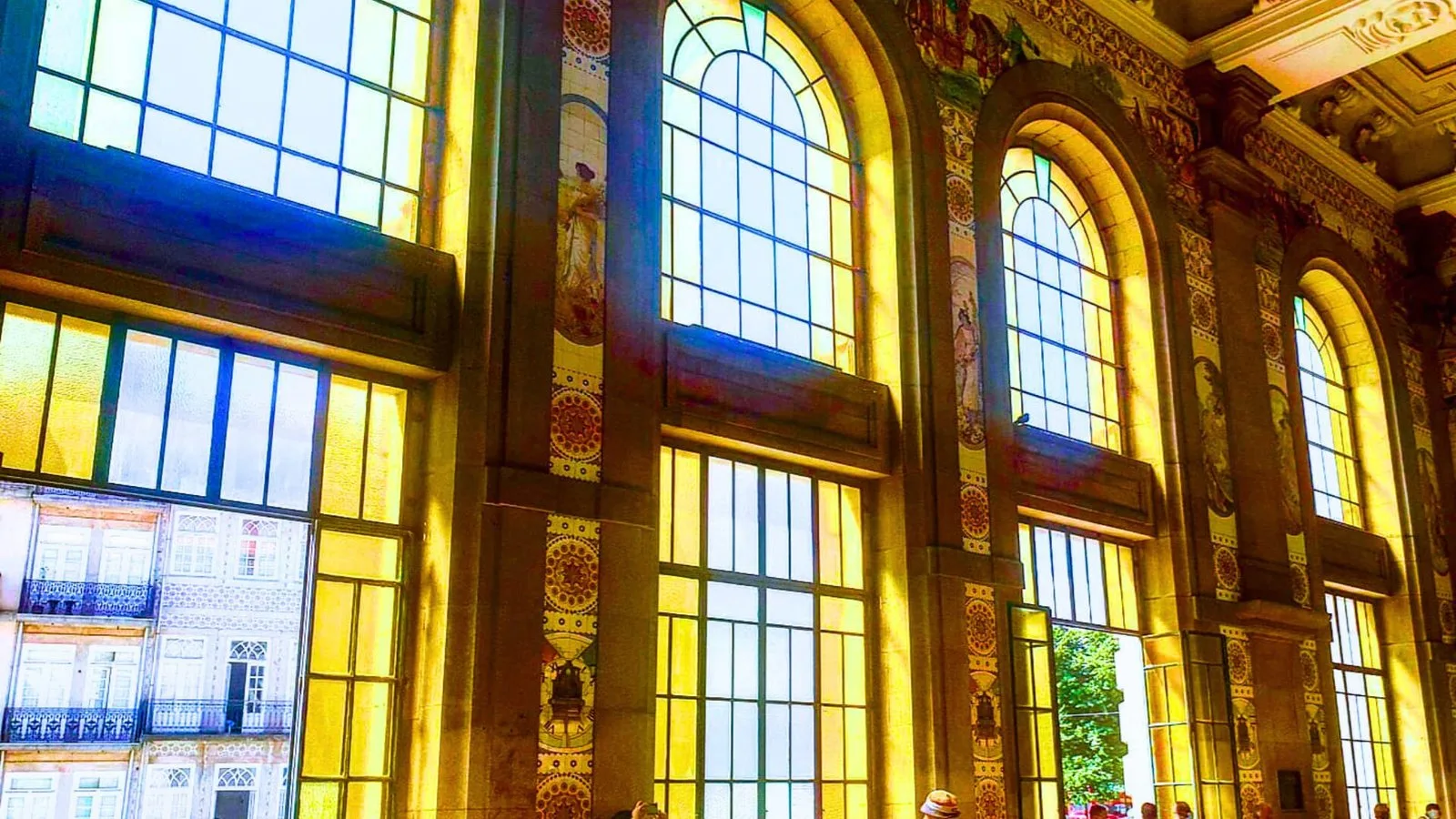 Stained glass
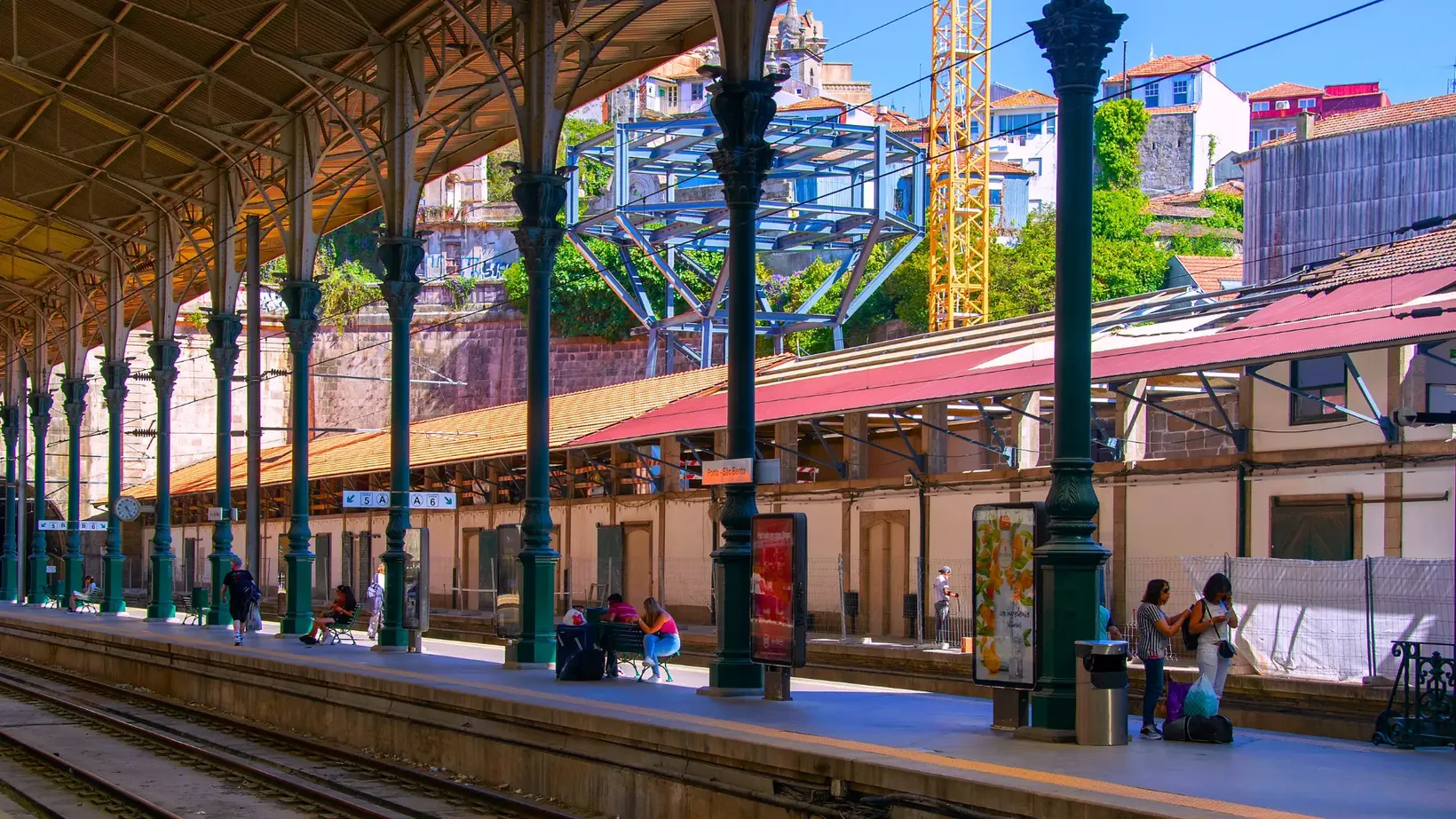 Railway tracks
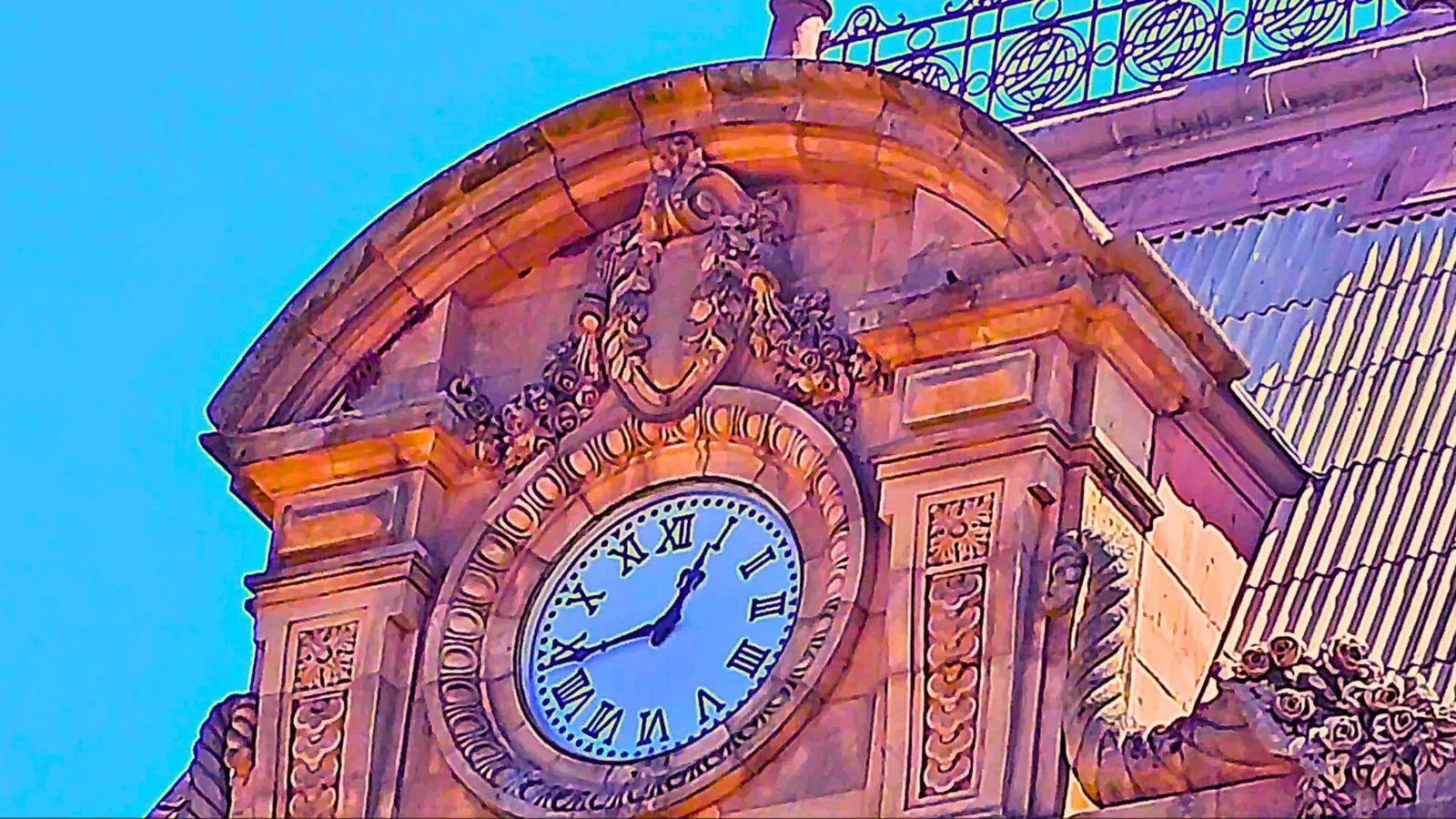 Exterior clock
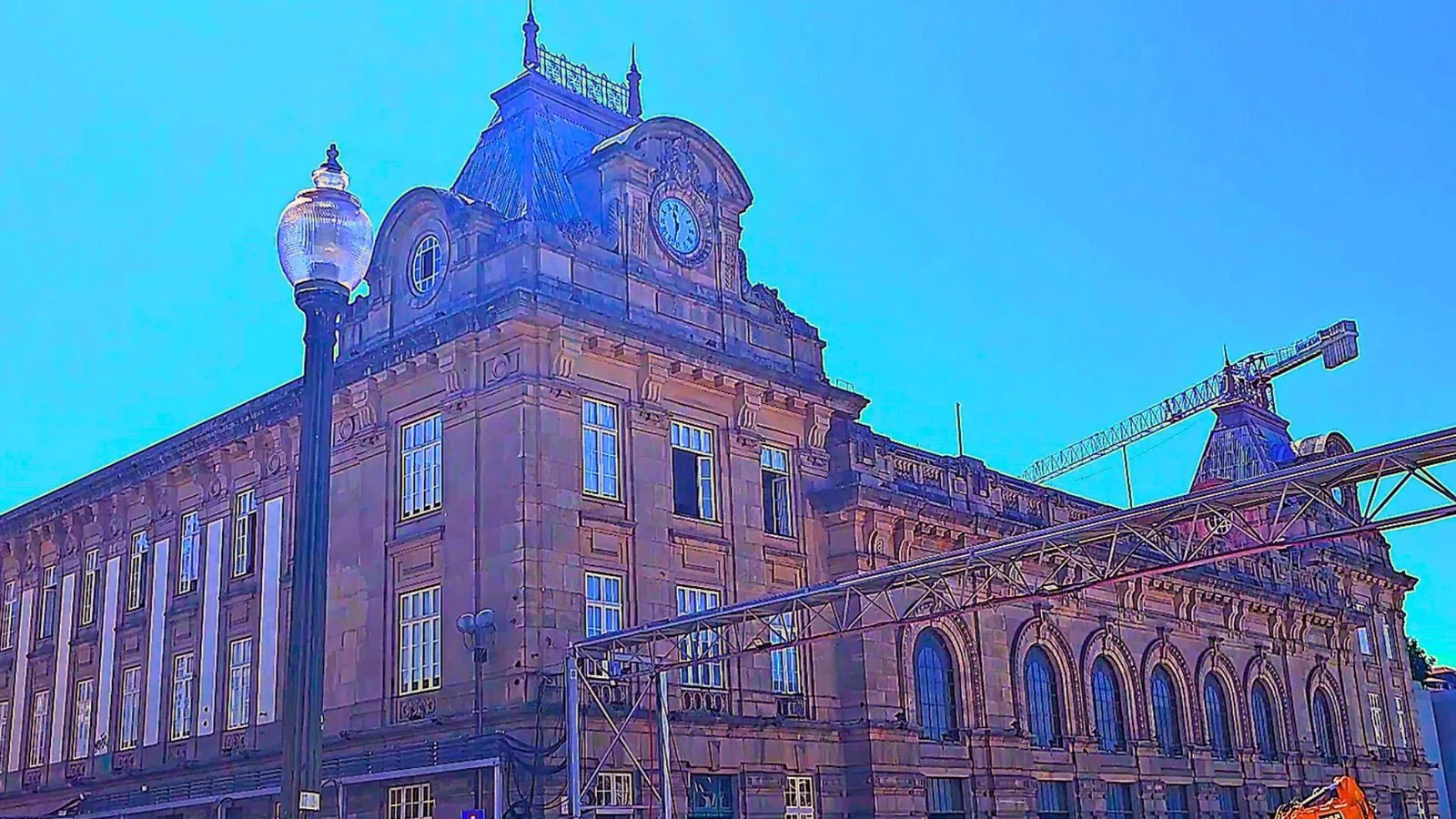 Another façade view
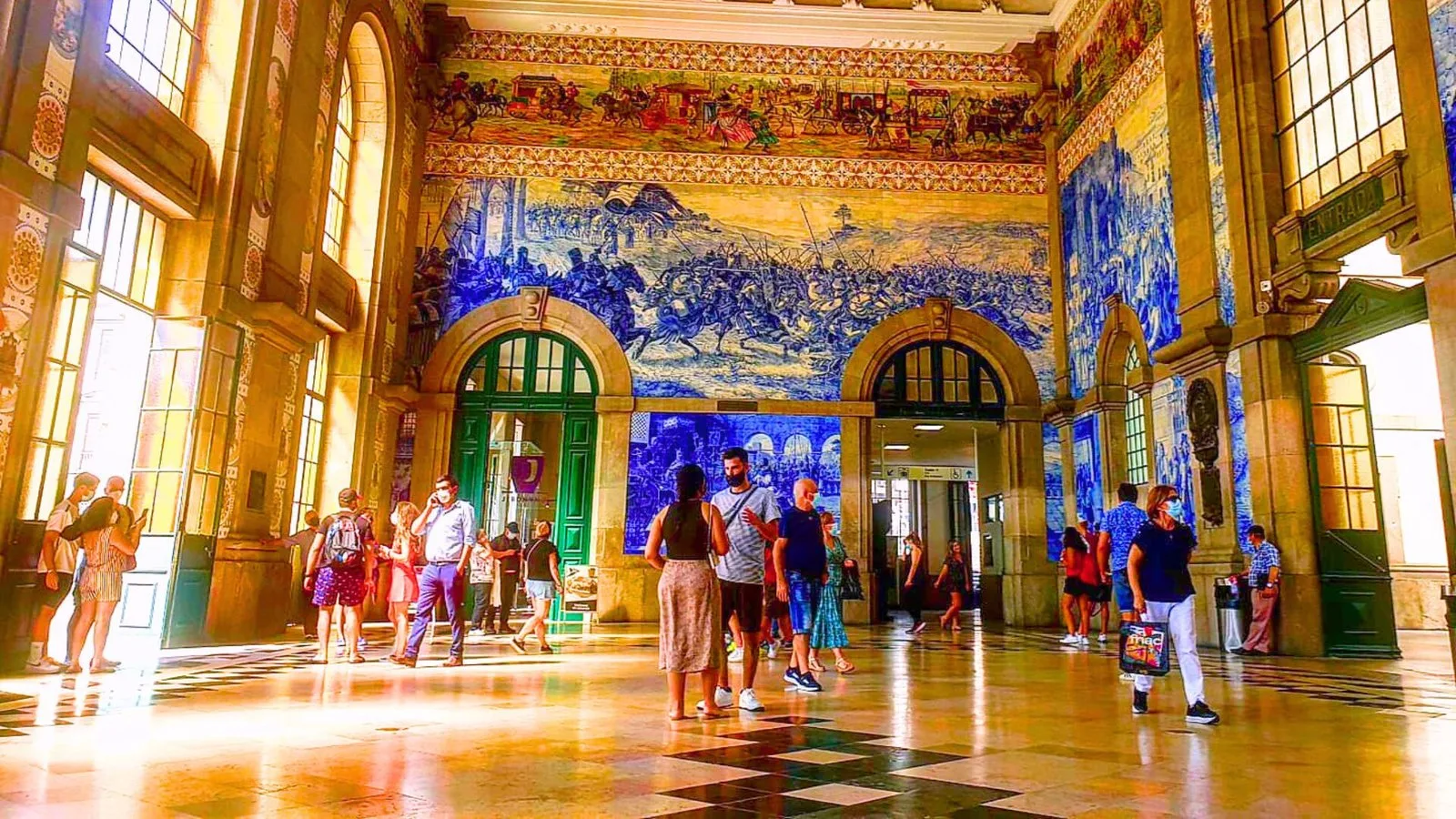 Tile details
A working railway station
São Bento is served by Porto’s urban rail network, with connections to regional destinations including Braga, Guimarães and Marco de Canaveses. Some long-distance trains depart from Campanhã instead: always check the departure station, timetable and any necessary changes on the CP website.
How to visit
A visit can be short, but give yourself time to study the panels and keep the routes used by railway passengers clear.
That is usually enough for the main hall. If you enjoy history or photography, you may want to stay a little longer.
São Bento is both a tourist attraction and a transport hub, so the hall can be busy, especially during commuting hours.
Begin with the colourful frieze, then follow the blue-and-white scenes. Taking them one at a time makes the stories easier to understand.
Avoid blocking passageways and platforms. Visit Portugal notes a ramp at the left-side entrance to the hall; check accessible train boarding arrangements with CP.
A short walk away
From São Bento, head towards Aliados, walk uphill to Porto Cathedral or follow the old streets downhill towards Ribeira. Expect some slopes and uneven stone paving.
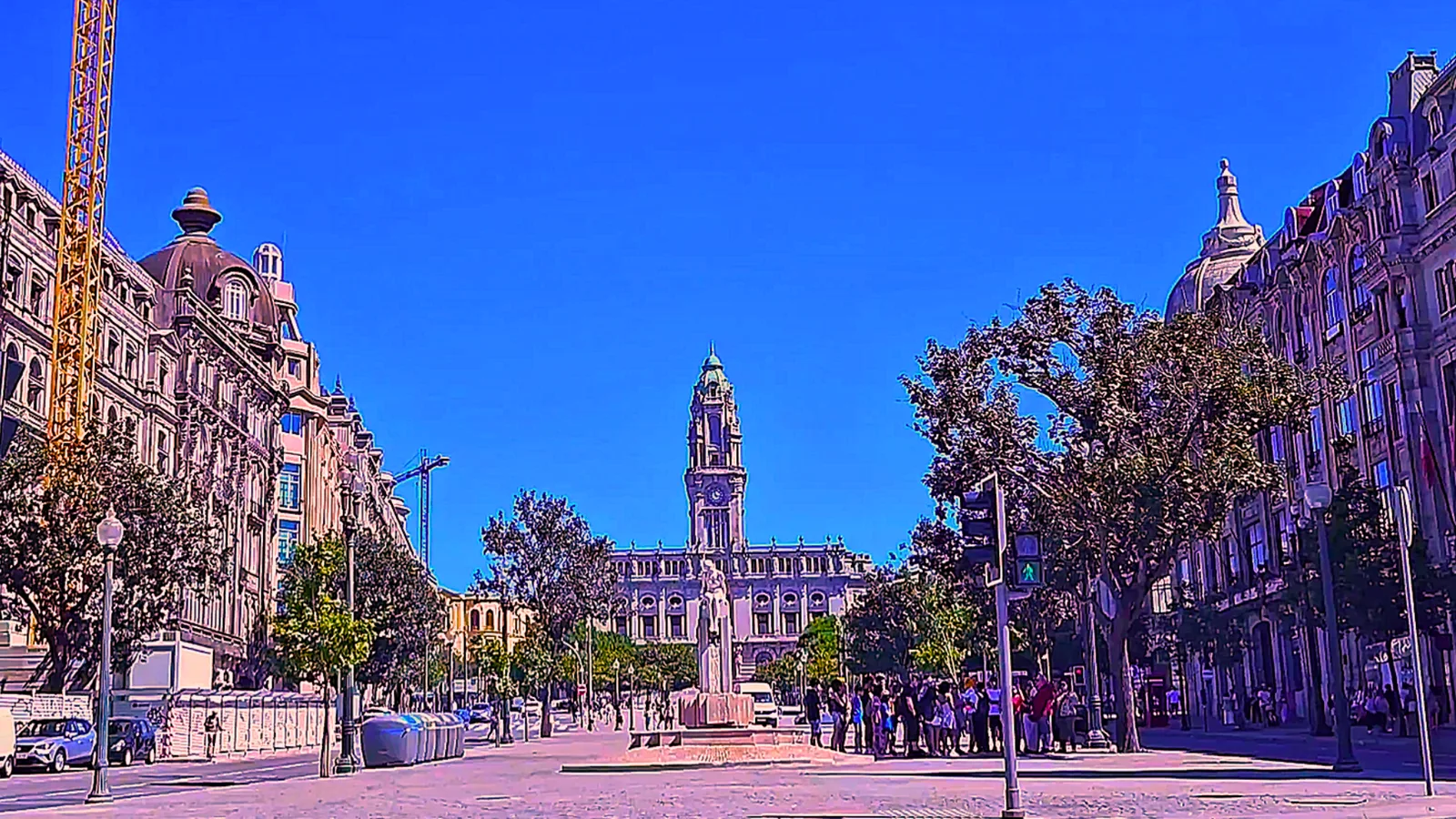
A broad avenue of monumental architecture, with Porto City Hall at the far end, just a short walk away.
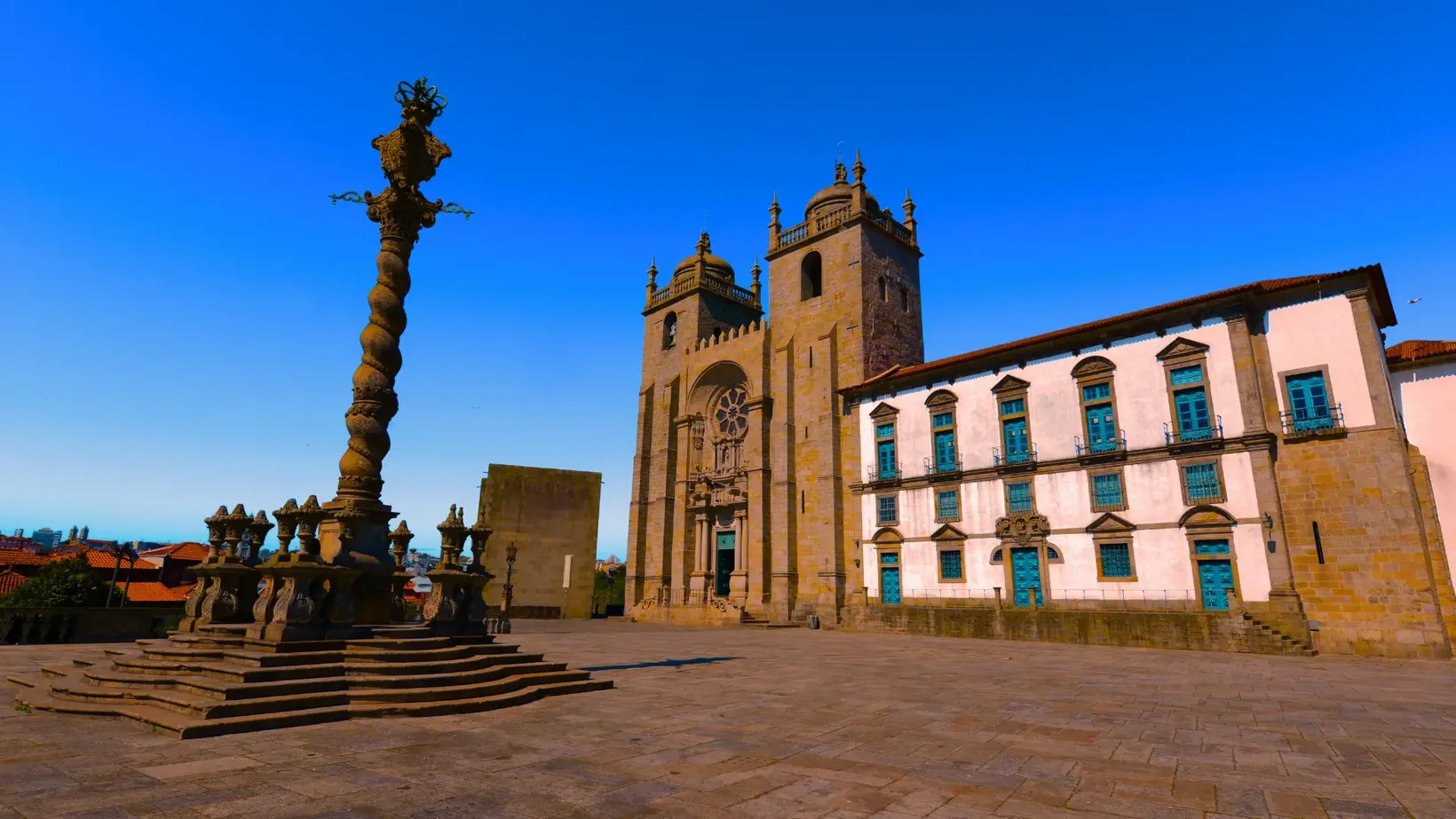
Walk uphill to one of the city’s oldest monuments and enjoy views from the cathedral area.
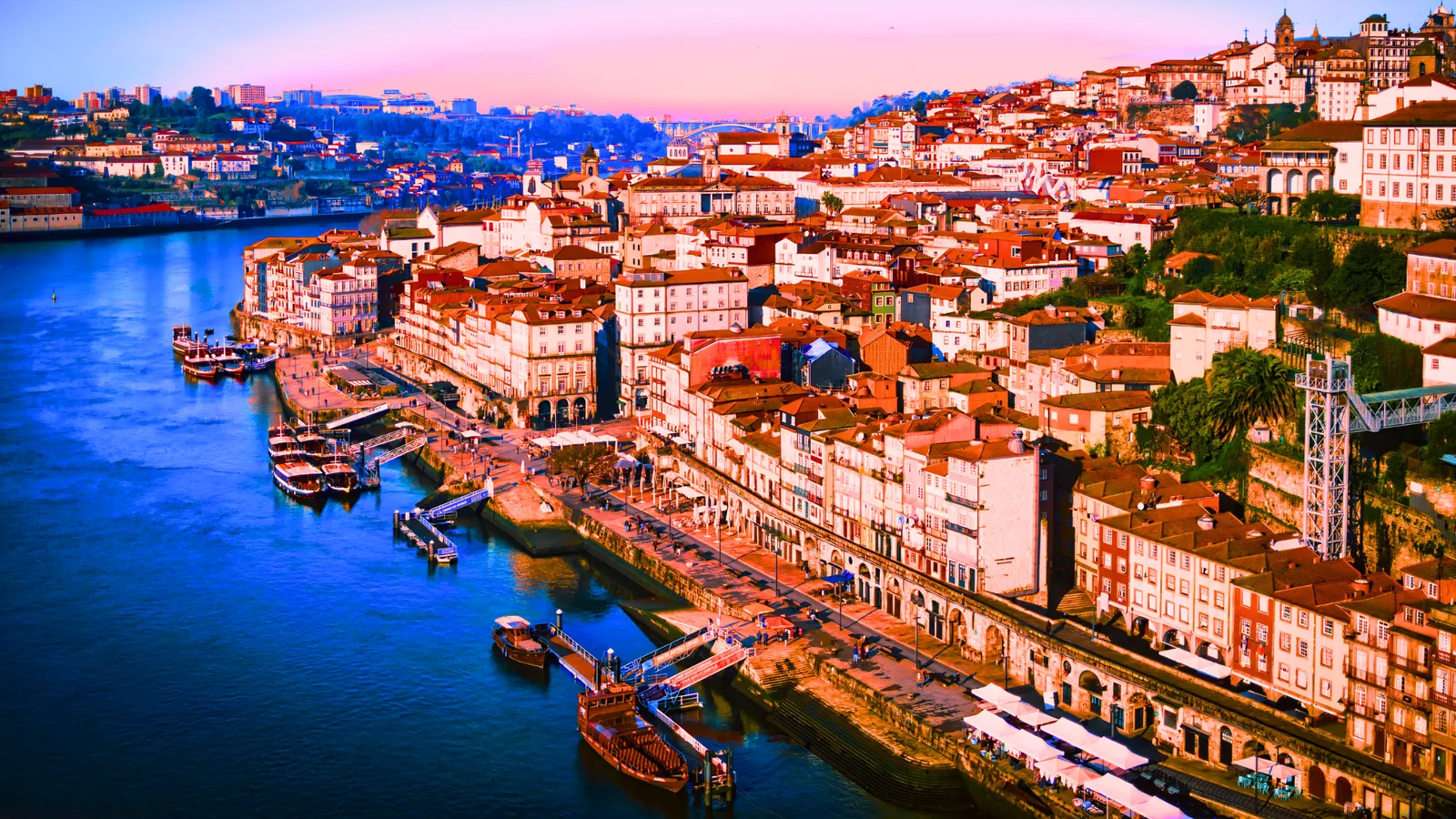
Follow the historic streets downhill towards the colourful riverfront buildings.
Continue exploring
After visiting the tiled hall, step back into the square: Porto Cathedral, Rua das Flores and Aliados are all within easy reach.