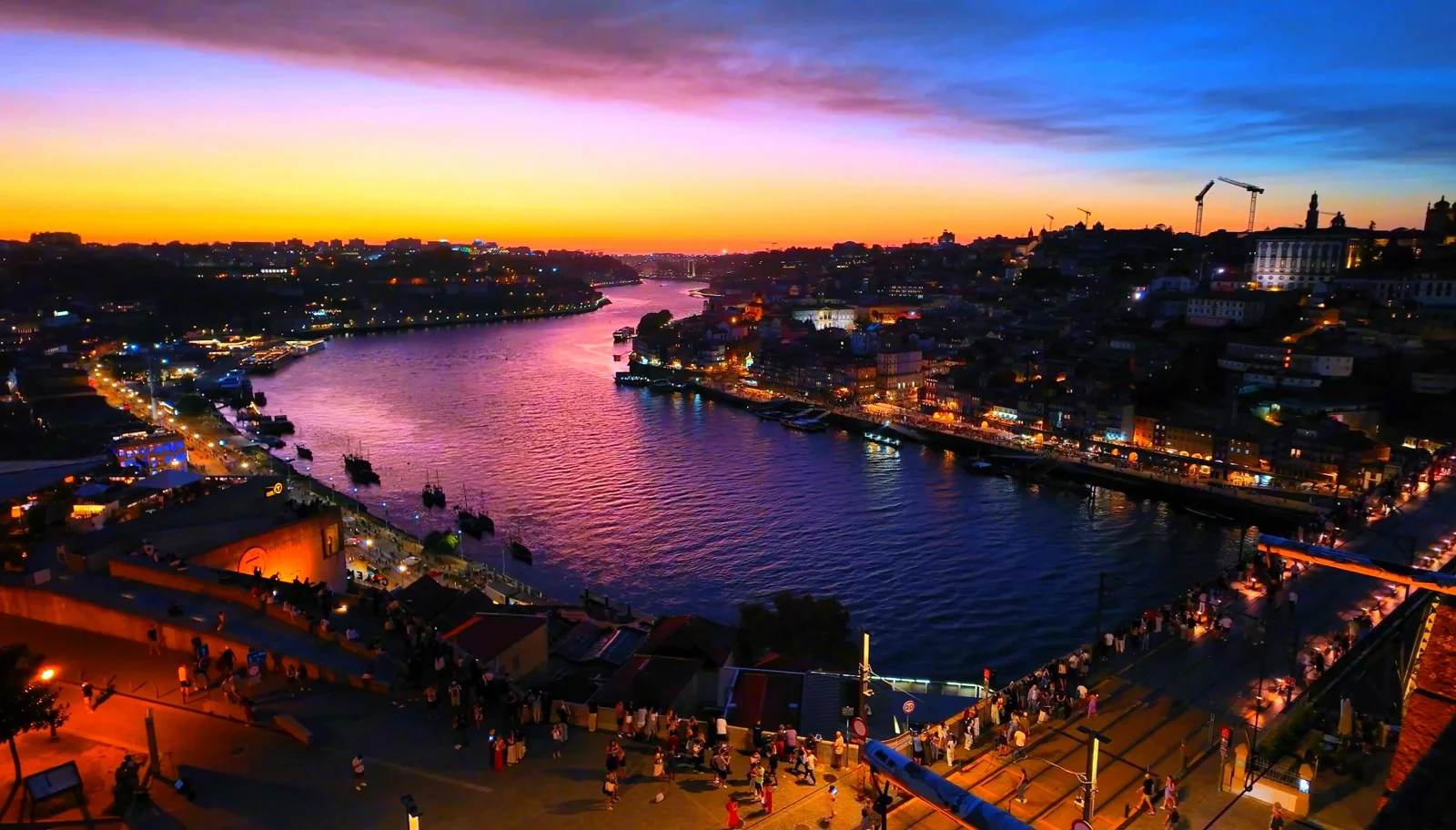
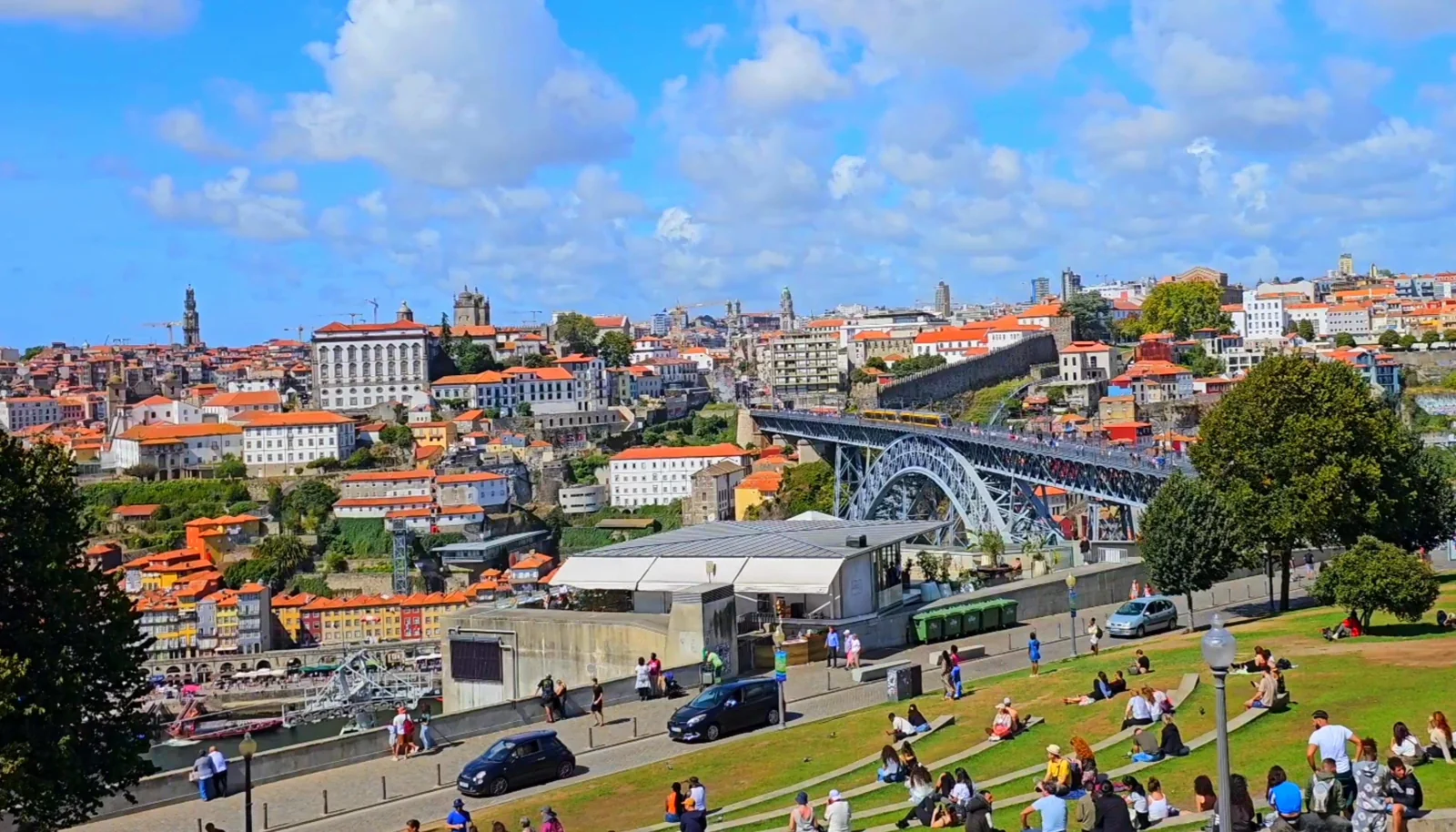
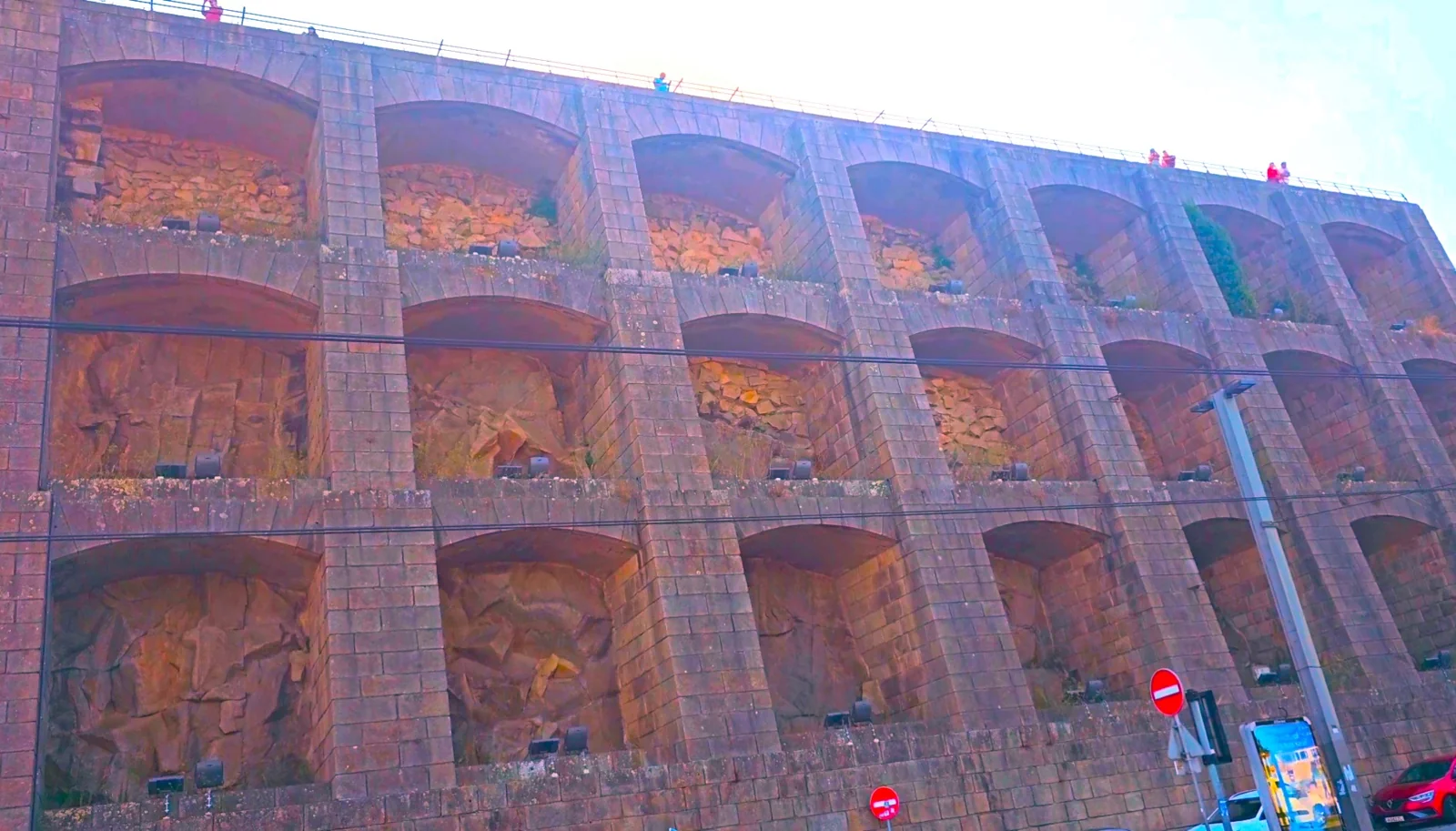
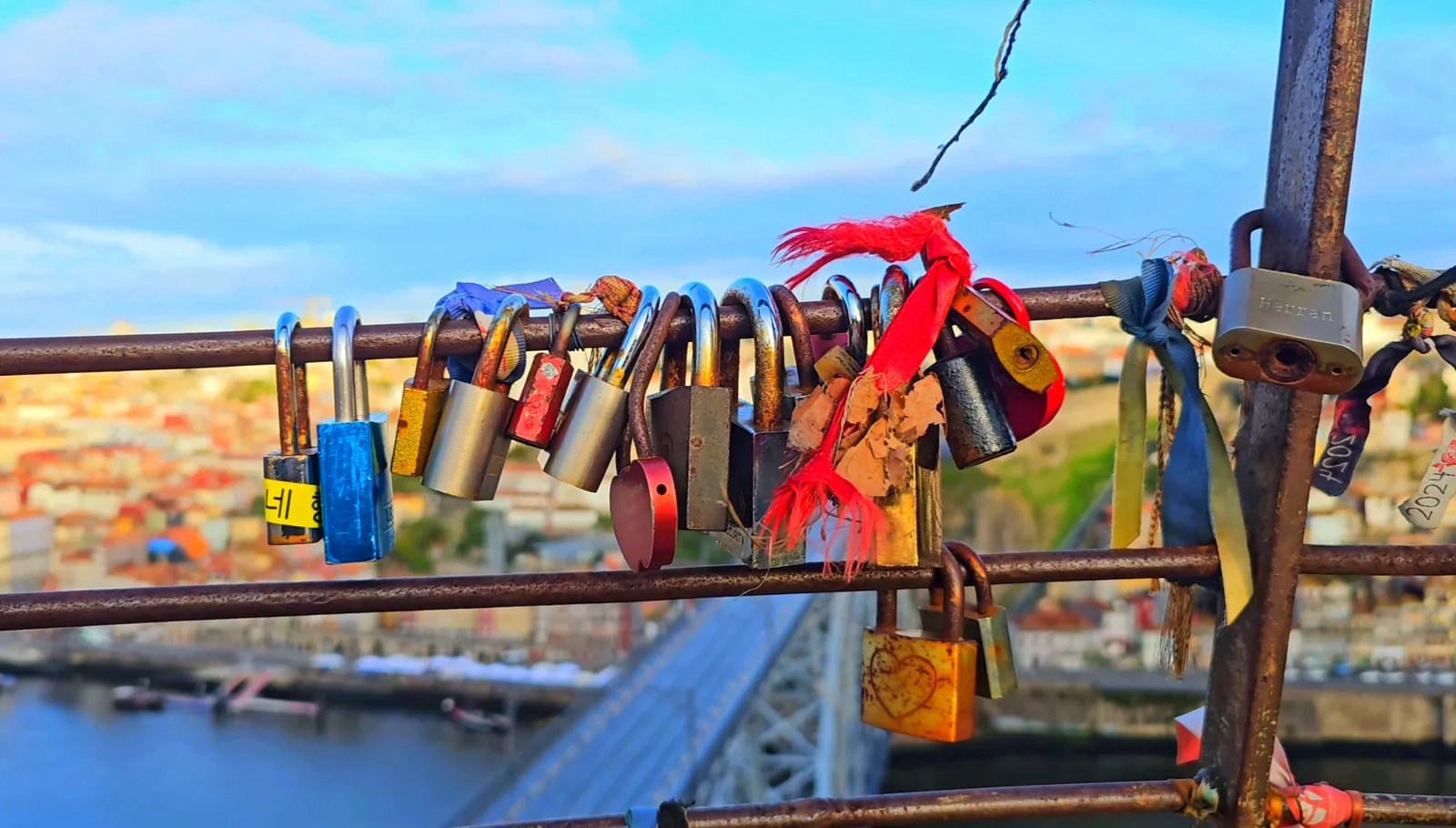
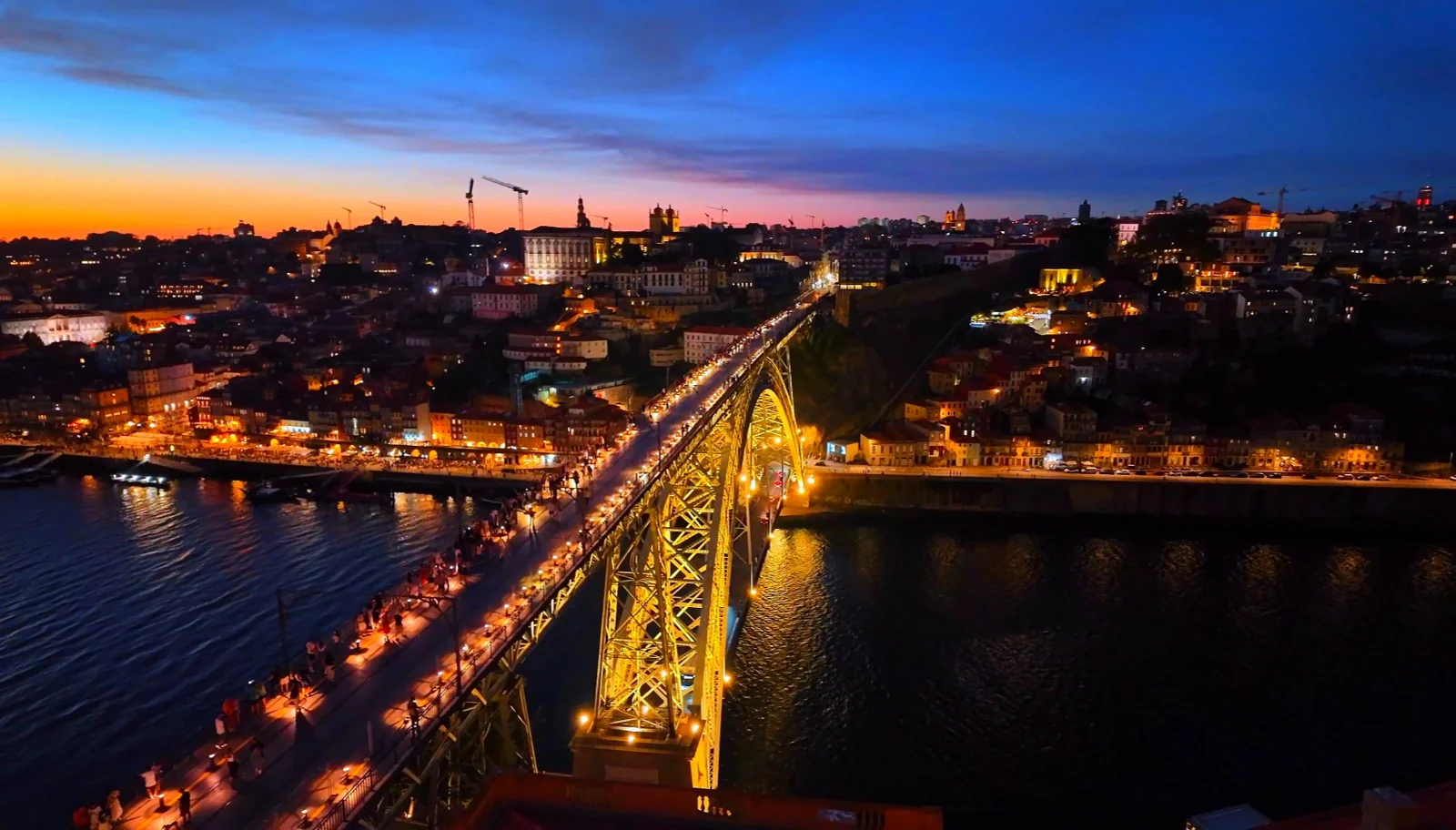
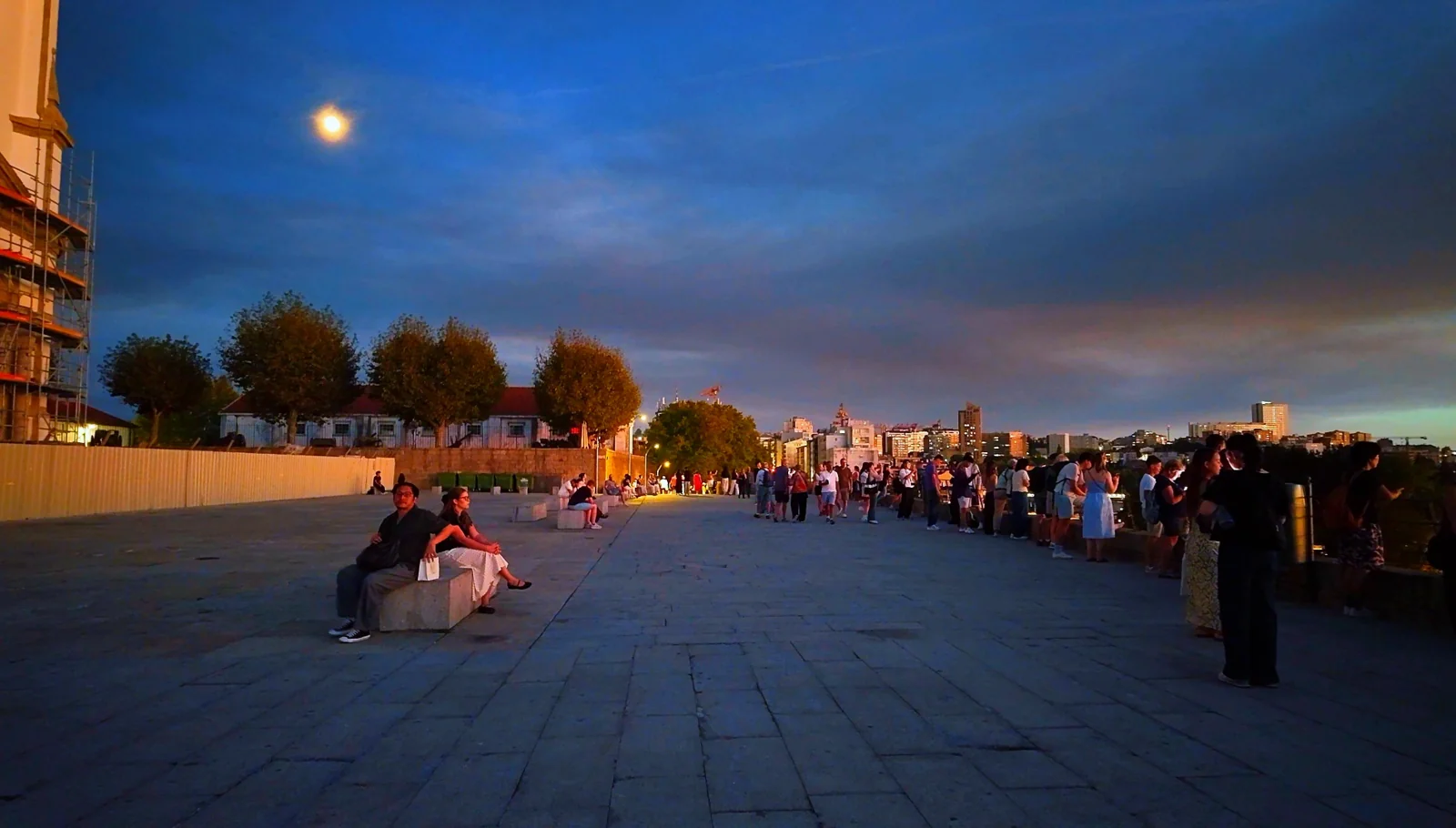
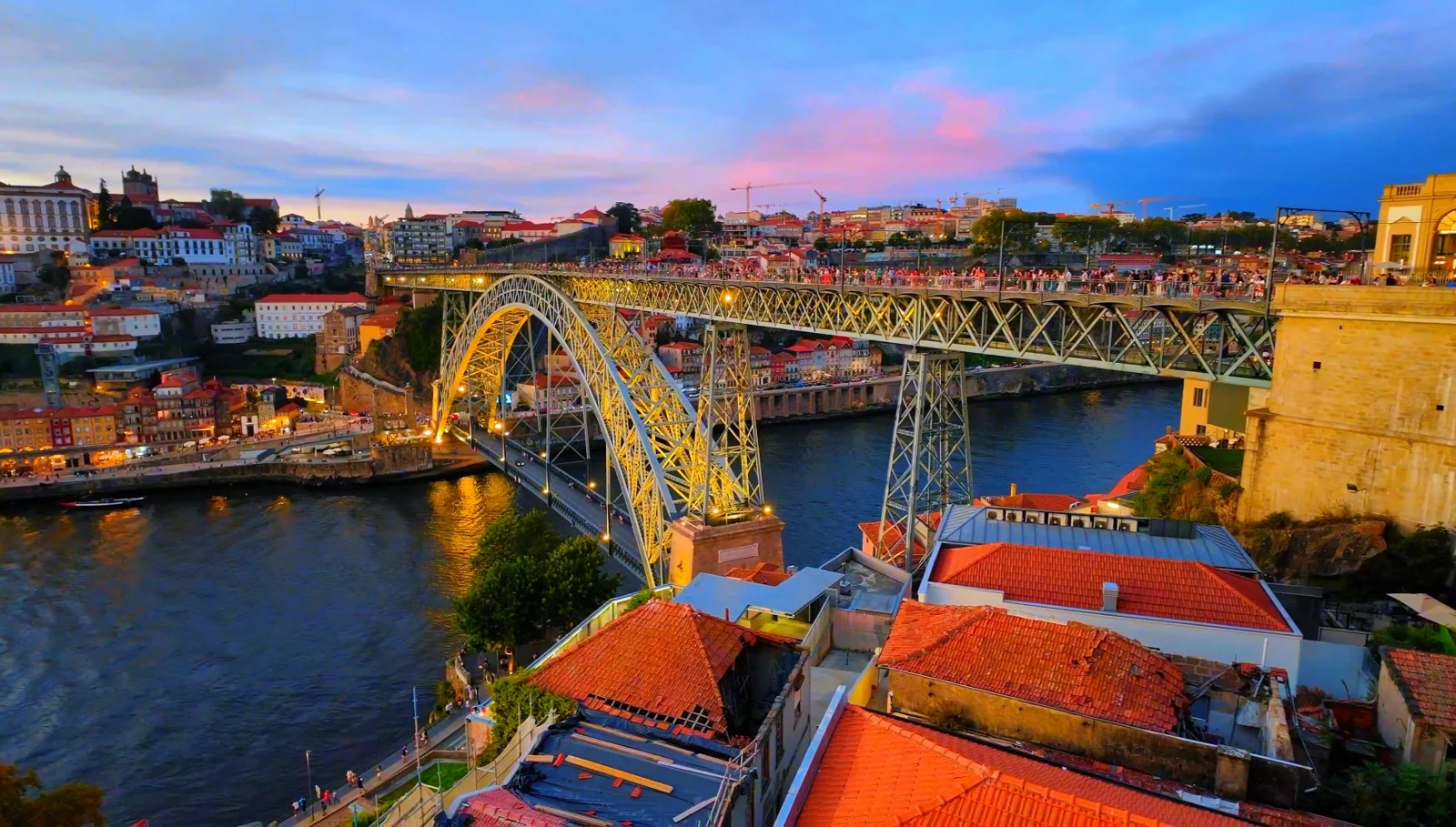
From here, Luís I Bridge crosses the scene, Ribeira climbs the hillside and the Douro separates two riverbanks worth exploring. Serra do Pilar deserves more than a quick photograph: combine the viewpoint with the monastery’s history, head down to Jardim do Morro and choose how to continue through Gaia.
What kind of walk would you like?
Choose how to combine Serra do Pilar with nearby places. Allow time for the climb, photographs and your return journey.
A short visit with time to pause
Serra do Pilar and Jardim do Morro
Start beside Jardim do Morro station and follow signs towards Serra do Pilar.
Walk up to the terrace using permitted routes and look over the bridge and both riverbanks.
Return to Jardim do Morro to explore its paths and lawn.
The garden and terrace are separate places. The final climb to Serra do Pilar is on foot.
Allow time before and after sunset
From late afternoon to the illuminated city
Arrive in daylight to find your way and choose a viewpoint.
Watch the light change over the Douro while keeping paths clear.
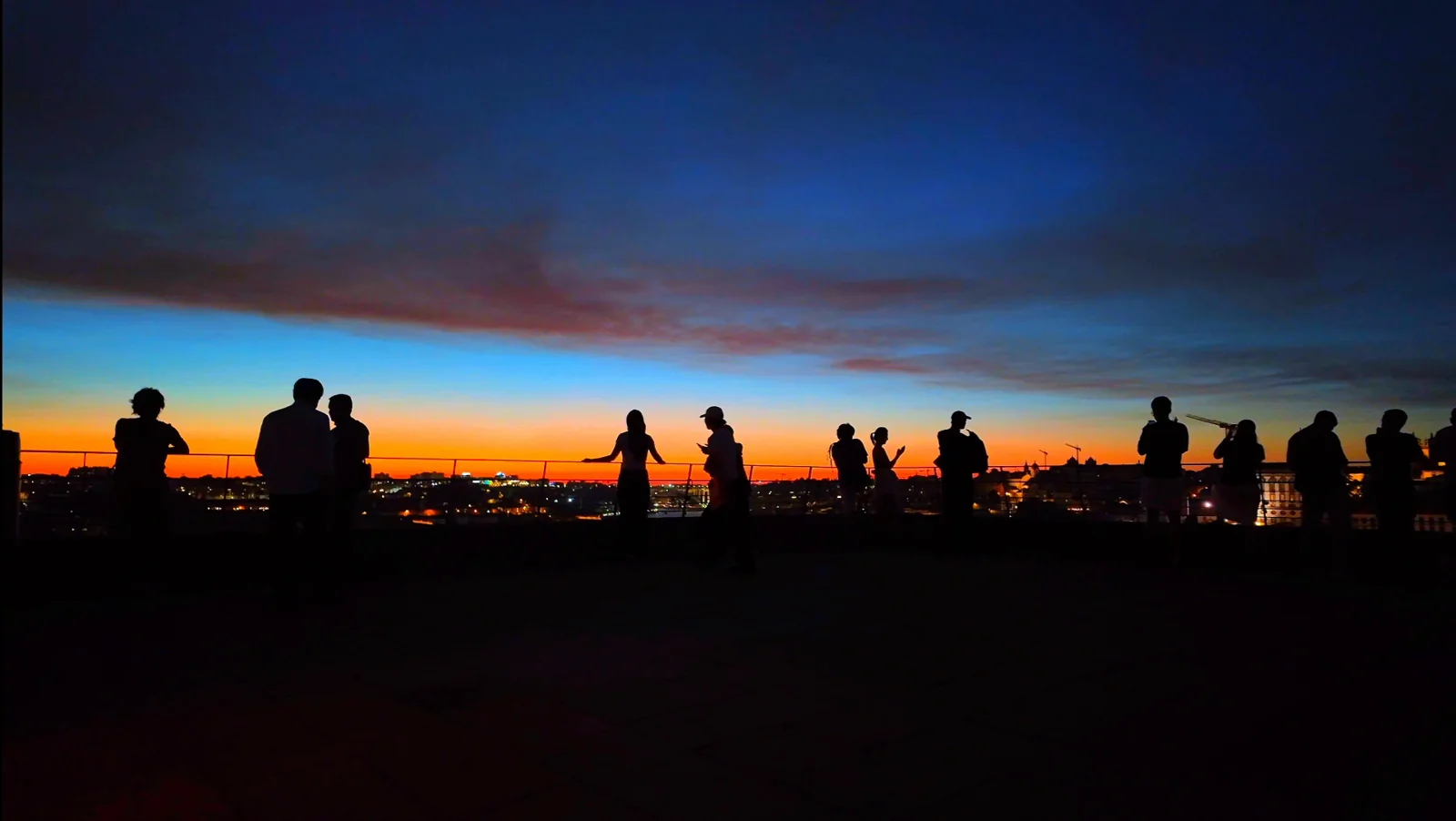
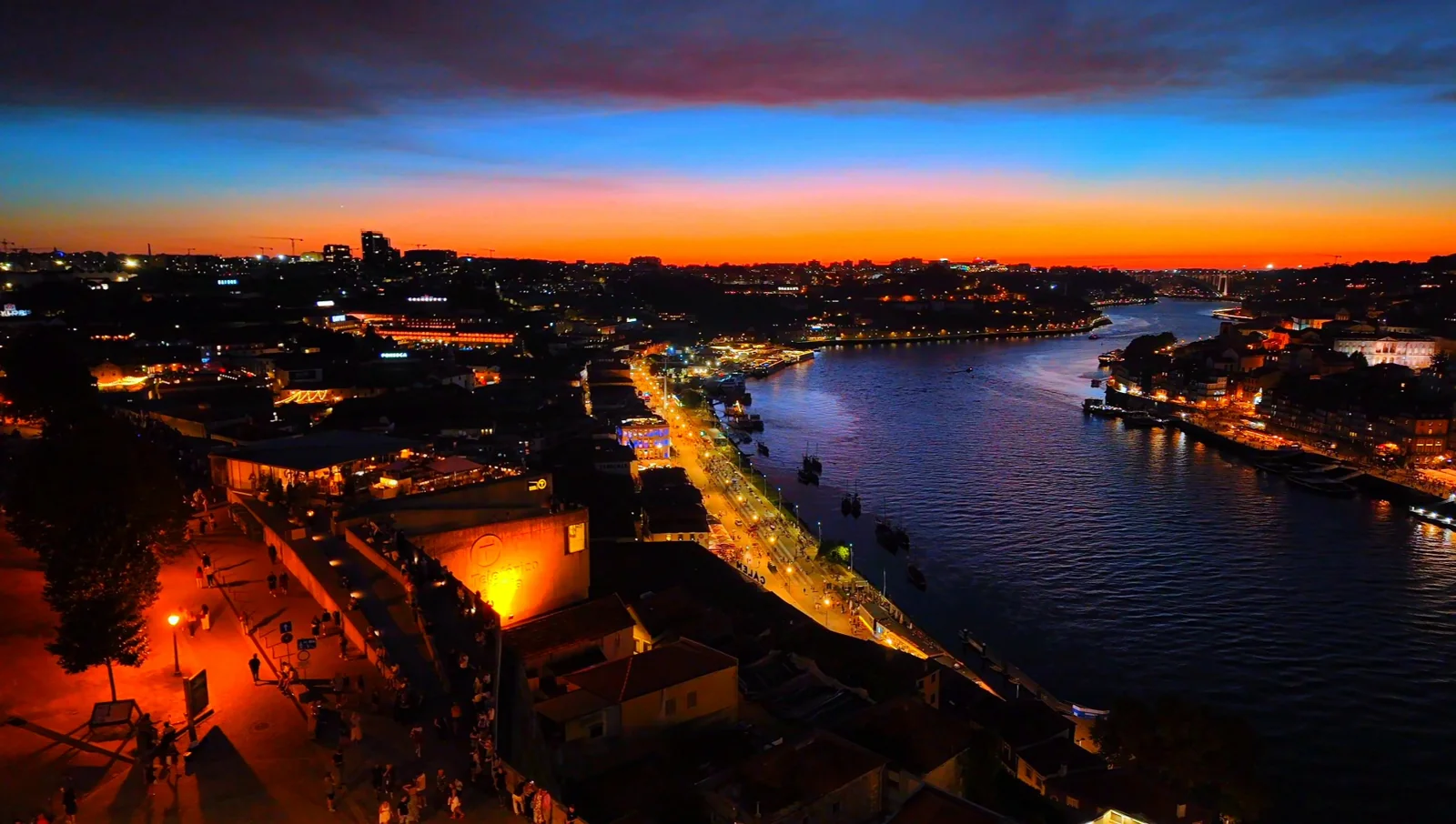
Stay a little longer to see the bridge and riverbanks illuminated.
Sunset times change with the season. On busy days, arrive early and expect crowds when leaving.
A longer walk with changes in elevation
Serra do Pilar, the garden and Gaia’s waterfront
Visit the exterior of Serra do Pilar and pass through Jardim do Morro.
Choose the cable car or a signposted walking route down to Gaia’s waterfront.
Continue along the quayside, through Mercado Beira-Rio or around the wine-cellar streets.
The cable car requires a ticket and has its own operating hours. Walking downhill still means planning your climb or transport back.
Porto · Gaia · Douro
Before taking a photograph, see what you are looking at
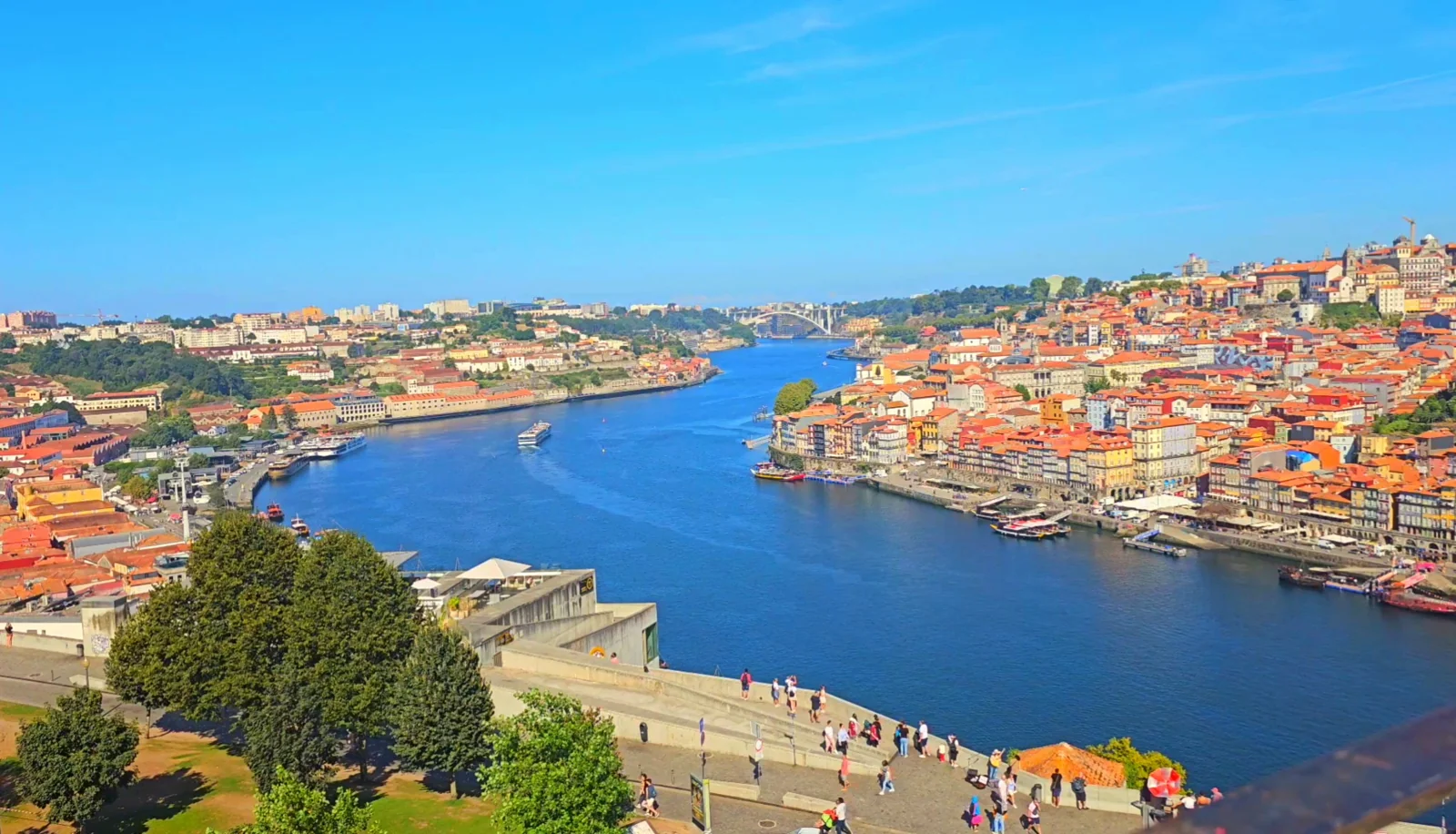
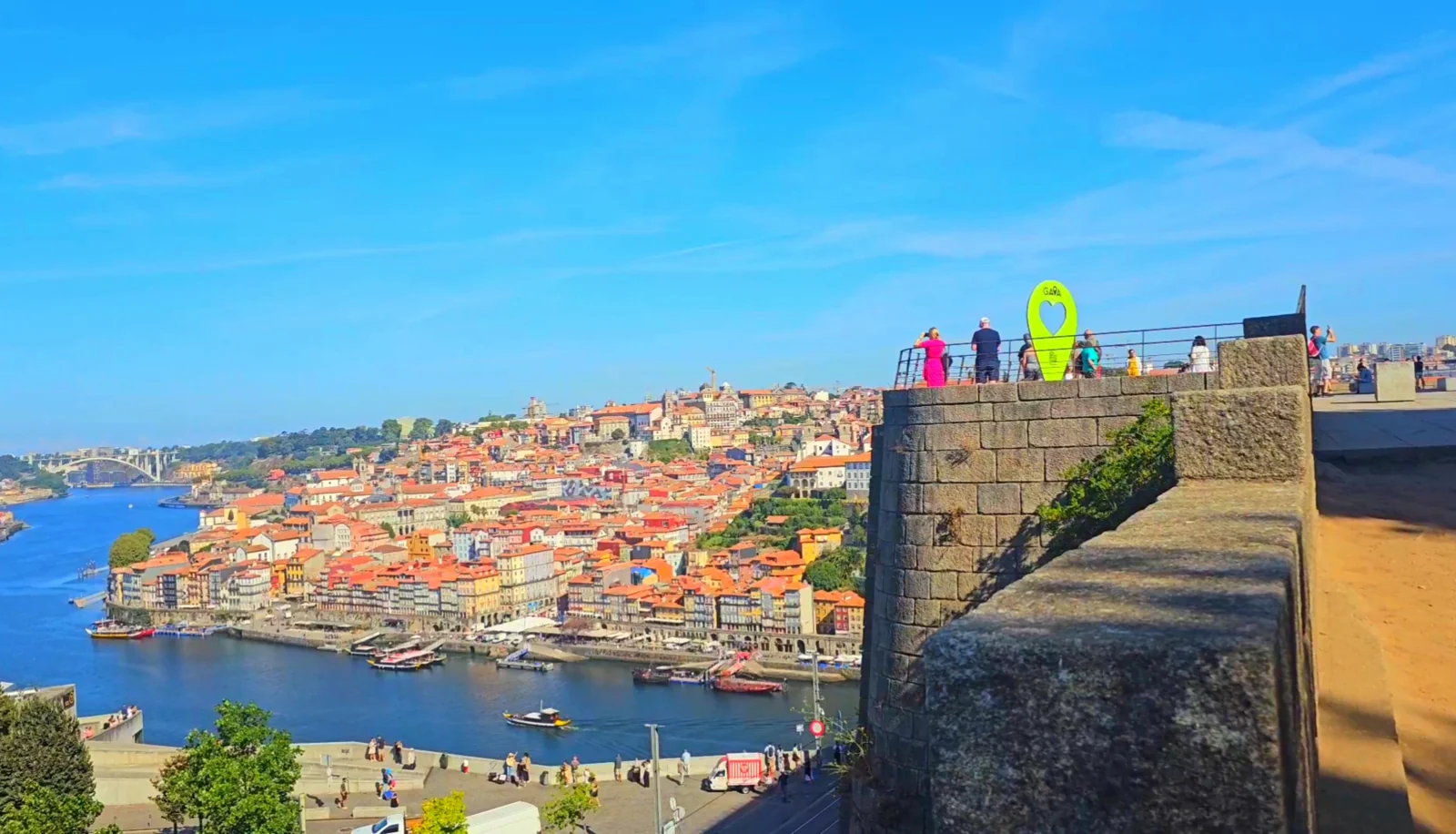
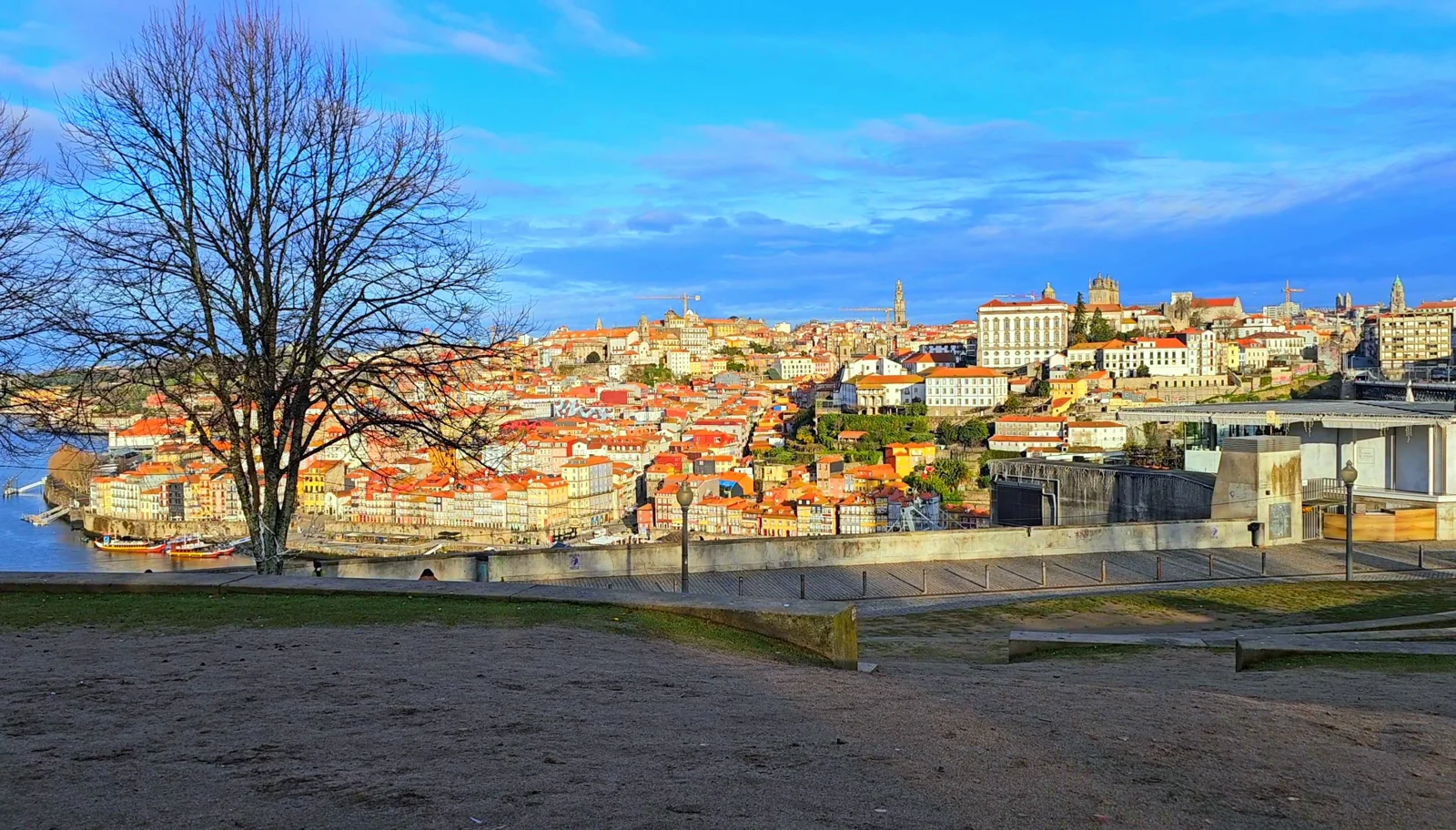
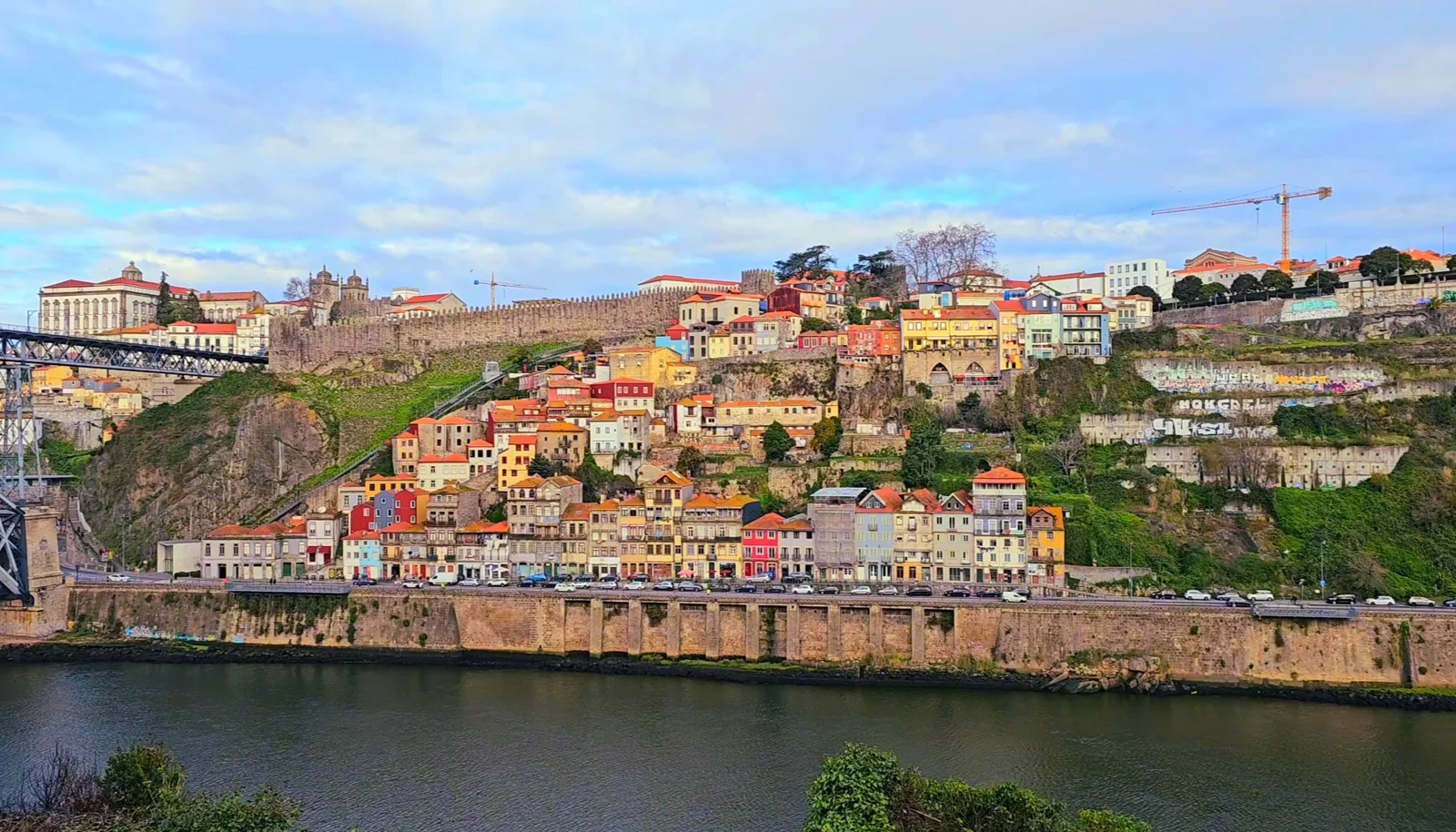
Part of this viewpoint’s appeal is being able to read the landscape. Find the bridge, follow the curve of the river and notice how houses and monuments are arranged on the hillsides.
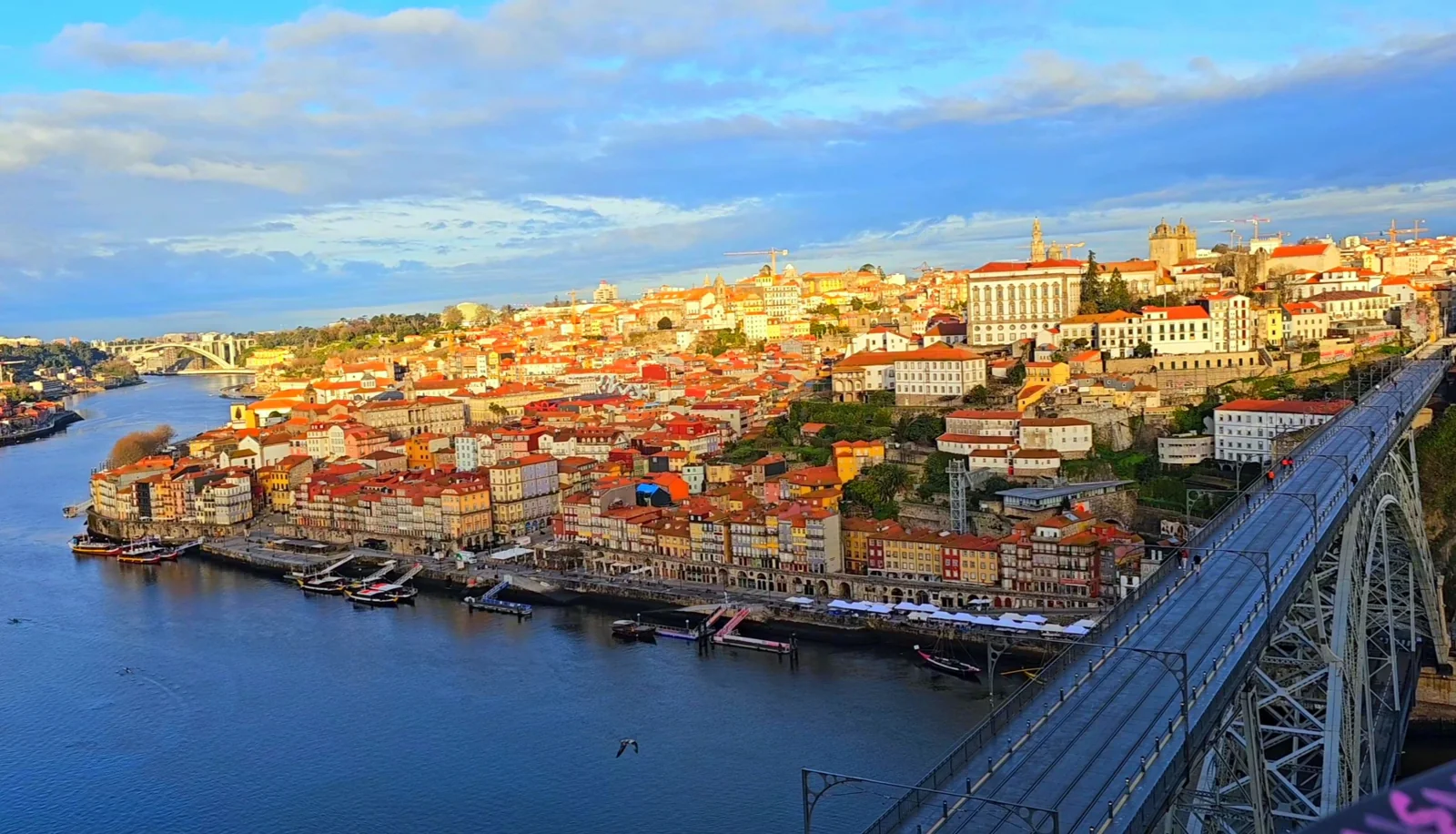
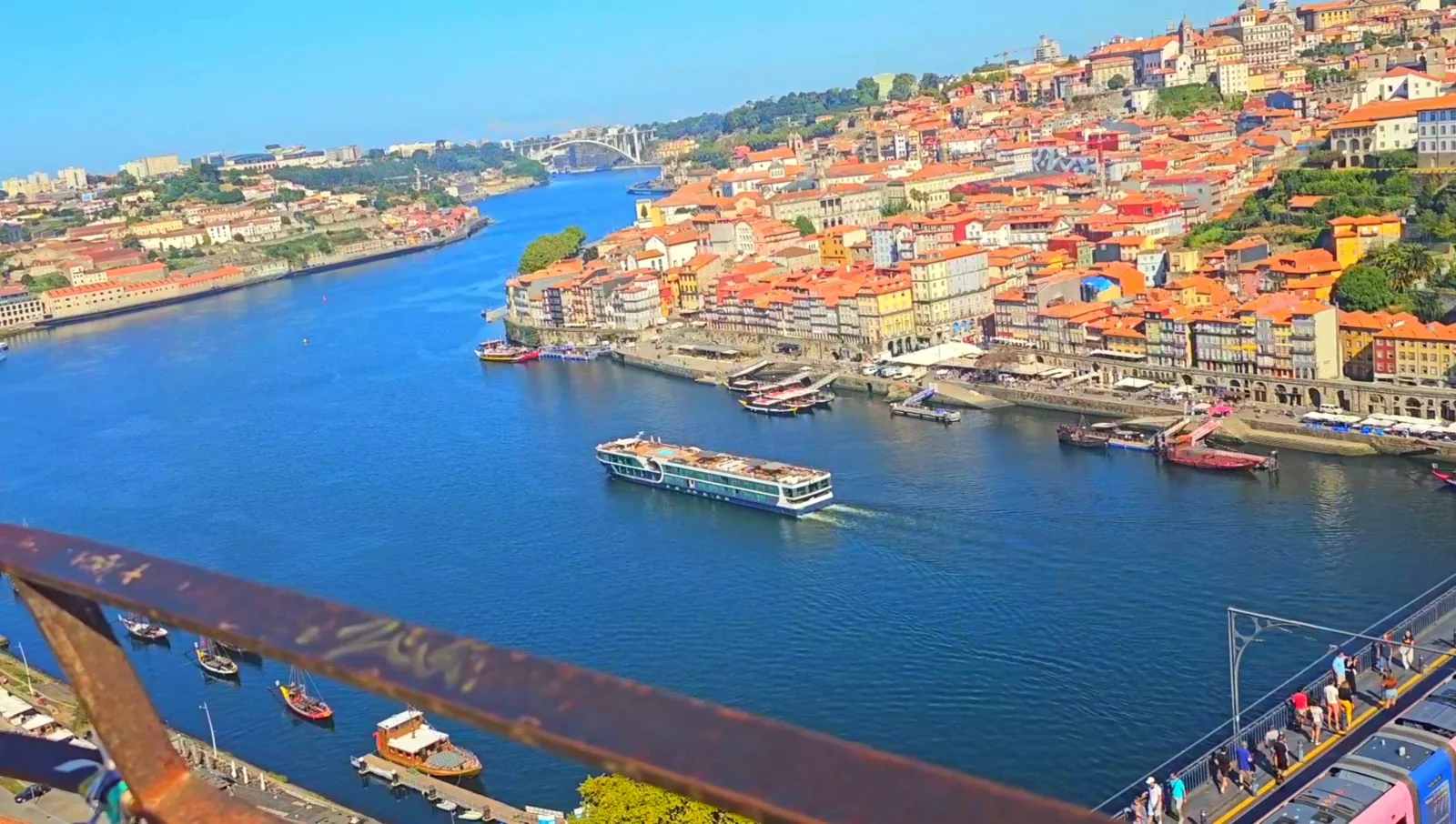
The Douro and Porto’s Ribeira seen from Serra do Pilar during the day
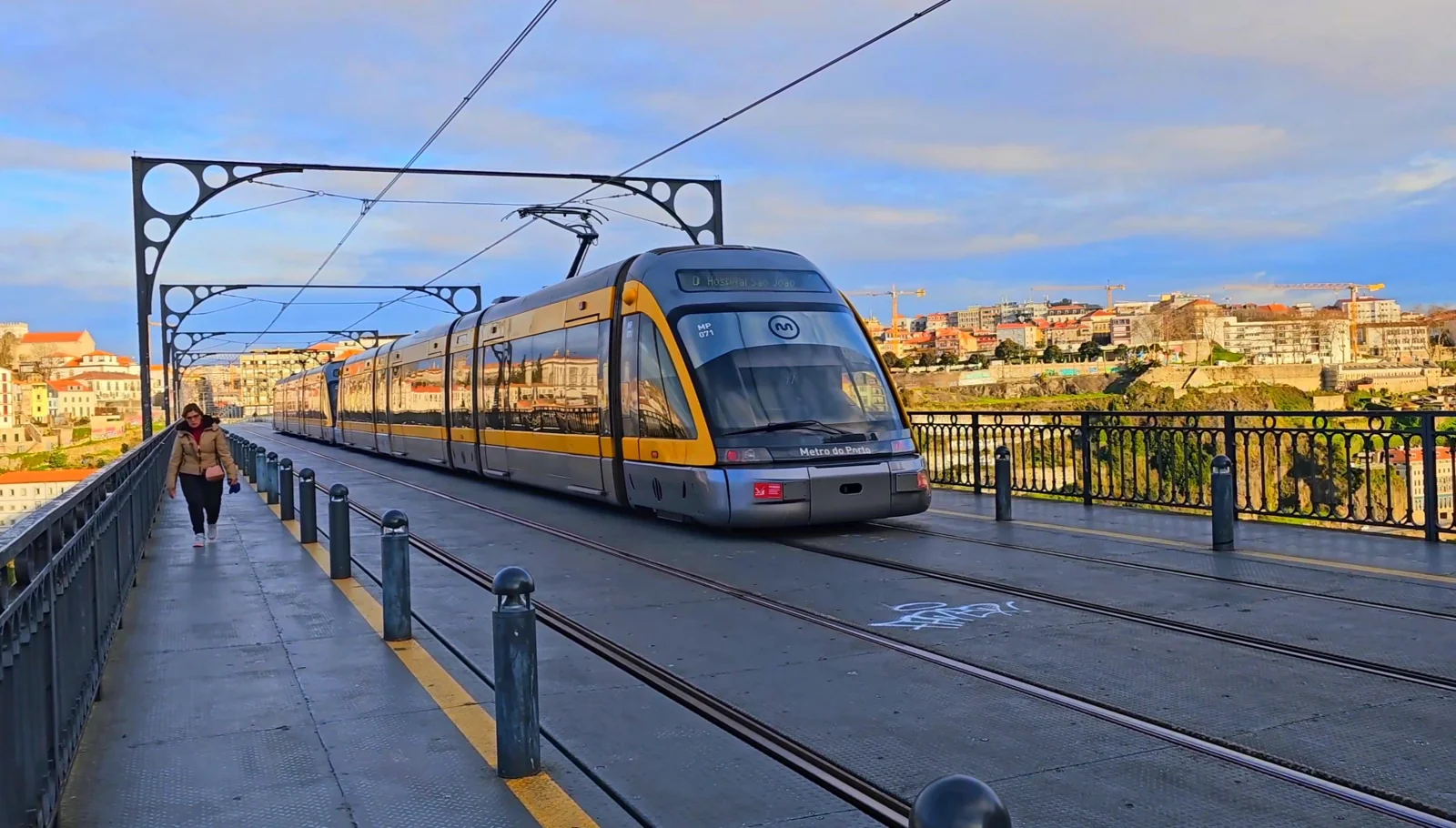
Luís I Bridge
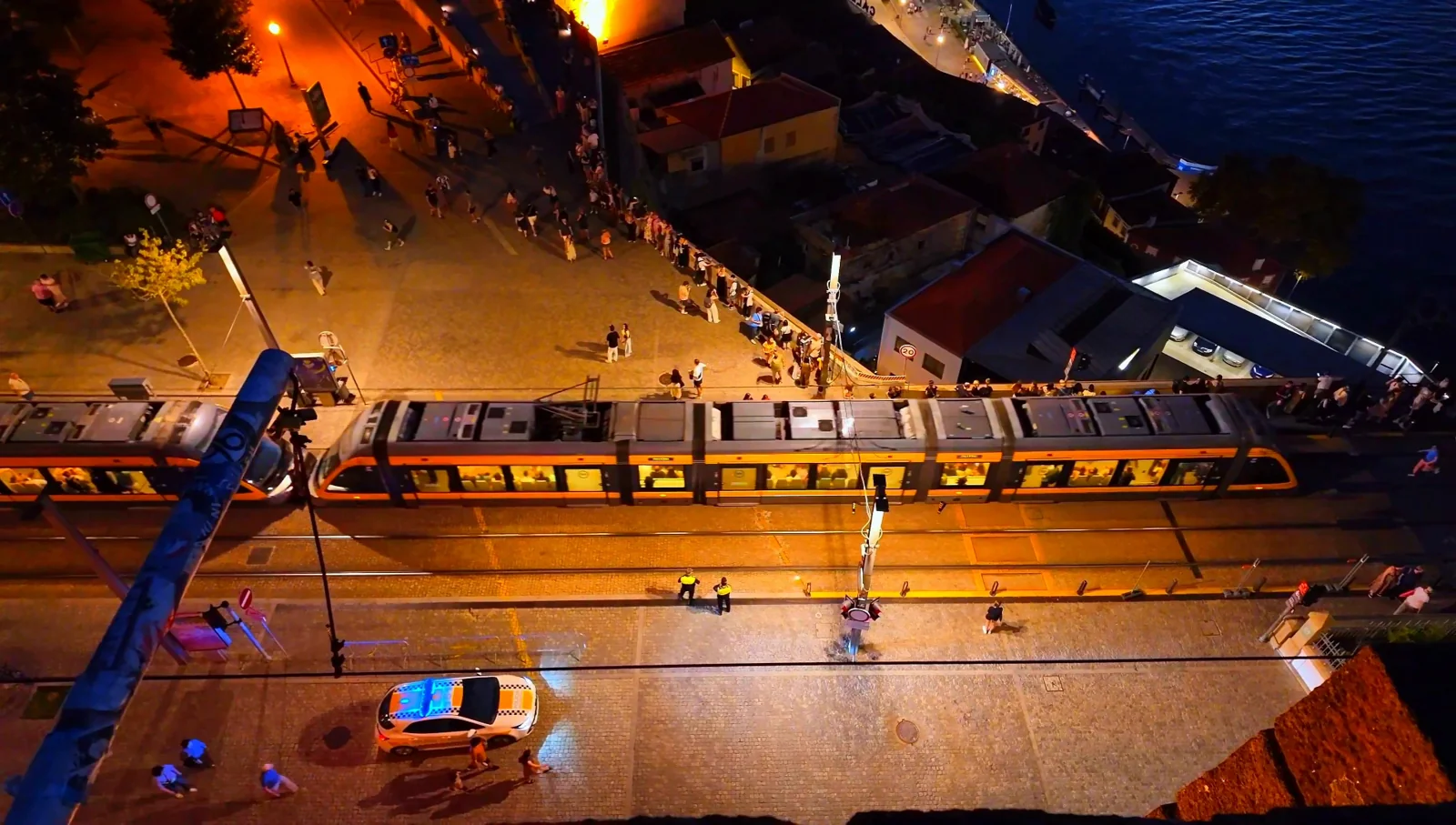
The upper deck brings Porto close to Jardim do Morro. From Serra do Pilar, you can observe the bridge’s structure and the movement of Metro trains and pedestrians.
Porto’s hillside
Across the river are Ribeira, the cathedral and the Episcopal Palace, among streets and façades rising from the waterfront.
Gaia’s riverbank
On the southern bank, look for the roofs of warehouses and wine cellars, the quayside and the route following the Douro west.
Mosteiro da Serra do Pilar
A round church. And a round cloister too.
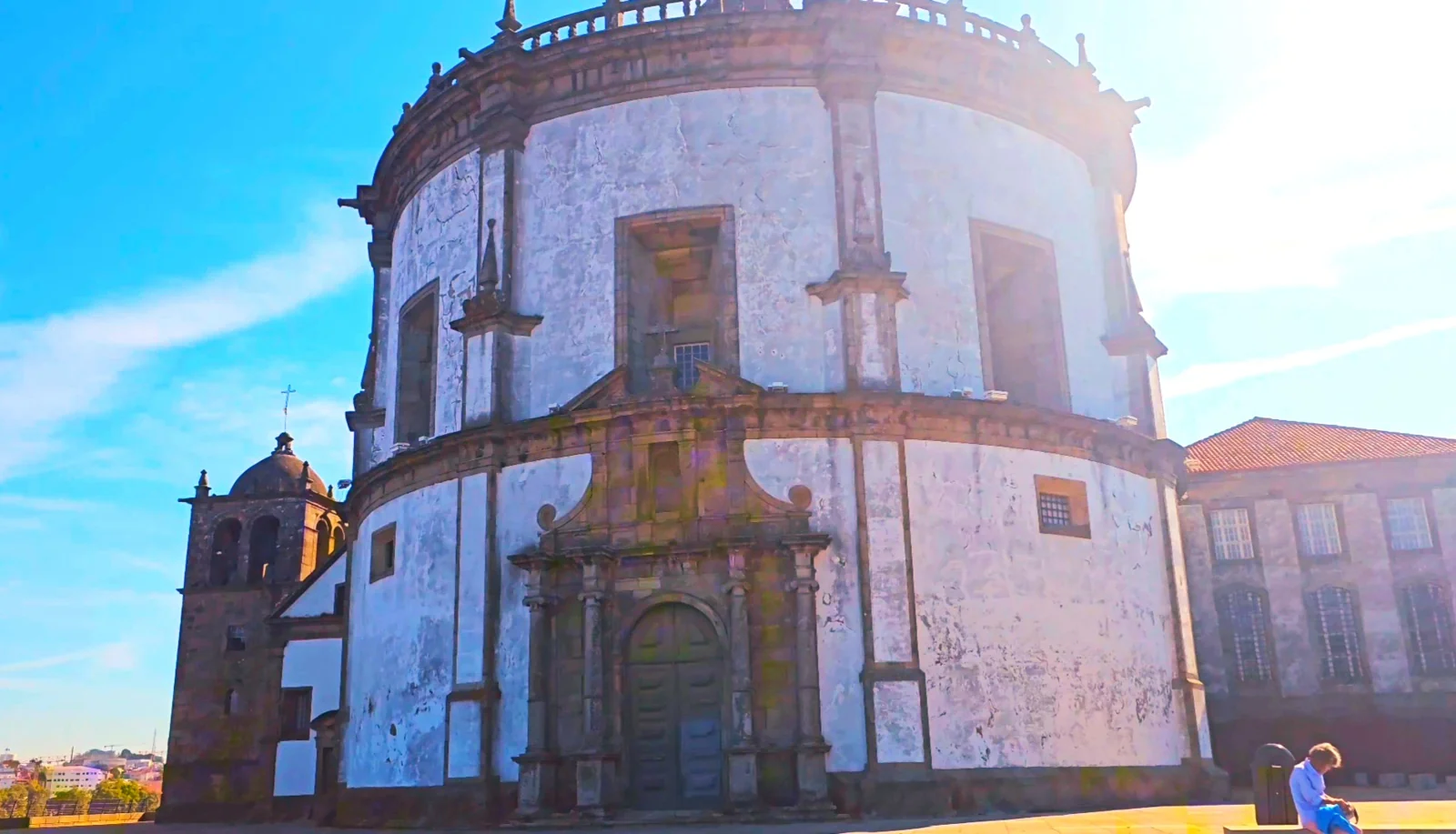
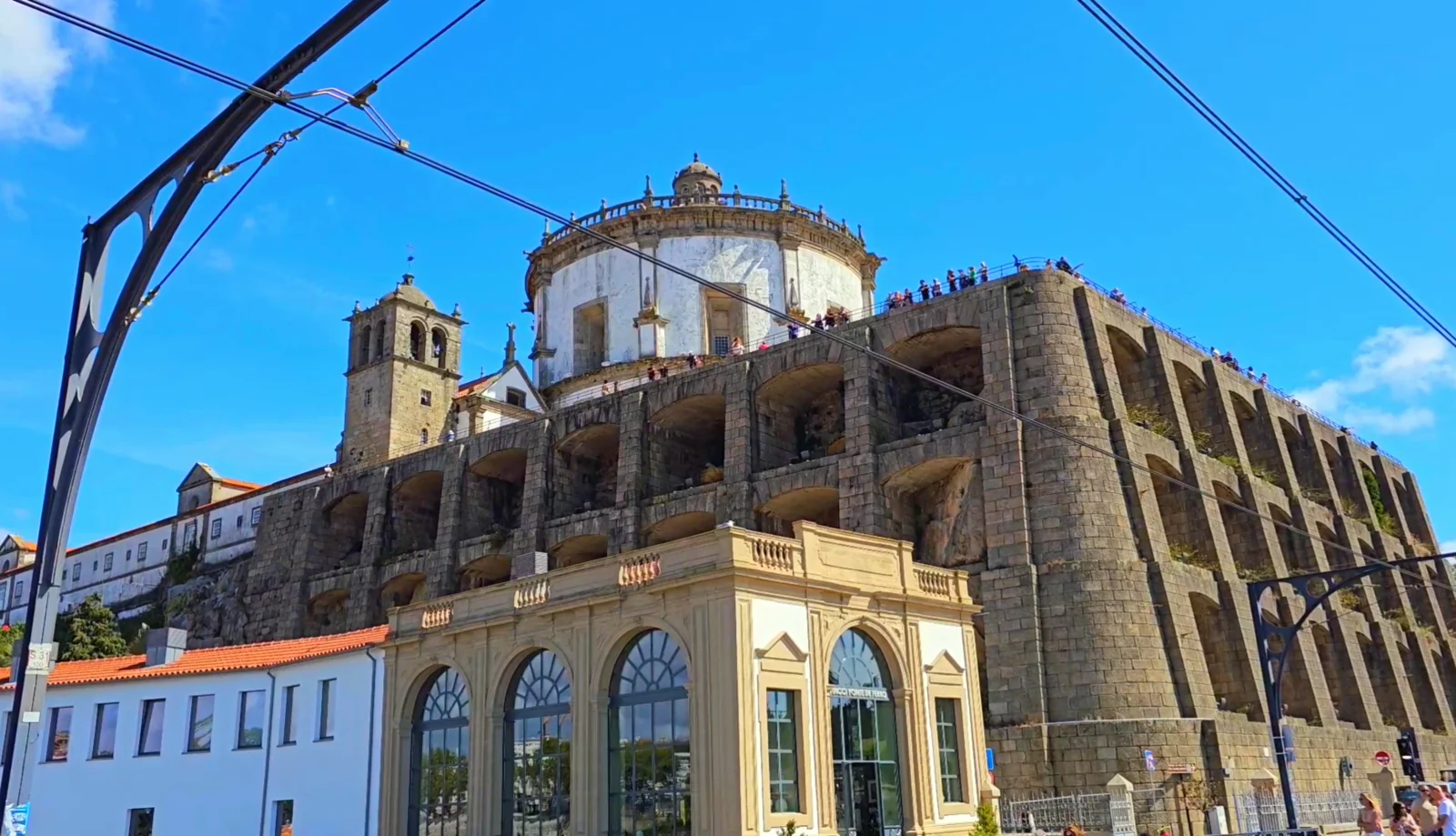
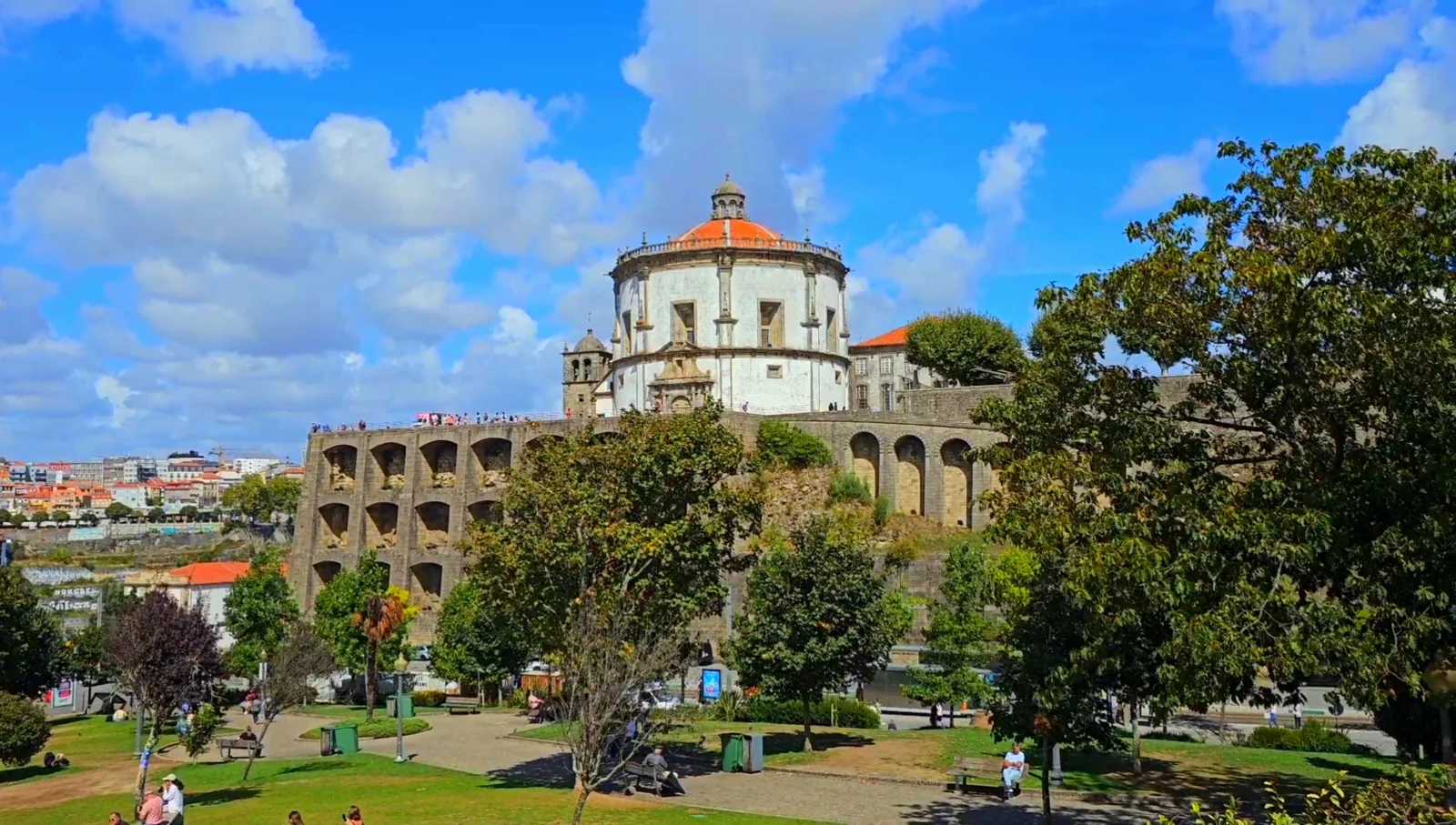
Circular façade of the church at Serra do Pilar Monastery
The circular structure you recognise from afar is the monastery church. The cloister within the complex also has a circular plan. Rectangular spaces lie between them: the whole monastery is not one single circle. The combination becomes more interesting once you understand how the different parts connect.
The monastery was founded in the 16th century for a religious community from Grijó. Building took place in several phases, from the foundation of the community to the completion of the different spaces seen today.
The cloister that was dismantled and moved
To create space between the chancel and cloister, the prior had the cloister dismantled in 1690 and moved about 15 metres east. This made room for the retrochoir, a space behind the chancel. It is one of those details that changes how you look at a building: not everything has always stood where you find it today.
This monastery helped defend Porto during a war that divided Portugal: a struggle between two brothers over the throne.
On one side stood Pedro, who supported a constitutional monarchy and his daughter Maria II’s right to the throne. On the other stood Miguel, who ruled as an absolute monarch. The country was divided between liberals and Miguel’s supporters, known as Miguelites.
In 1832, Pedro’s liberal troops established themselves in Porto. The Miguelites surrounded the city and tried to capture it. This marked the beginning of what became known as the Siege of Porto.
Across the river in Gaia, much of the territory was controlled by the Miguelites. But there was an exception here: Serra do Pilar. Liberal forces had occupied the monastery and turned it into a fortress. Even on this side of the Douro, surrounded by enemy positions, they continued to help defend Porto.
For more than a year, the city endured bombardment, hunger and disease. At Serra do Pilar, the defenders repelled repeated attacks and kept the monastery in liberal hands. Resistance continued on both riverbanks and became associated with the name Porto still bears today: Invicta, meaning “unconquered”.
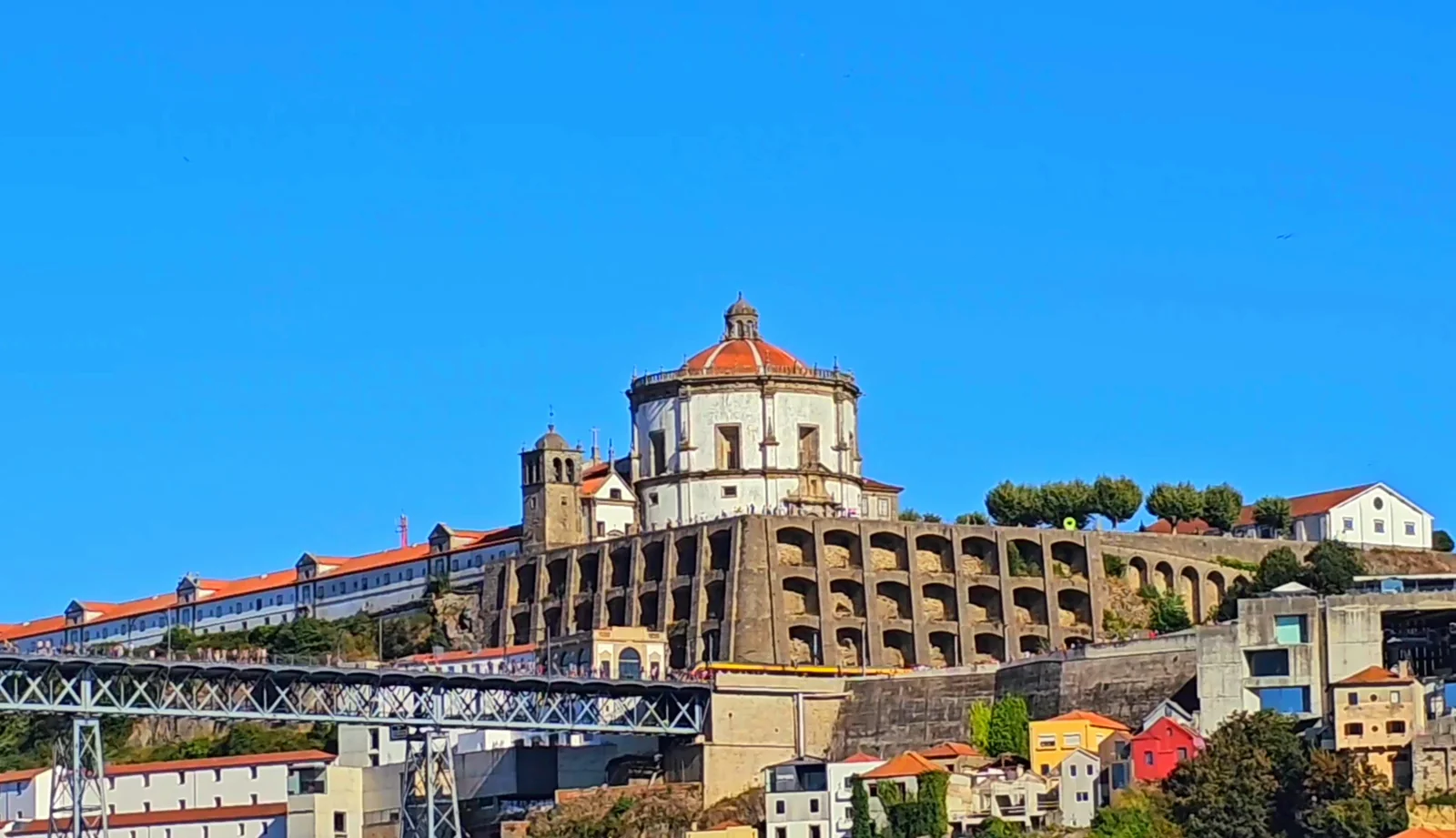
Serra do Pilar Monastery seen from Porto, with a Metro train on the bridge
Sá da Bandeira: wounded, he continued to command
The defence of these positions in Gaia also involved one of Portugal’s most remarkable figures of the period: Sá da Bandeira, the officer who ordered Serra do Pilar Monastery to be fortified.
His name was Bernardo de Sá Nogueira, and he commanded liberal troops. In September 1832, during fighting at Alto da Bandeira, elsewhere in Gaia, a bullet severely wounded his right arm.
Despite his injury, he continued to command. According to the account published in Personalidades Gaienses, he agreed to be evacuated only after the last of his men had withdrawn to Serra do Pilar. By then, he was severely weakened by blood loss. His arm had to be amputated.
Later, the British gave him a prosthetic arm, which became part of the collection associated with him at Portugal’s Military Academy.
But his story extends far beyond this battle. He went on to hold government office and spent decades campaigning against the slave trade and slavery in Portuguese territories.
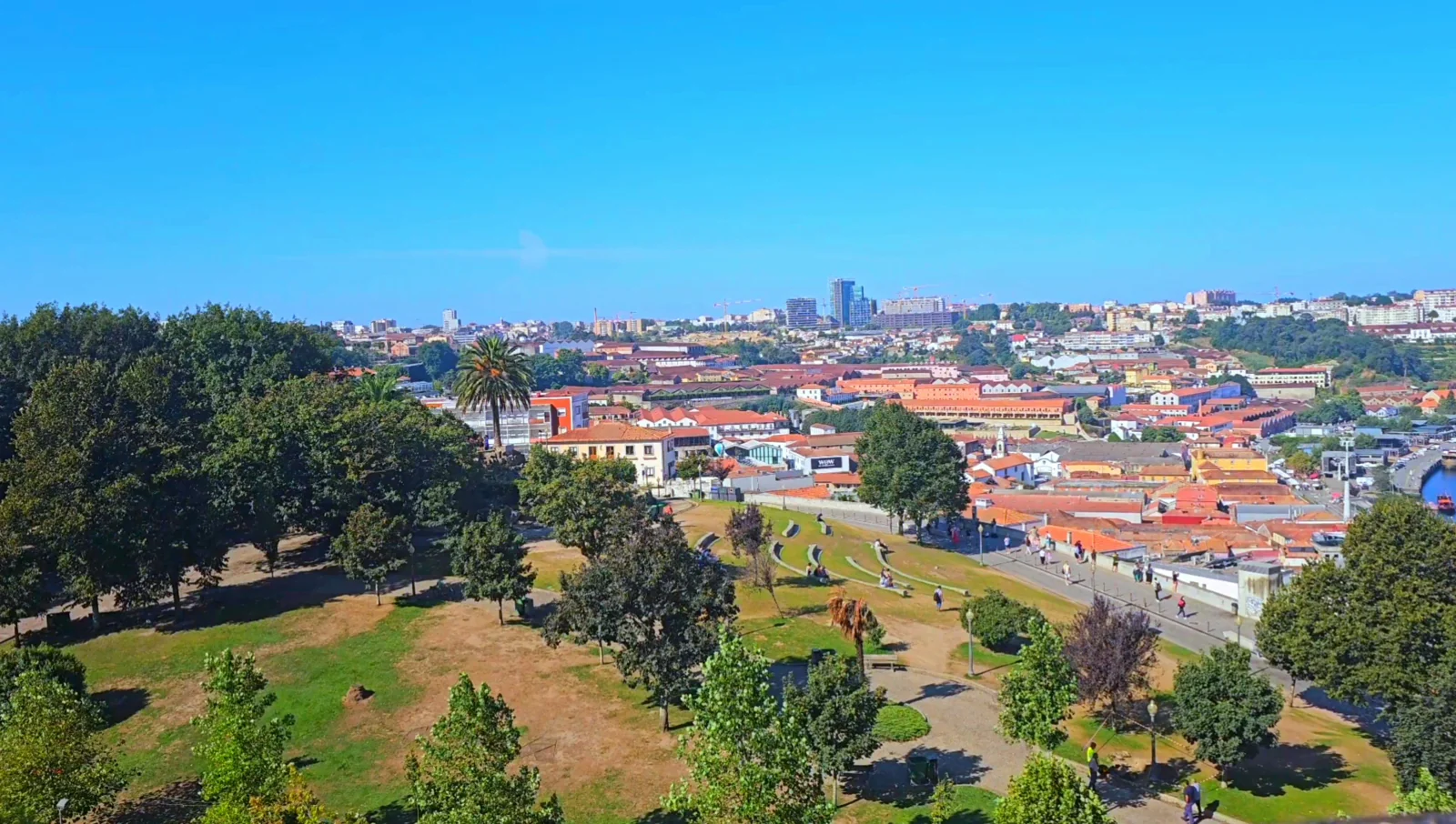
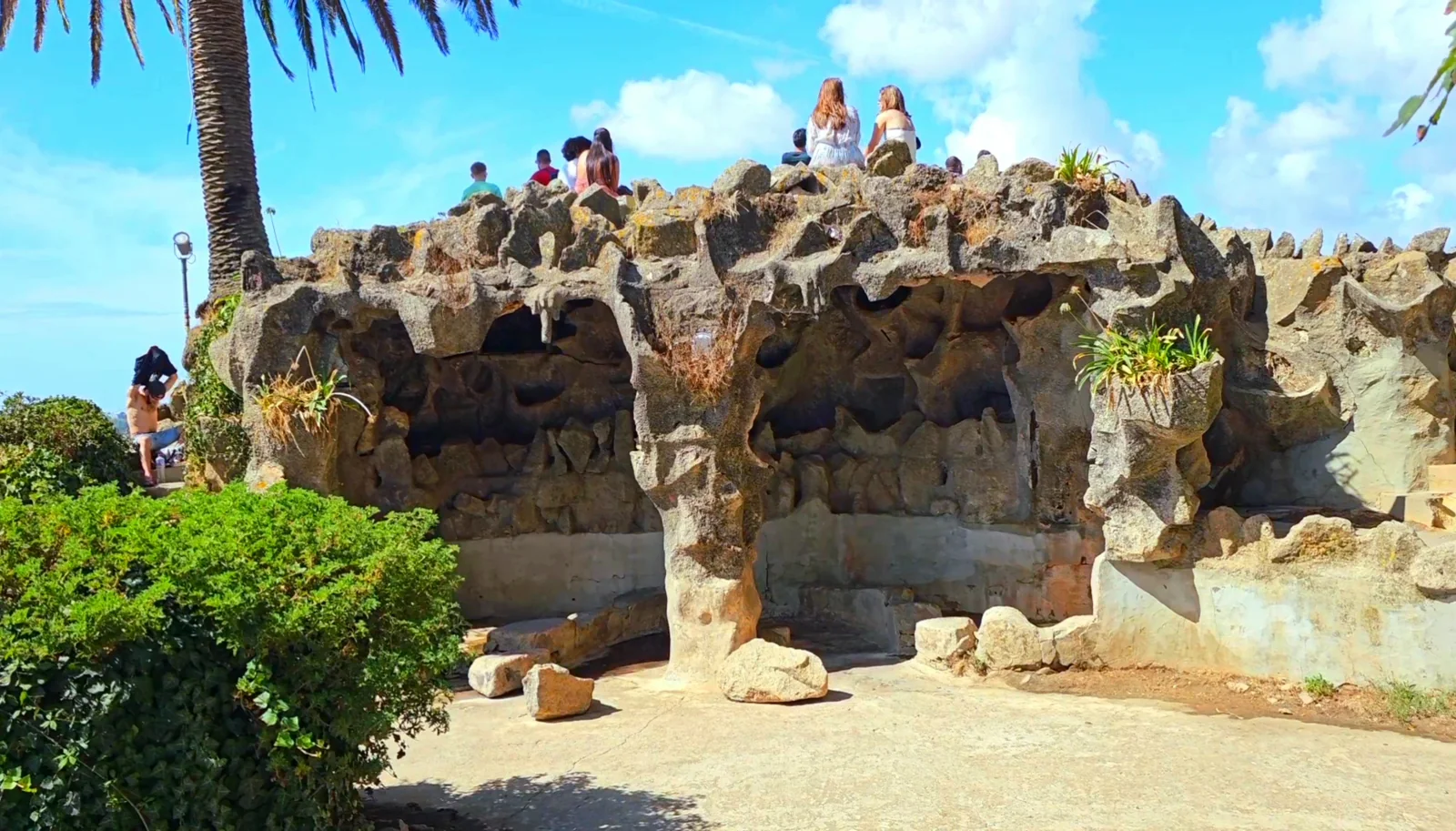
View from the upper part of Jardim do Morro over the garden, bridge and Porto
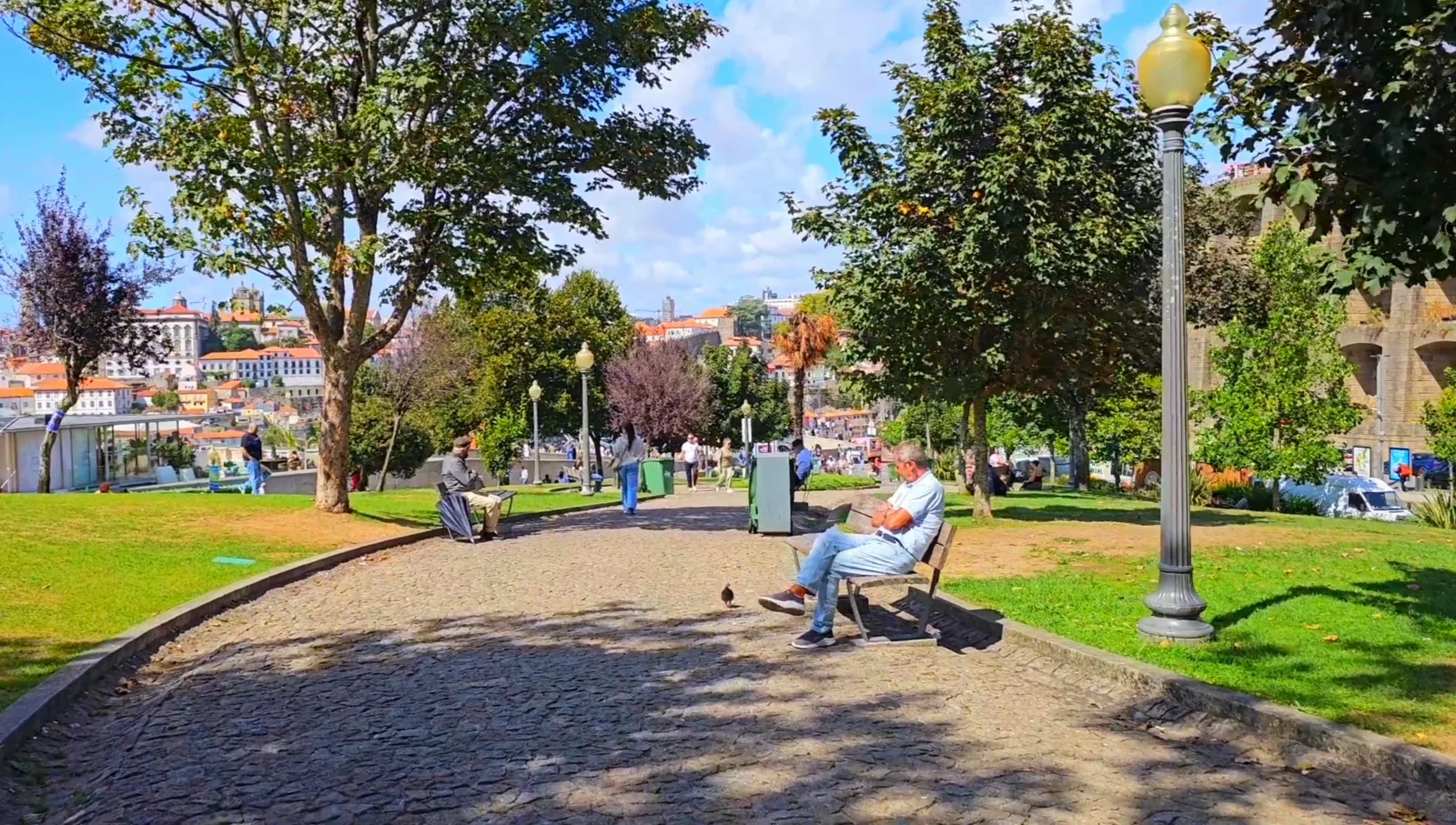
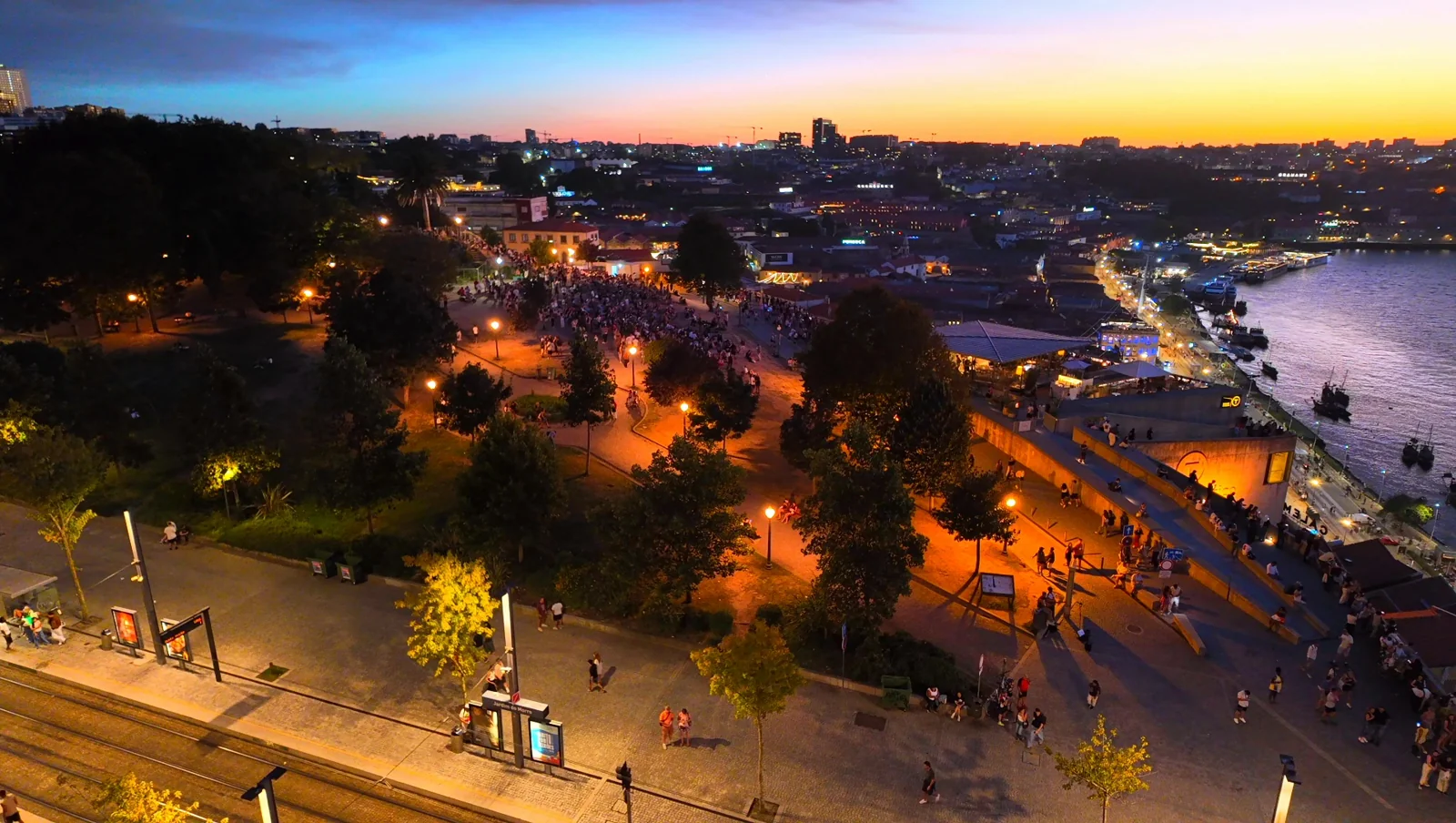
Below Serra do Pilar, Jardim do Morro has paths, trees, benches and a lawn where people gather to talk and look over the river. It feels different from the terrace: here, you can pause between a walk across the bridge and the next part of your visit to Gaia.
Why do so many people gather here?
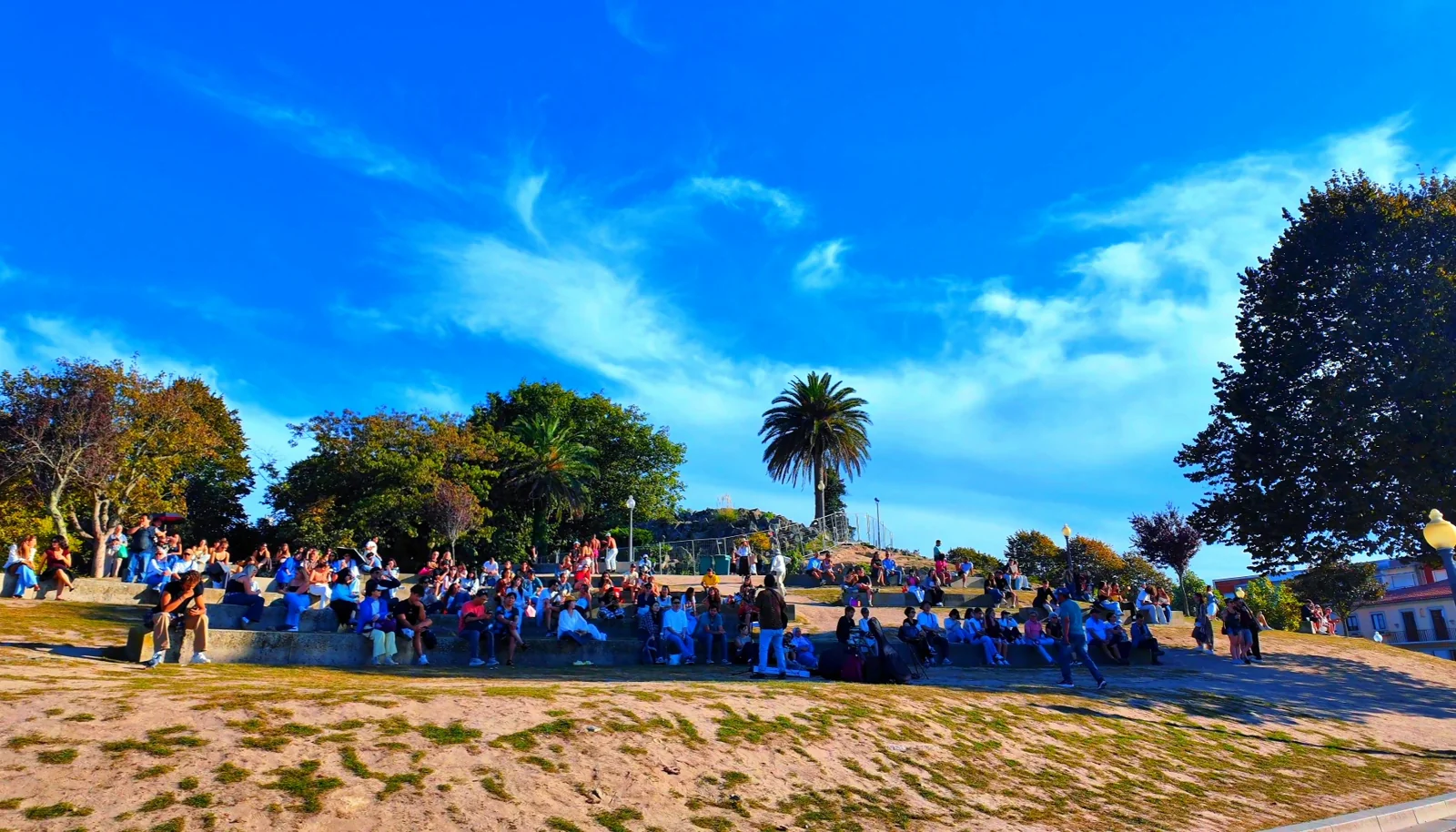
The appeal is easy to understand: the nearby bridge and Metro make several stops easy to combine, and the view changes with the evening light. The photographs show people sitting on the lawn and gathering at the viewpoints. If you prefer more space, a daytime visit can be an alternative to the sunset period.
Path, benches and trees in Jardim do MorroPeople gathered on the lawn in Jardim do Morro
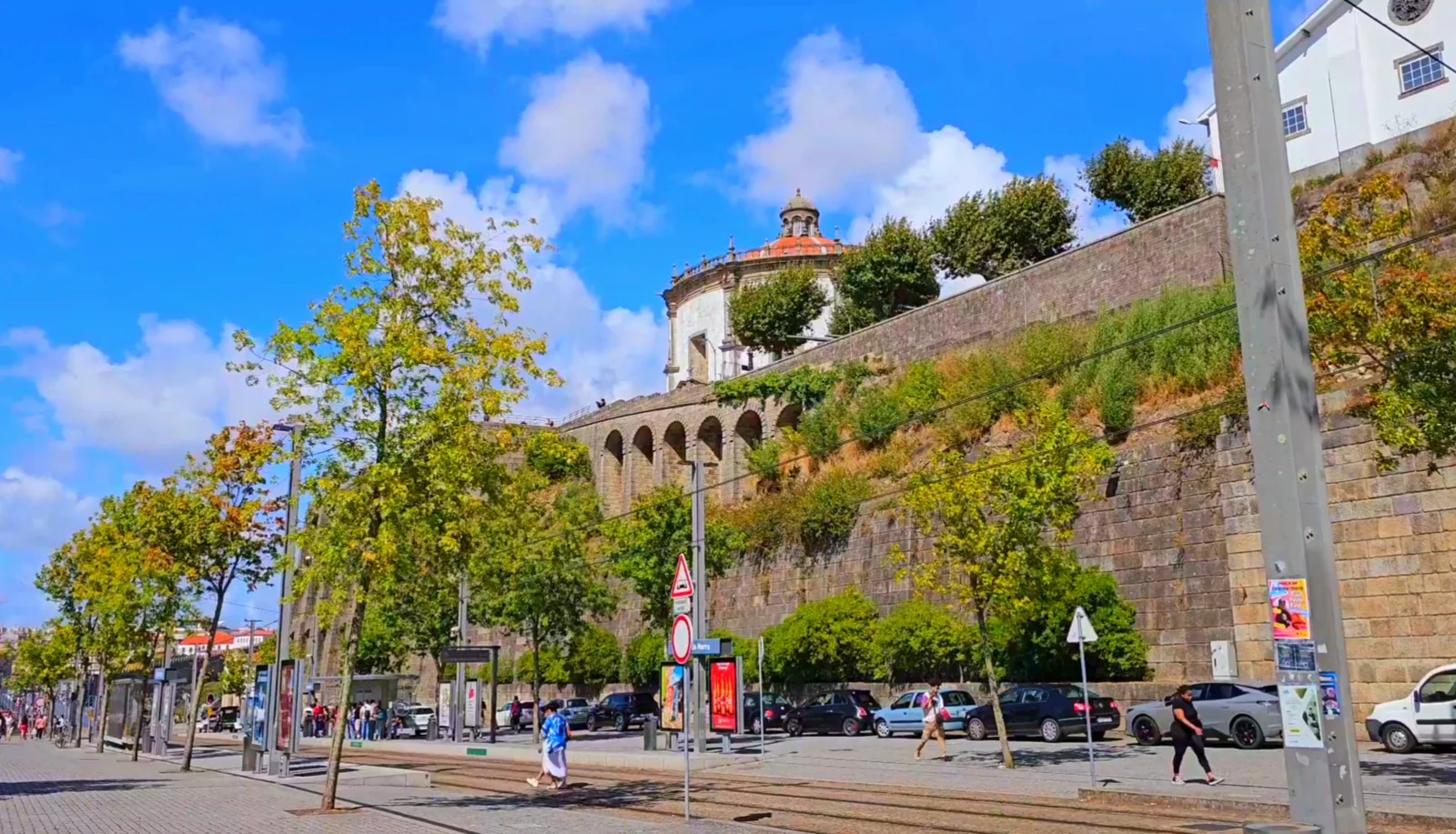
Continue along Avenida da República
View from Avenida da República towards Serra do Pilar Monastery
Beside Jardim do Morro, Avenida da República takes your walk into urban Gaia. It is an option for seeing the city beyond the riverbank, heading towards General Torres and Gaia Town Hall. Choose a section and check distances on a map; you do not need to walk the whole avenue.
Cable car or walk down to the river?
The cable car connects the upper area with Gaia’s waterfront, but does not replace the final climb to the Serra do Pilar terrace. Use it in one direction and combine the other with a walking route. Check operating hours, prices and conditions with the operator.
Photographs by Renata Silva, taken from Serra do Pilar, Jardim do Morro, the bridge and Porto’s riverbank. Pause the gallery or open a photograph for a larger view.
Jardim do Morro station, on Porto Metro’s Line D, is a nearby starting point. You can also walk across the upper deck of Luís I Bridge. Keep to the pedestrian space and respect Metro traffic.
Slopes and accessibility
Reaching the terrace involves a climb. Routes have different surfaces and changes in elevation; do not assume every route is suitable for wheelchairs or pushchairs. Check your specific route and any restrictions before visiting.
Photography and your return
In daylight, you can make out details on the hillsides. In the evening, watch the light change and plan your return after dark. Bring an extra layer for the wind and keep access routes clear.
Are Jardim do Morro and Serra do Pilar the same place?
No. The garden is lower down beside the Metro and bridge. The Serra do Pilar terrace is higher up, in front of the monastery. You can combine both on the same walk.
Do I need a ticket to enjoy the view?
Looking at the view outside is different from visiting the monument circuit. Check public access to the viewpoint locally, and consult Património Cultural for interiors and the dome. The cable car requires a separate ticket.
Can I visit the cloister?
Do not plan an interior visit without confirmation: when checked on 24 November 2026, the official ticketing website listed the monastery as temporarily closed for refurbishment.
When should I visit?
It depends on what you want. Daylight helps you see the buildings; late afternoon lets you follow the sunset and stay for the lights. Colours depend on the weather and sunset times change throughout the year.
Keep exploring Gaia
Photography: Renata Silva / GoldenPorto. Information reviewed on 24 November 2026.