Free to enter
The main hall can be visited without a ticket, because São Bento is still an active railway station.
Porto landmark guide
Porto’s historic railway station of azulejos, trains, Beaux-Arts architecture and quiet grandeur.
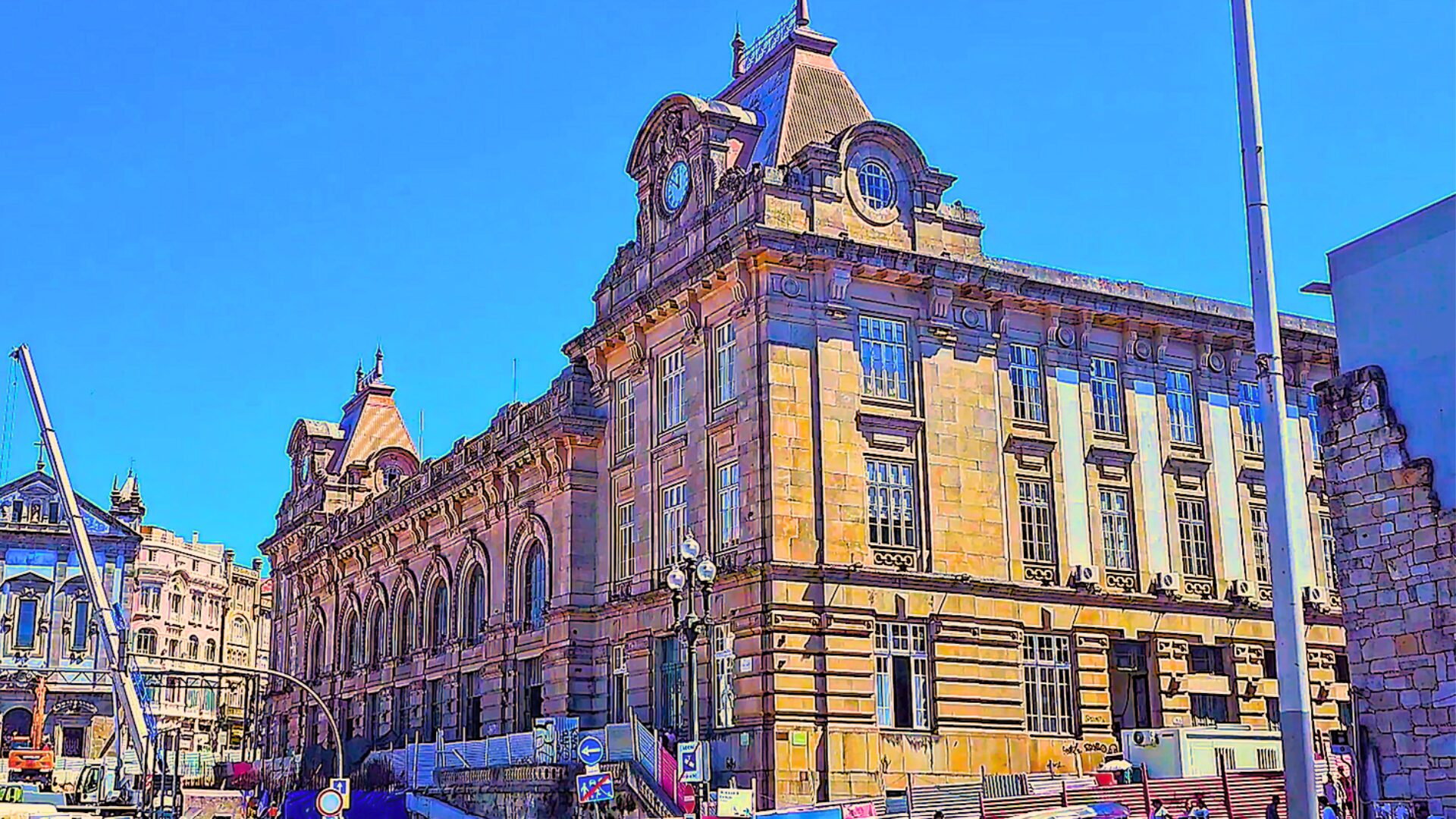
In the heart of Porto, São Bento is more than a place to catch a train. It is a living station, a visual story of Portugal and one of the city’s most memorable interiors.
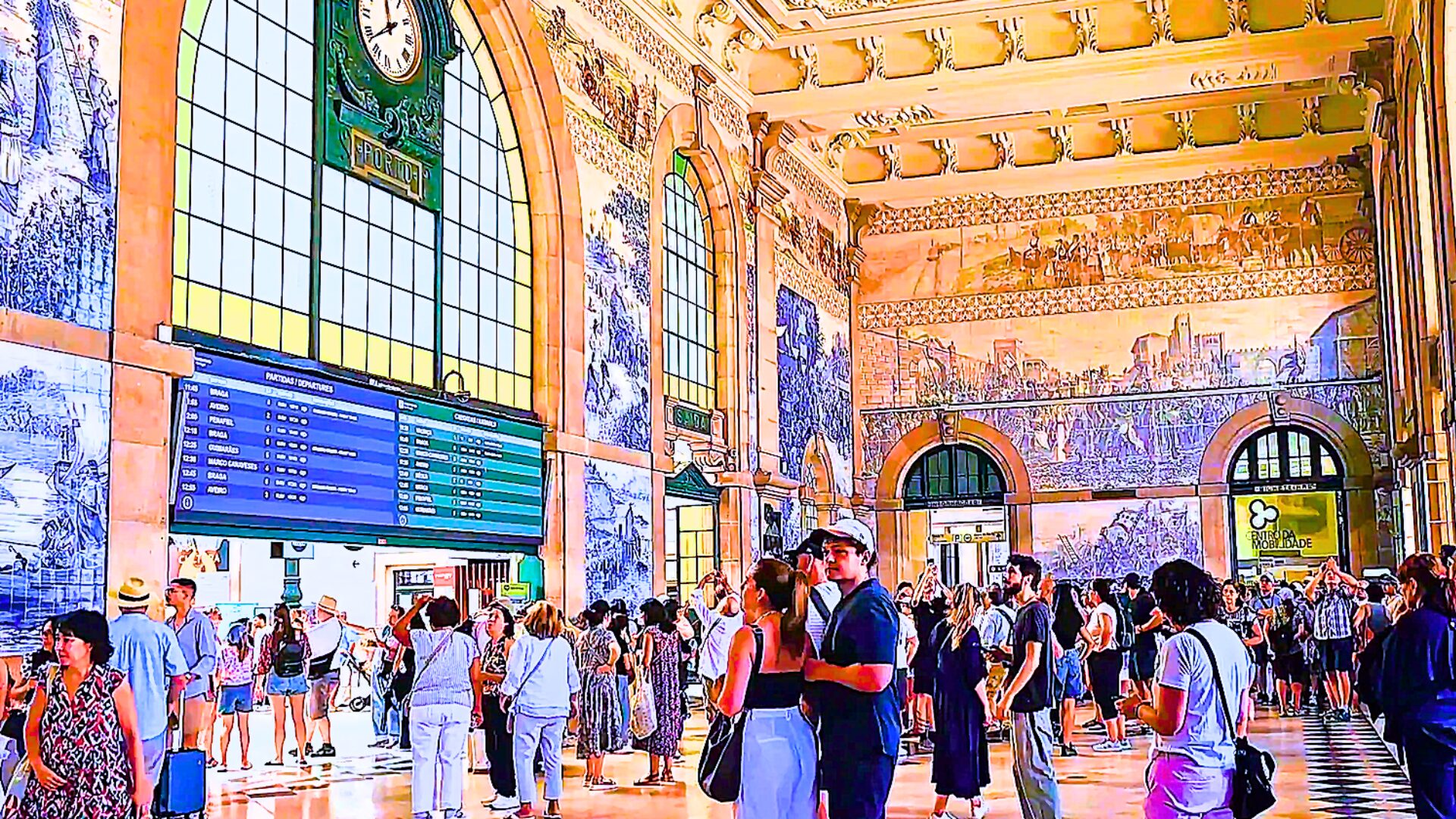
São Bento Station is one of those places where visitors naturally slow down. People arrive with suitcases, trains move in and out, and yet the main hall feels almost like a gallery. Its blue-and-white azulejo panels make the station one of Porto’s most beautiful first impressions.
The station is active, central and free to enter, which makes it one of the easiest landmarks to include in a Porto walk. It also sits close to Aliados, Rua das Flores, the Sé Cathedral, Clérigos and the route down to Ribeira.
Quick facts
A practical overview before you step inside one of Porto’s most photographed interiors.
The main hall can be visited without a ticket, because São Bento is still an active railway station.
The definitive station was inaugurated in the early twentieth century, after a provisional station opened in 1896.
The building was designed by Porto architect José Marques da Silva, with a French-influenced Beaux-Arts character.
The famous tile panels were painted by Jorge Colaço and turn the station hall into a visual narrative.
Video stories
Watch São Bento as part of a filmed walk through Porto’s historic centre, including Avenida dos Aliados, Sé Cathedral, Bolhão, São Bento and nearby streets shaped by history, tiles and local memory.
The Porto and Gaia video collection brings together landmarks, cultural walks, historic streets, local stories and filmed moments that help you feel the city before you visit.
Why it is famous
São Bento is famous for its vast blue-and-white azulejo panels, which cover the main hall and depict scenes from Portuguese history, traditional life and moments of movement across the country.
The effect is powerful because the station is not frozen like a museum. Visitors look up at historic scenes while passengers continue to arrive, wait, leave and pass through the space.
The artist
Jorge Colaço was one of the great names of Portuguese tile painting in the early twentieth century. At São Bento, he transformed a railway station into a historical gallery, using azulejos to tell stories that visitors can read visually.
The panels were painted between 1905 and 1916 and are one of the reasons the station feels so different from an ordinary transport building. Instead of being only a place of departure, São Bento becomes a place of memory.
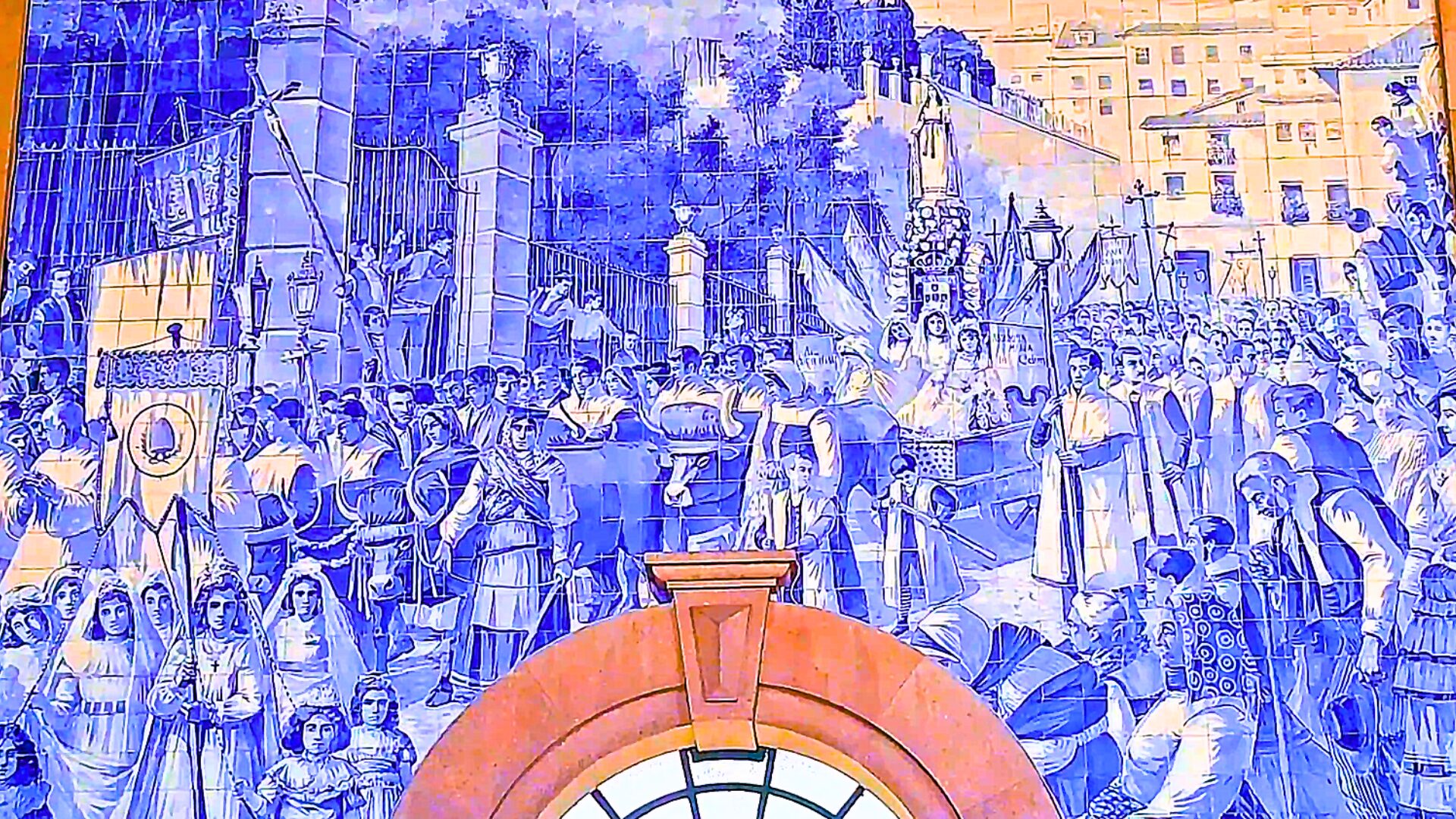
The beauty is not only in the scale of the panels, but in the storytelling: battles, arrivals, rural life, ceremonies and movement across Portuguese history.
Visual gallery
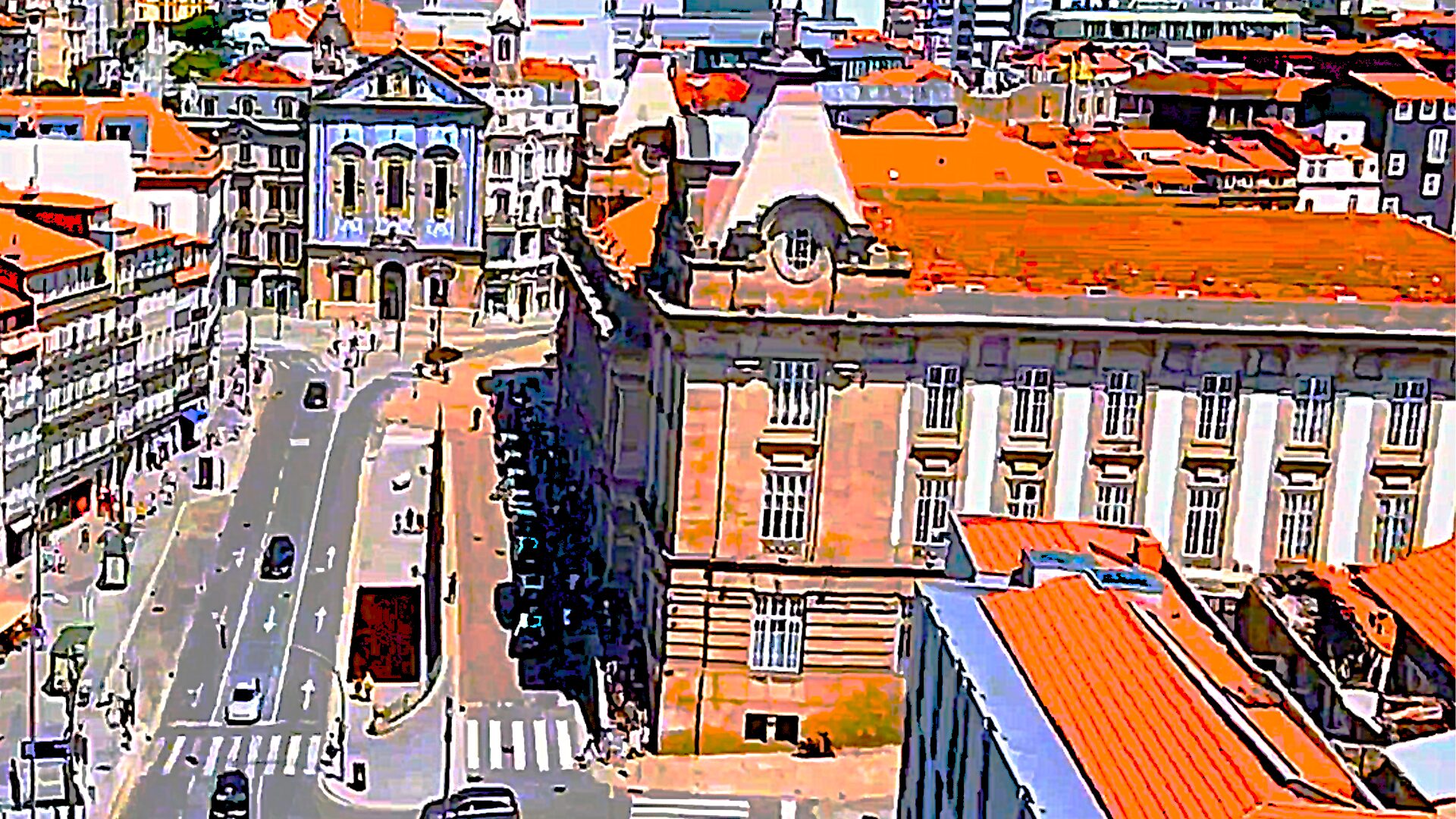
A moving gallery of the station’s exterior, azulejo hall, clock, glass details, train platforms and architectural angles.
 The façade
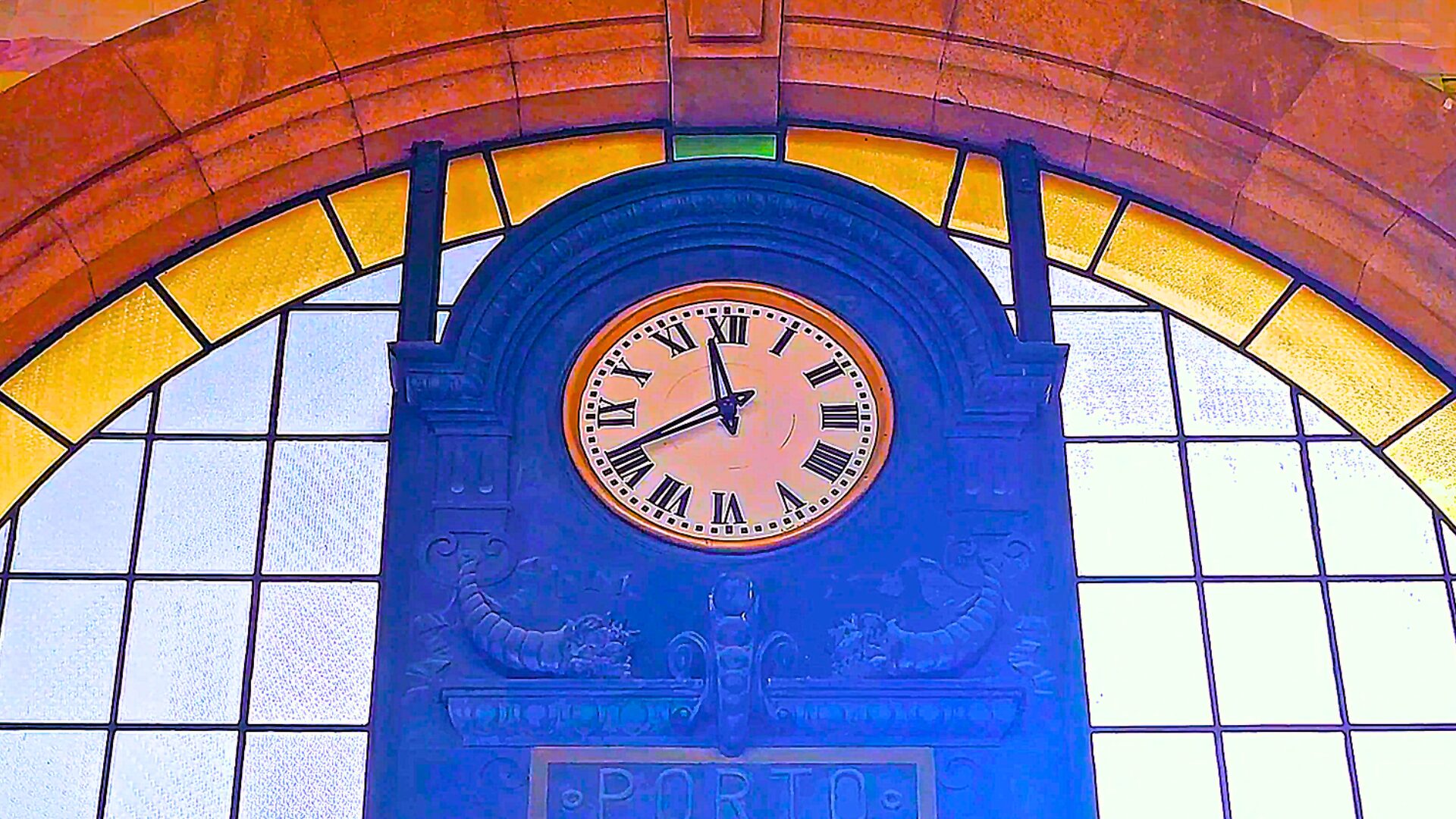 Clock hall
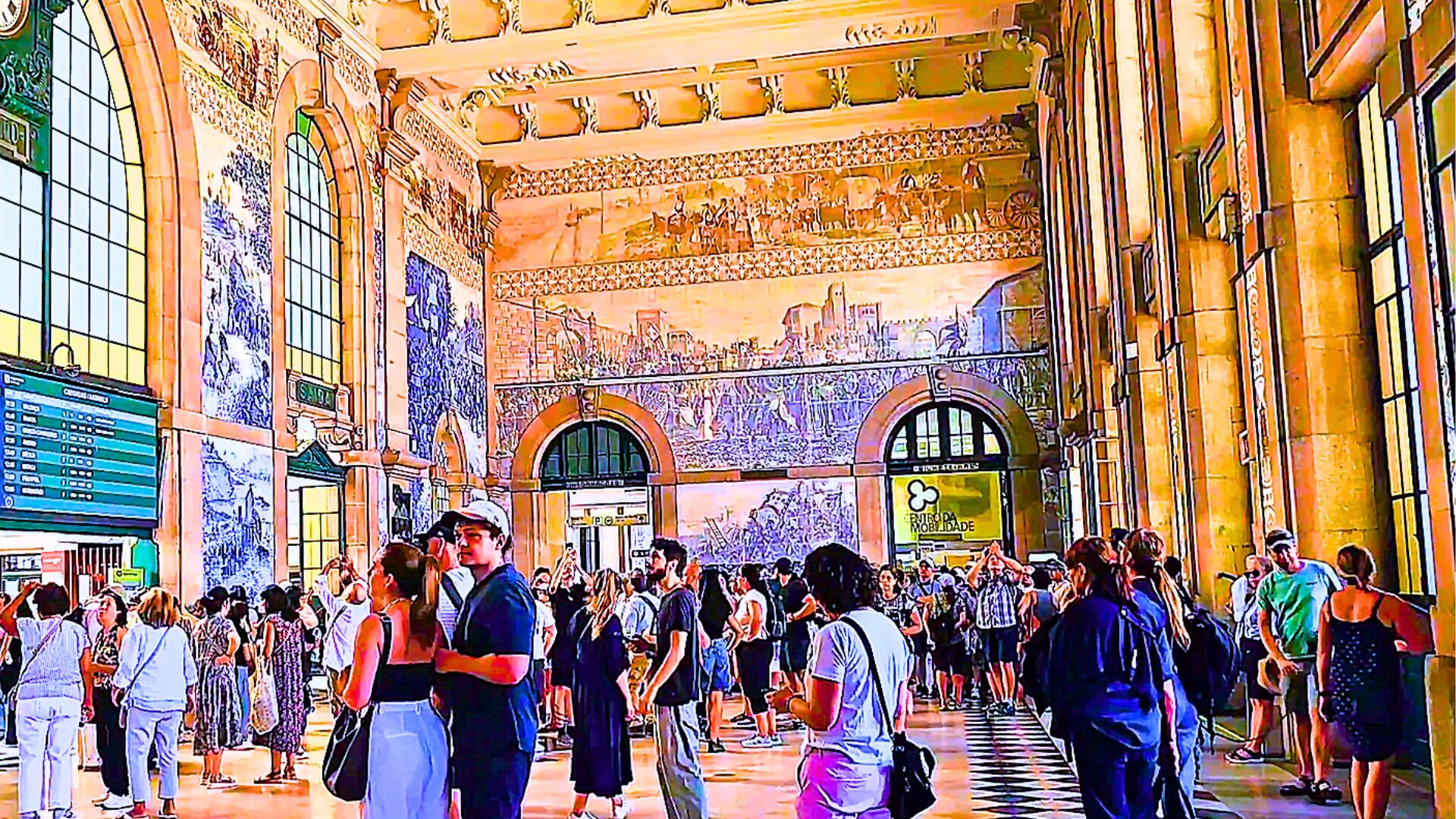 Colaço tiles
Azulejo panels
Colaço tiles
Azulejo panels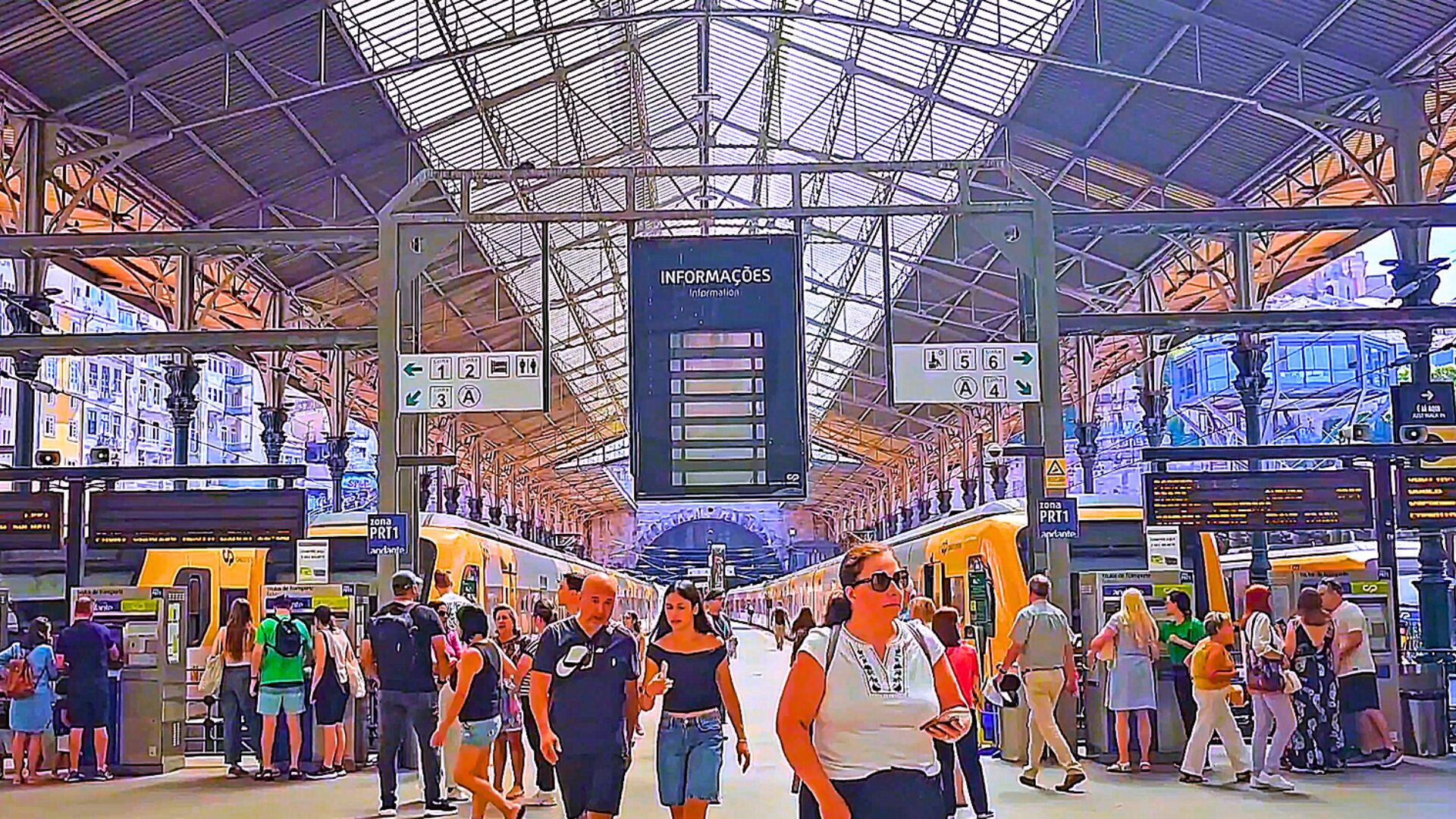 Trains
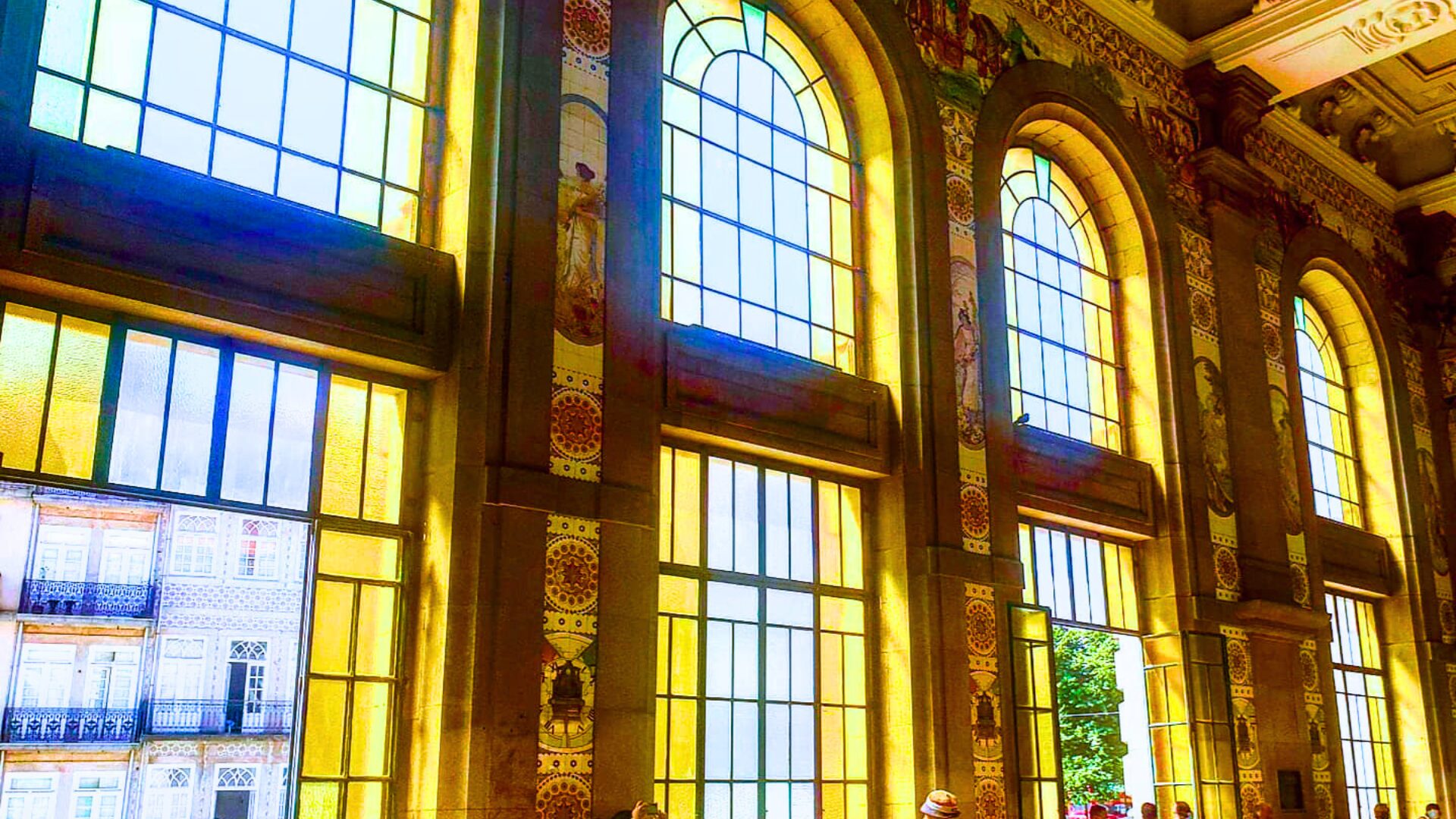 Glass and light
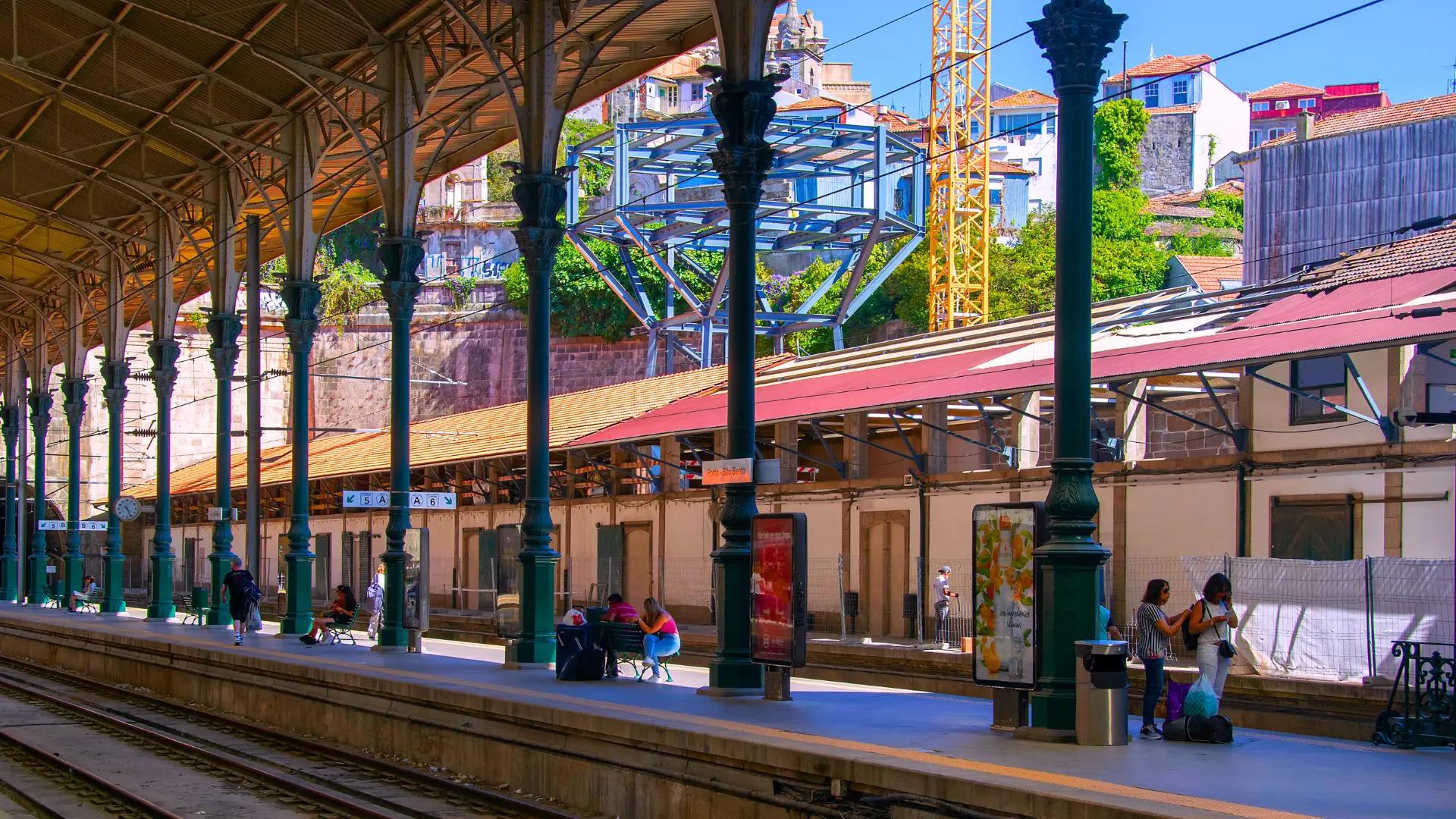 Rail tracks
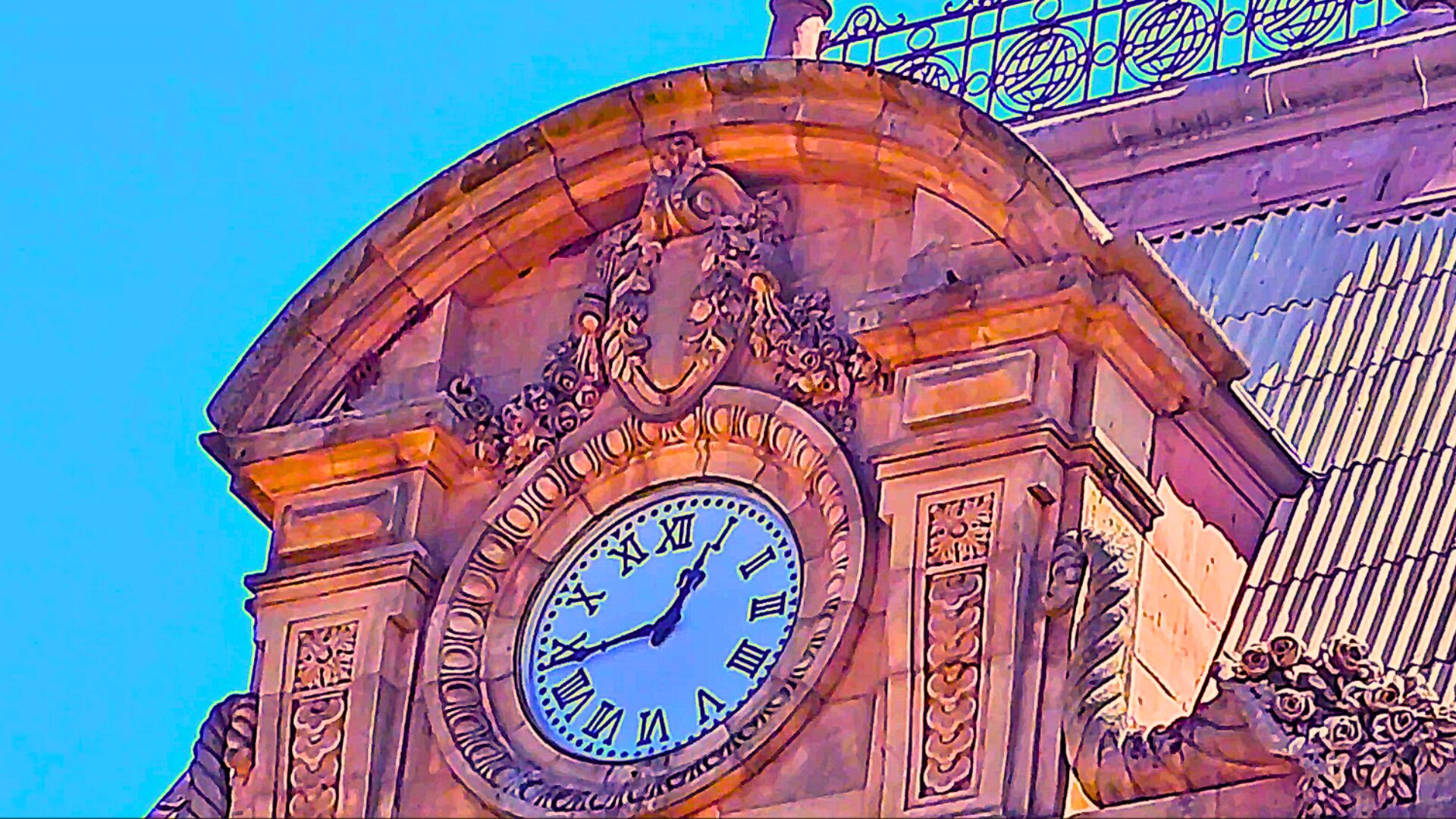 Exterior clock
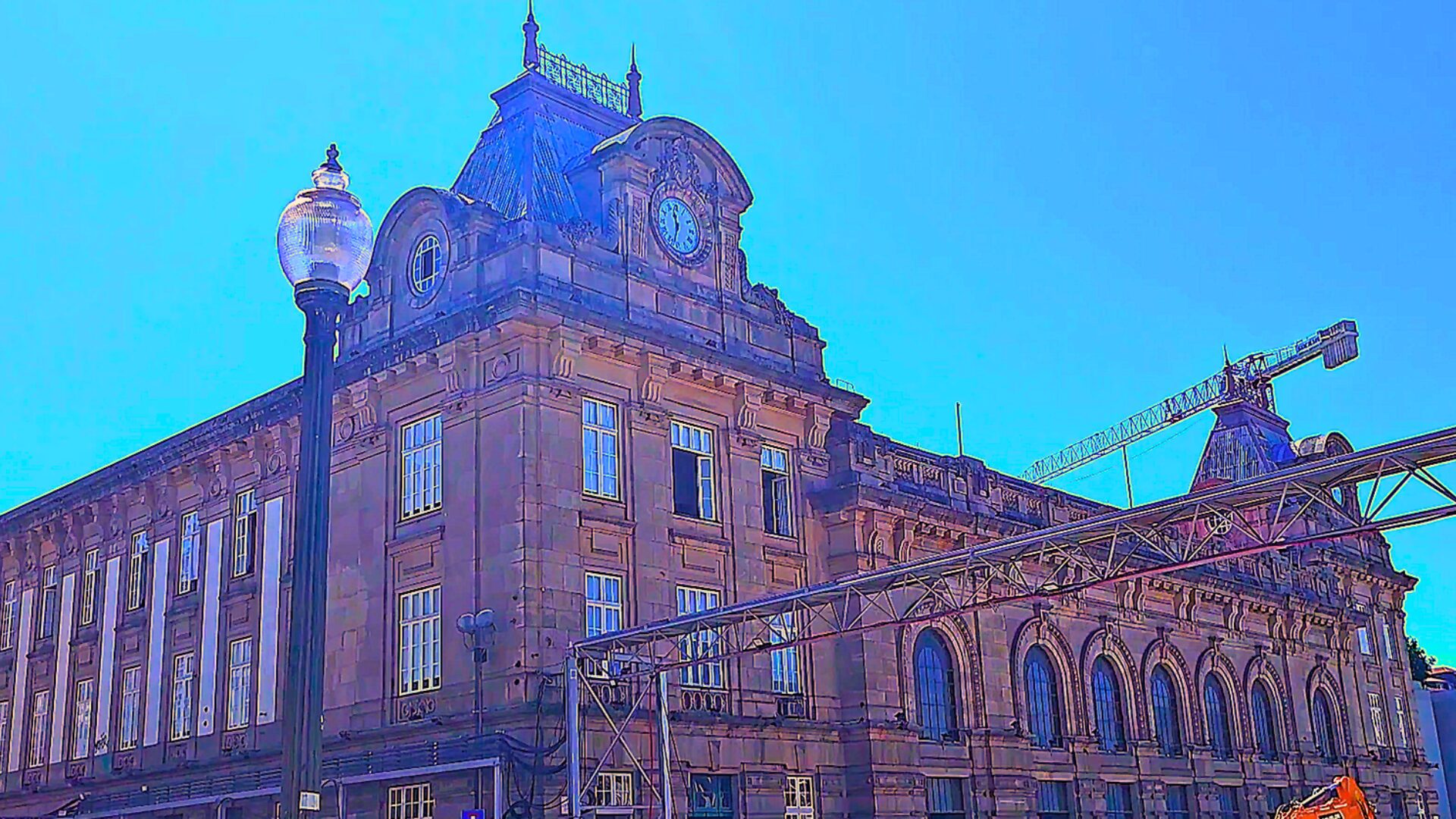 Urban angle
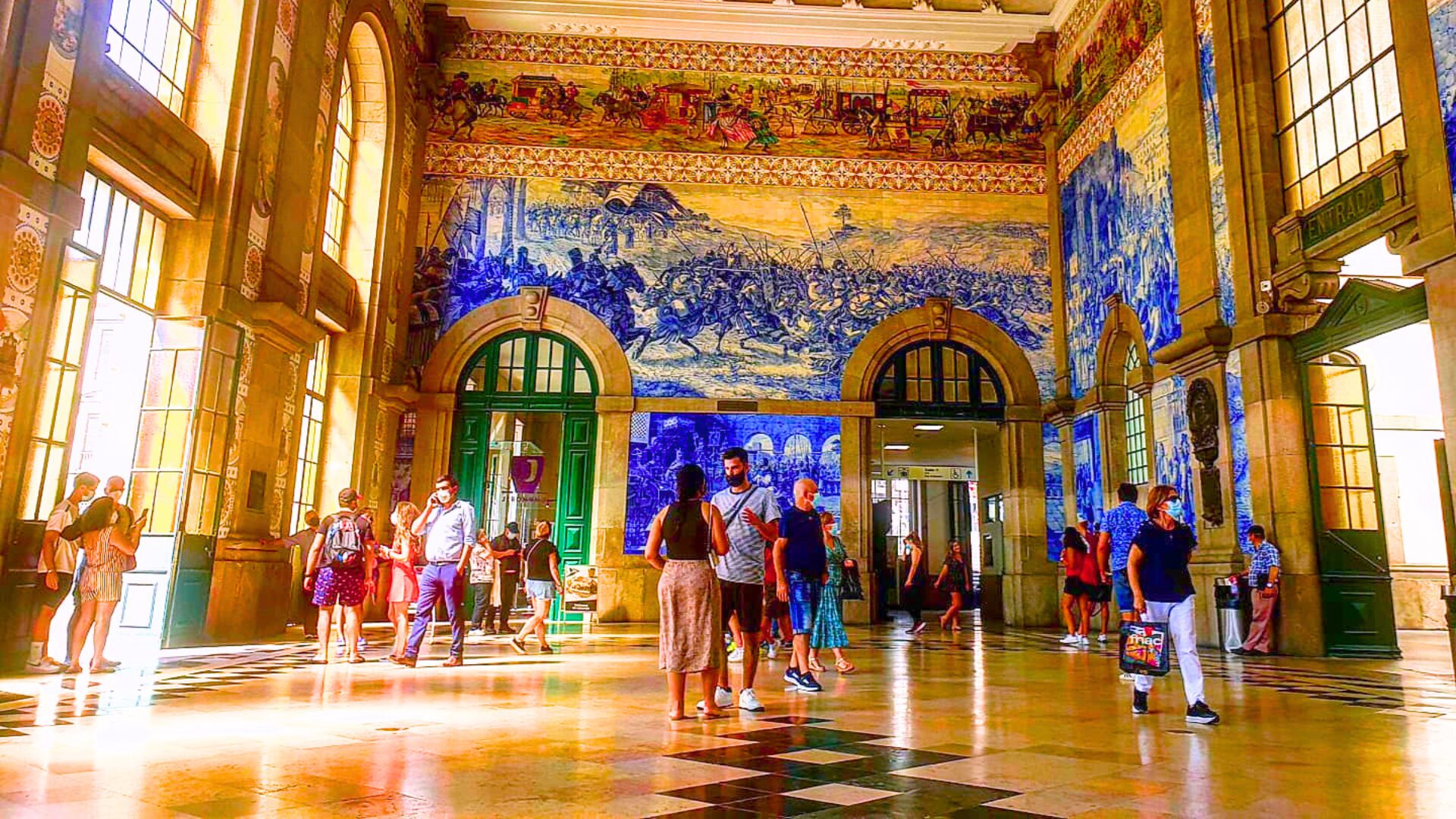 Tile details
Still moving
One of the most charming things about São Bento is that it has not become only a monument. Trains still arrive and depart, people still use it as part of daily life, and the artistic hall remains connected to real movement.
You can use São Bento for regional trips, including routes towards places such as Braga, Guimarães and the Douro line, depending on schedules and connections.
How to visit
You can visit São Bento quickly, but it is worth giving yourself enough time to look up, step back and notice the details.
A short stop is enough for the main hall, but more time helps you notice the panels, clock and atmosphere.
The station can become crowded because it is both a tourist stop and a real transport hub.
The clock area gives one of the most iconic views of the tile hall and helps frame the scale of the space.
Enjoy the space, but stay aware of passengers, luggage, platforms and people moving through the station.
Nearby
São Bento sits in one of the best places to begin a Porto walk. From here, you can move naturally towards the old city, the river or the grander side of Baixa.
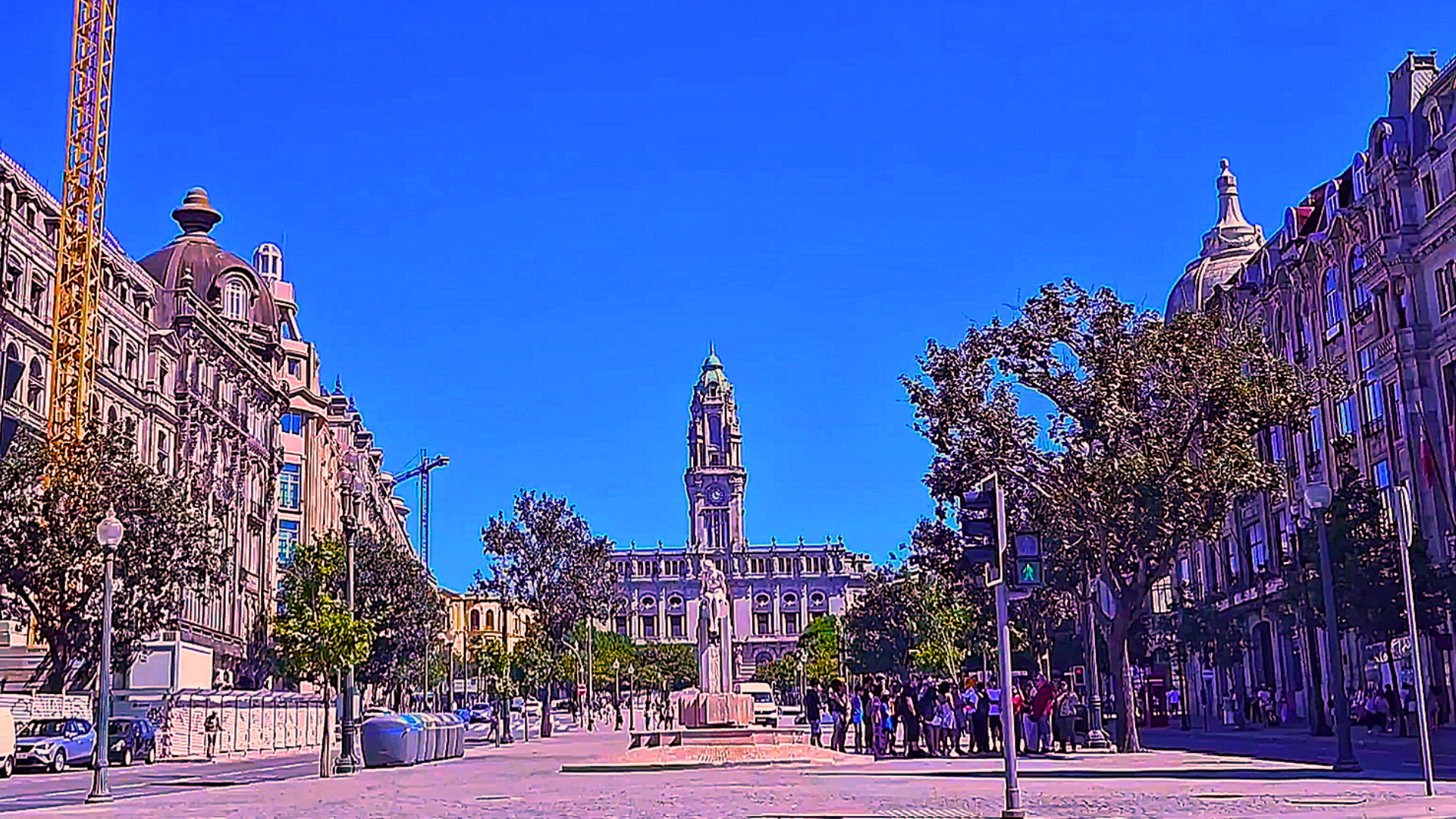
The civic heart of Porto, with monumental buildings, cafés and a strong central-city feeling.
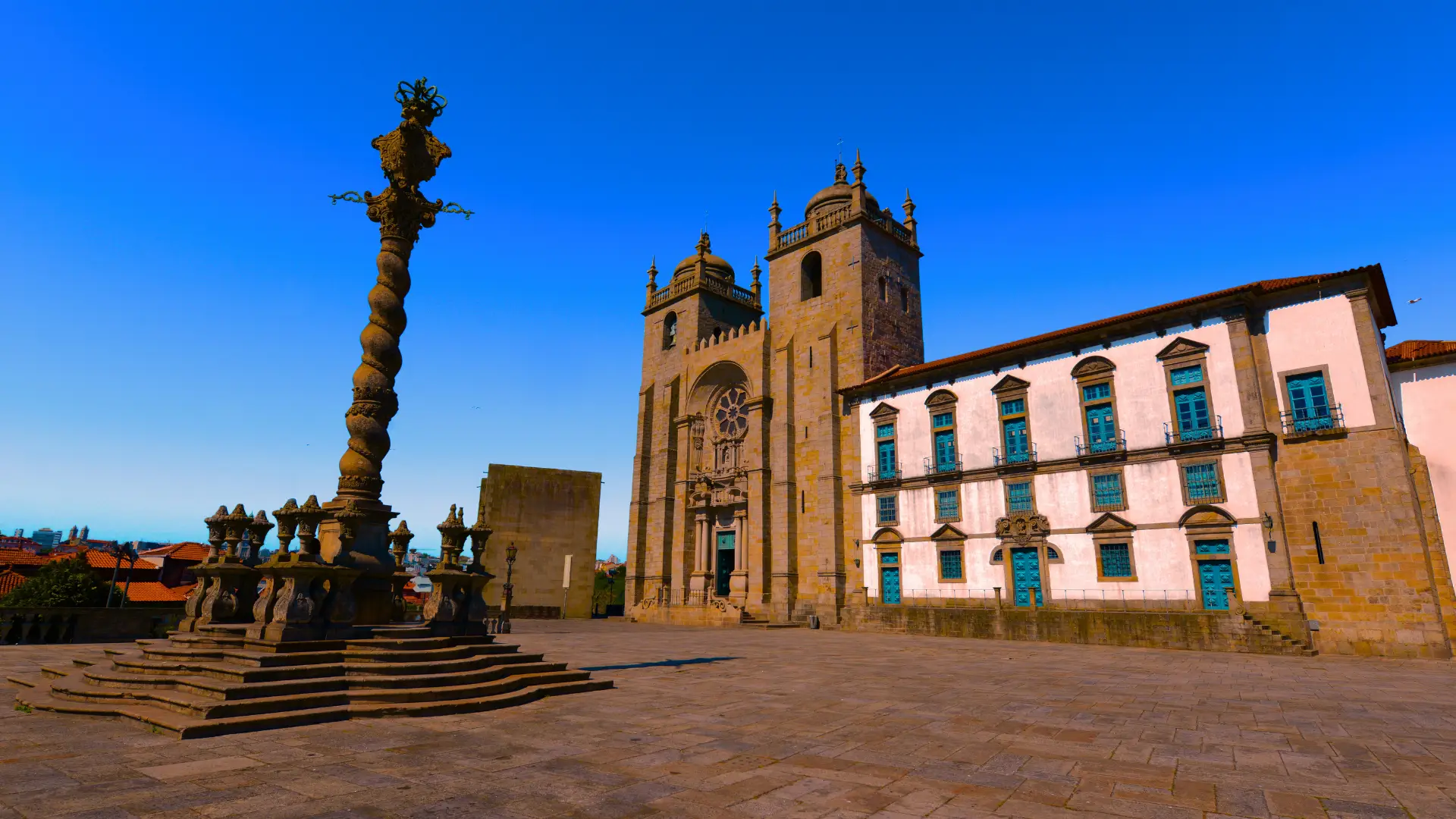
A short uphill walk takes you to one of Porto’s oldest and most powerful landmarks.
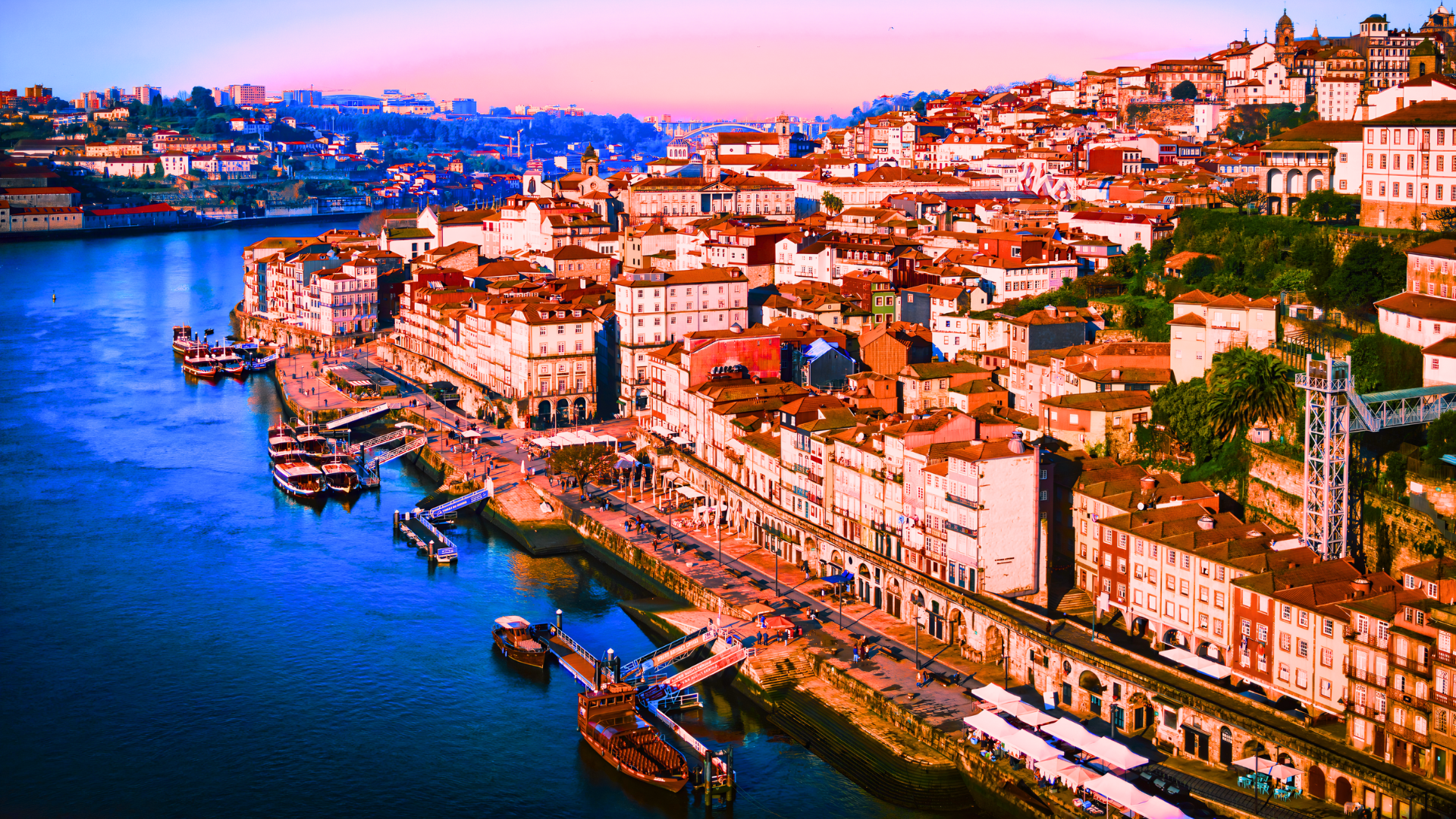
Follow the slope down through the historic centre until the city opens to the Douro.
Final thought
São Bento is one of the easiest places to begin understanding Porto: history on the walls, movement on the tracks and the old city waiting just outside the doors.